Crispy chicken coated in a sticky gochujang glaze has a way of disappearing fast, especially when the sauce walks that line between sweet, spicy, and a little savory-funky in the best possible way. The chicken stays crisp under the coating instead of turning soggy, and the honey gives the heat a roundness that keeps you reaching for another bite.
What makes this version work is the way the chicken is dredged in cornstarch before frying. That thin, dry coating creates a light crust that clings to the sauce instead of soaking it up right away. The glaze itself is built on gochujang, soy sauce, rice vinegar, and garlic, so it tastes layered instead of just hot and sweet. A short simmer tightens everything up without pushing it into candy territory.
Below, you’ll find the exact cues for getting the chicken crisp and the sauce thick enough to coat without clumping. There are also a few smart swaps for when you want to adjust the heat or make the dish work with what you already have in the kitchen.
The chicken stayed crisp even after tossing it in the sauce, and the glaze thickened just enough to cling to every piece without turning sticky or burnt. I served it over rice and my husband kept going back for “just one more spoonful” of the sauce.
Save this crispy honey gochujang chicken for the night you want a fast skillet dinner with a sticky glaze and real crunch.
The Trick to Keeping the Chicken Crisp Under a Sticky Glaze
The biggest mistake with sauced chicken is rushing the toss. If the sauce goes on too early or sits too long in the pan, the crust softens and you end up with tender chicken in a dull coating instead of actual crisp edges. Frying in batches matters here because crowded chicken steams before it browns, and steam is what kills the crunch.
The other thing worth watching is the sauce consistency. You don’t want a watery glaze that runs off the chicken, but you also don’t want to cook it until it turns into paste. Pull it when it looks glossy and slightly thickened; it should coat a spoon and leave a clean trail when you drag a finger through it.
- Cornstarch — This is what gives the chicken that light, craggy crust. Flour will work in a pinch, but it won’t give the same crisp finish or the same clean bite under the sauce.
- Boneless chicken thighs — Thighs stay juicy during frying and hold up better once they’re tossed in sauce. Chicken breast can work, but cut it smaller and watch it closely so it doesn’t dry out.
- Gochujang — This paste brings heat, depth, and a little fermented tang that plain chili sauce can’t match. Check the label if you’re heat-sensitive; some brands are noticeably hotter than others.
- Honey — Honey smooths out the spice and helps the glaze cling. Maple syrup will sweeten it, but the flavor will shift and the finish will taste thinner.
- Rice vinegar — A small amount wakes up the sauce and keeps the sweetness from flattening. If you need a substitute, use apple cider vinegar, but start with a little less because it’s sharper.
Frying First, Glazing Second, Serving Immediately
Coating the Chicken Evenly
Toss the chicken pieces until every surface looks dry and lightly dusty, then shake off the excess so you don’t get gummy patches in the pan. The coating should look thin, not pasty. If the cornstarch starts clumping, the chicken was damp; pat it dry before you coat it.
Building a Deep Golden Crust
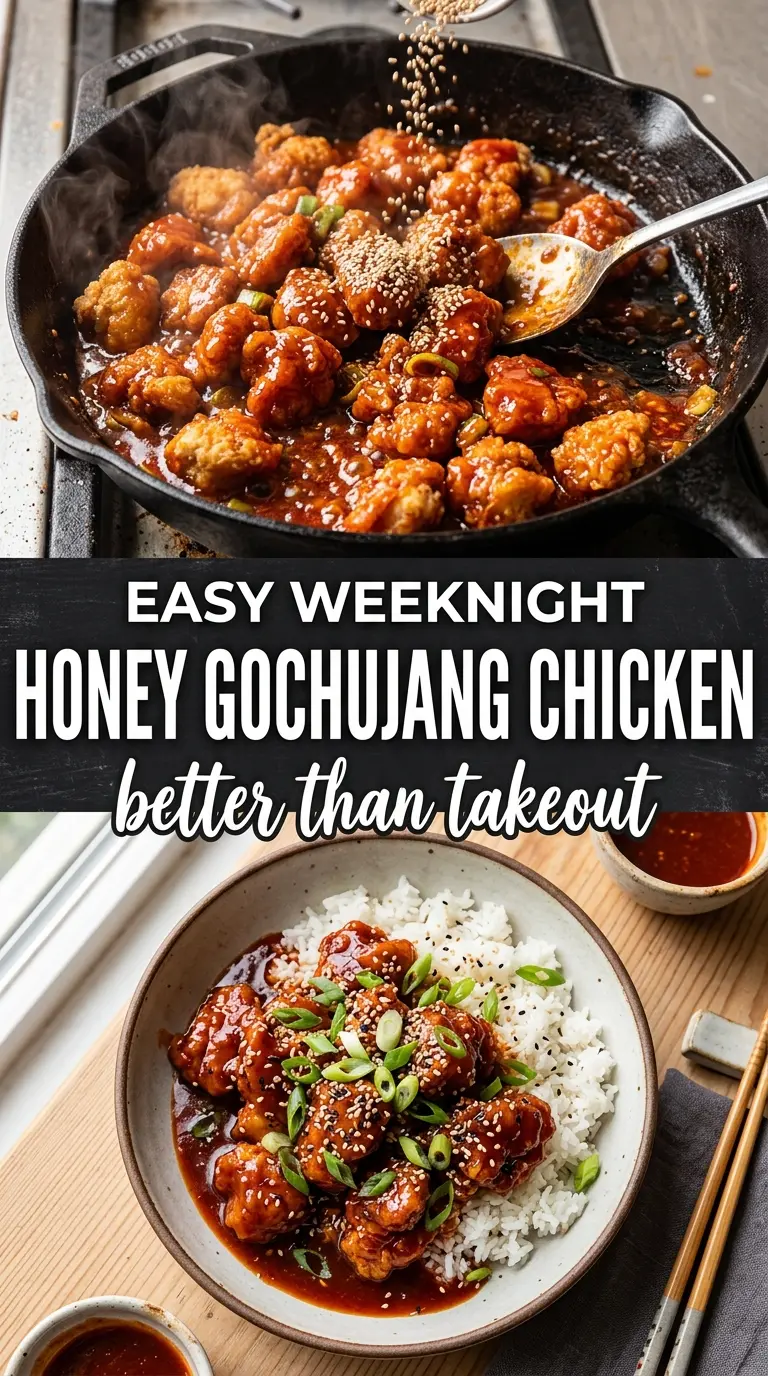
Heat the oil over medium-high until a pinch of cornstarch sizzles right away. Fry the chicken in batches and leave space around each piece so the edges can brown instead of steaming. Turn the pieces when the underside is deep golden and releases easily from the skillet; if it sticks, give it another minute.
Making the Glaze Tight and Glossy
Whisk the gochujang, honey, soy sauce, rice vinegar, and garlic in a small saucepan, then simmer just until the sauce thickens slightly and turns shiny. The garlic should smell fragrant, not raw, and the sauce should coat a spoon without feeling syrupy. If it gets too thick, a teaspoon of water loosens it fast.
Tossing Without Losing the Crunch
Add the fried chicken to the sauce and toss quickly, just until every piece is coated. Don’t let it sit in the pan after that, because the crust keeps softening as it absorbs the glaze. Get it onto the rice right away and finish with sesame seeds and scallions for contrast.
How to Adjust the Heat, Texture, or Dietary Needs
Make It Less Spicy Without Flattening the Sauce
Use a little less gochujang and add an extra teaspoon of honey. That keeps the glaze balanced and glossy while dialing back the heat, but don’t swap in sweet chili sauce if you want the same fermented depth.
Gluten-Free Version
Use a gluten-free gochujang and tamari instead of regular soy sauce. The chicken and cornstarch are already naturally gluten-free, so the main thing is checking the label on the paste, since some brands include wheat.
Baked Instead of Fried
Toss the cornstarch-coated chicken with a little oil, spread it on a hot sheet pan, and bake until browned and cooked through. You won’t get the same shattering crust, but you’ll still get a good texture and the sauce will carry the dish.
Storage and Reheating
- Refrigerator: Store leftovers in an airtight container for up to 3 days. The coating softens, but the flavor holds up well.
- Freezer: The sauced chicken freezes, but the crust won’t stay crisp. Freeze in a single layer first, then pack it into a container once solid.
- Reheating: Reheat in a skillet over medium heat or in a 400°F oven until hot. The microwave works in a pinch, but it makes the coating soft and the sauce loose.
The Things That Trip People Up With This Dish
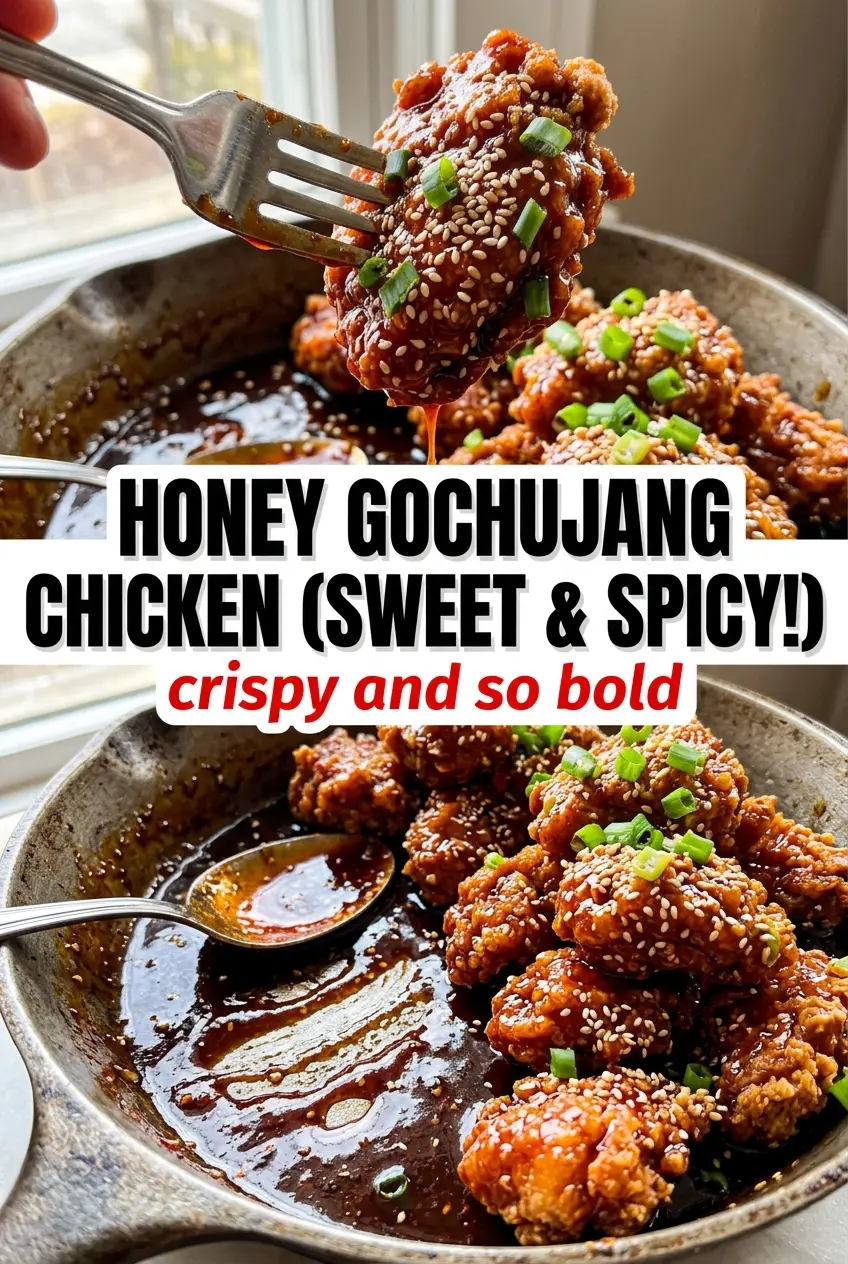
Honey Gochujang Chicken
Ingredients
Equipment
Method
- Toss the chicken pieces in cornstarch until evenly coated, shaking off excess for a dry, crunchy surface.
- Heat the vegetable oil in a large skillet over medium-high heat until shimmering, then fry the chicken in batches until golden and crispy, about 4–5 minutes per side, flipping once for even browning.
- Whisk together the gochujang, honey, soy sauce, rice vinegar, and garlic in a small saucepan until smooth and glossy.
- Simmer the sauce over medium heat for 2–3 minutes, stirring, until slightly thickened and able to coat the back of a spoon.
- Toss the crispy chicken in the sauce until fully coated so the glaze clings to the crunchy exterior.
- Garnish with sesame seeds and sliced scallions and serve immediately over rice for best crunch.