Roasted vegetable pizza earns its spot in the regular dinner rotation because the vegetables taste like themselves, not like toppings trying to hide under cheese. Roasting the zucchini, peppers, onion, and tomatoes first pulls out their moisture and concentrates the flavor, which means you get sweet edges, tender centers, and a crust that stays crisp instead of soggy. The balsamic drizzle at the end adds a sharp little finish that makes the whole pizza taste complete.
The trick is treating the vegetables like their own part of the recipe, not something you throw on raw and hope for the best. A hot oven and enough olive oil give you caramelization instead of steaming, and that pre-roast step is what keeps the finished pizza from turning limp in the middle. I also like using both mozzarella and parmesan here: one gives you the melt, the other gives you salt and depth.
Below, I’ve laid out the little details that matter most, from how to roast the vegetables evenly to the best way to keep the crust from going soft. There are a few easy variations too, including how to make it dairy-free without losing the same satisfying finish.
I roasted the vegetables first like you said and the pizza came out with a crisp bottom and sweet, caramelized toppings instead of a wet middle. The balsamic at the end made it taste like something from a good pizzeria.
Save this roasted vegetable pizza for the nights when you want crisp crust, caramelized vegetables, and a finished pie that tastes bakery-made.
The Vegetable Roast That Keeps Pizza From Going Soggy
The biggest mistake with vegetable pizza is piling raw vegetables on top of dough and hoping the oven will fix everything. It won’t. Zucchini, tomatoes, and onions all give off moisture as they cook, and that steam has nowhere to go once they’re sealed under cheese. Roasting them first changes the whole pizza: the water cooks off, the edges brown, and the flavor gets concentrated enough to stand up to the dough.
That first roast also gives you control over texture. You want the vegetables softened and caramelized, not collapsed into mush. If the pan looks crowded, use two sheets instead of one. Overcrowding traps steam, and steamed vegetables on pizza are the fastest way to lose that crisp bottom crust.
What Each Ingredient Is Doing in This Pizza

- Pizza dough — Homemade or store-bought both work here. Store-bought dough is fine if you let it sit at room temperature first so it stretches without snapping back; cold dough fights you and tears more easily.
- Zucchini, bell pepper, red onion, and cherry tomatoes — This mix gives you a good balance of sweetness, acidity, and texture. Slice everything in similar sizes so the vegetables finish roasting at the same pace, and halve the tomatoes so they blister instead of bursting all over the pan.
- Mozzarella and parmesan — Mozzarella gives you the melt, but parmesan keeps the flavor from going flat. If you use low-moisture mozzarella, the pizza holds together better; fresh mozzarella can work, but it needs extra draining or the center gets wet.
- Olive oil and garlic — The oil helps the vegetables brown and keeps the dough from baking up dry. The garlic should go in minced, not whole, so it perfumes the pizza without leaving sharp raw bites.
- Pizza sauce or marinara — Use a thicker sauce here. Thin sauce spreads too easily and adds more moisture than you want under roasted vegetables.
- Balsamic glaze and basil — These go on at the end for contrast. The glaze adds tangy sweetness, and basil gives the pizza a fresh finish that keeps it from tasting heavy.
How to Build the Pizza So the Crust Stays Crisp
Roasting the vegetables first
Toss the sliced vegetables with olive oil, salt, and pepper, then spread them out in a single layer on a baking sheet. They need space or they’ll steam instead of brown. Roast at 450°F until the edges look caramelized and the zucchini has softened but still holds its shape, about 15 to 18 minutes. If the tomatoes are collapsing before the peppers are tender, your pieces are cut too small.
Prepping the dough for a better bottom
Roll the dough on parchment so it stays easy to transfer, then brush the surface lightly with olive oil before the sauce goes on. That thin oil barrier helps protect the crust from the toppings above it. Keep the sauce layer modest; a heavy hand here is what turns a good pizza into a soft one. You want enough to coat, not enough to pool.
Assembling and baking for melt and color
Spread the sauce first, then scatter the roasted vegetables evenly so every slice gets a little of everything. Add the mozzarella and parmesan after the vegetables so the cheese can settle into the gaps and hold the toppings in place. Bake until the crust is deeply golden around the edges and the cheese is bubbling with browned spots, not just melted into a shiny layer. If the bottom needs more color, slide the pizza lower in the oven for the last few minutes.
Finishing with the right contrast
Add the basil and balsamic glaze after the pizza comes out of the oven. Basil wilts fast in the heat, and balsamic glaze can scorch if it bakes too long. The finishing drizzle should be light and uneven, not a full coating. That little hit of acid is what wakes up the roasted vegetables and keeps each bite from tasting too rich.
Three Ways to Make This Pizza Work for Your Kitchen
Make It Dairy-Free Without Losing the Finish
Use a good meltable dairy-free mozzarella and skip the parmesan, then finish with extra basil and a slightly heavier balsamic drizzle for contrast. The texture won’t be quite as stretchy, but the roasted vegetables and glaze still carry the pizza.
Add Protein Without Weighing Down the Crust
A few slices of cooked chicken, crumbled Italian sausage, or crispy prosciutto work well here, but add them sparingly. Too much protein crowds the vegetables and adds weight, which can soften the center of the pizza.
Use What’s in Season
Swap in mushrooms, eggplant, or squash for any of the vegetables, but roast them by water content, not by the clock. Mushrooms may need a little less time, while eggplant and squash need enough heat to soften and brown before they go on the pizza.
Use Gluten-Free Dough the Right Way
A gluten-free crust can work well, but it usually needs a hotter, well-preheated pan and a little extra baking time to firm up underneath. Bake it until the center feels set when you lift a corner with a spatula, not just until the cheese melts.
Storage and Reheating
- Refrigerator: Store leftover slices in an airtight container for up to 3 days. The crust softens a little, but the flavor stays good.
- Freezer: Freeze baked slices wrapped tightly, then placed in a freezer bag, for up to 2 months. Let them thaw in the fridge before reheating for the best texture.
- Reheating: Warm slices in a 375°F oven or toaster oven on a rack or baking sheet until the cheese softens and the bottom crisps back up. The microwave will make the crust chewy and the vegetables watery.
Answers to the Questions Worth Asking
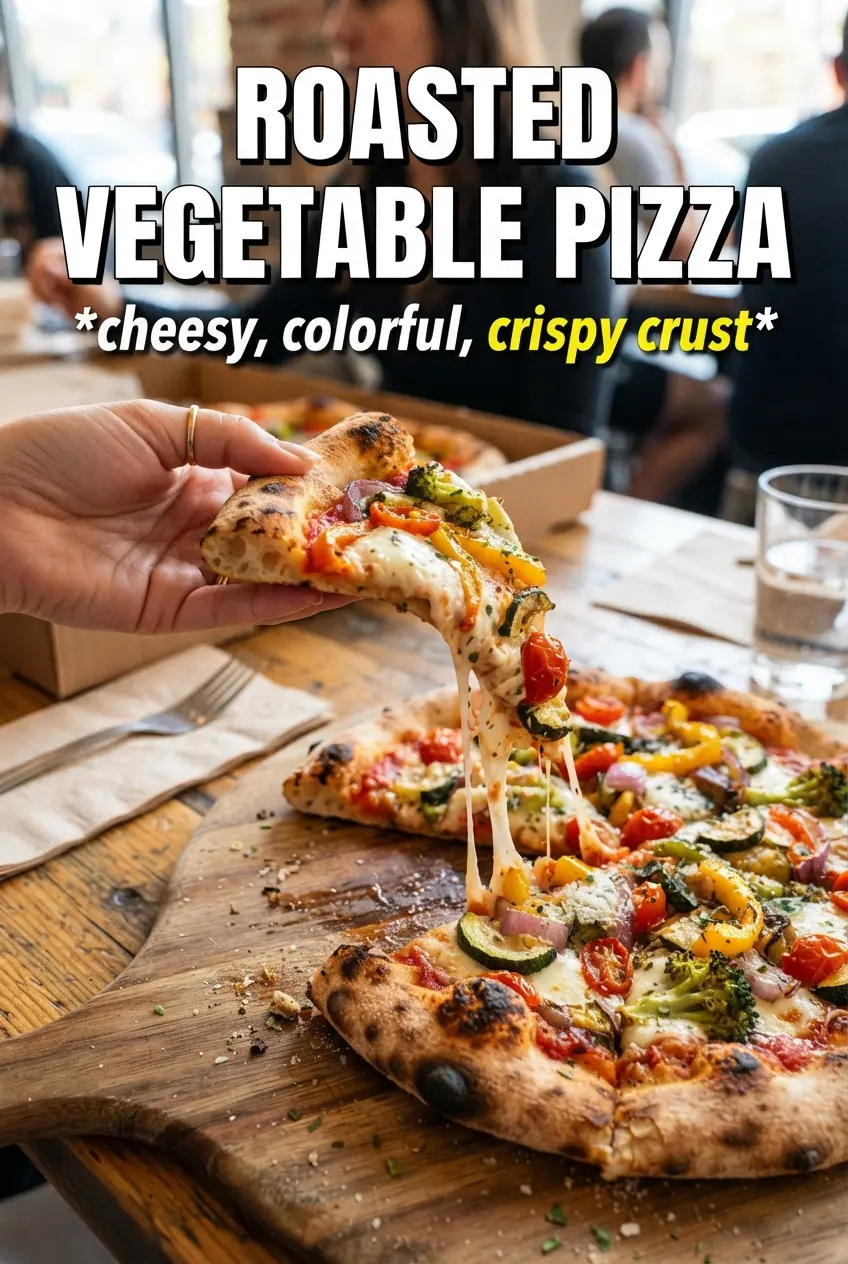
Roasted Vegetable Pizza
Ingredients
Equipment
Method
- Preheat the oven to 450F. Toss the zucchini, red bell pepper, red onion, and cherry tomatoes with 2 tablespoons olive oil, salt, and pepper.
- Spread the vegetables in a single layer on a sheet pan. Roast for 15-18 minutes until caramelized, stirring or turning once if needed for even browning.
- Roll out the pizza dough on a parchment-lined sheet. Brush the dough with the remaining olive oil.
- Spread the pizza sauce over the dough. Top with the roasted vegetables, sprinkle shredded mozzarella, and add the grated parmesan.
- Sprinkle Italian seasoning over the top. Bake at 450F for 12-15 minutes until the crust is golden and the cheese is bubbly.
- Let the pizza rest for 2-3 minutes so the cheese settles. Finish with fresh basil and drizzle with balsamic glaze.