Gluten-free chicken noodle soup should taste like the bowl you remember: clear golden broth, tender chicken, soft carrots, and noodles that hold together long enough to get from spoon to mouth without turning mushy. The difference between a decent pot and a great one usually comes down to the noodles and the timing. Get those two right, and this soup lands with the same comfort as the classic version.
I build the flavor in layers with onion, carrots, and celery first, then add the chicken and broth so the pot has time to turn savory before the noodles go in. That matters with gluten-free pasta because it keeps cooking fast even after the heat is off. Cook the chicken until it shreds easily, then add the pasta near the end and watch it closely.
Below you’ll find the small details that keep the broth clean and the noodles intact, plus a few swaps that work when you’re using what you have on hand.
The broth had that classic chicken noodle soup taste, and the gluten-free noodles held up better than I expected. I added the pasta at the end like you said, and it was still perfect when we ate it 20 minutes later.
Love this gluten-free chicken noodle soup? Save it to Pinterest for a cozy bowl with tender chicken, clear broth, and noodles that stay intact.
The Trick to Keeping Gluten-Free Noodles from Turning to Mush
Gluten-free pasta doesn’t forgive the way regular egg noodles do. Once it sits in hot broth, it keeps softening fast, and that can turn a good soup into a thick, starchy pot before you even get to the table. The fix is simple: cook the chicken first, pull it out, then add the pasta at the very end and stop as soon as it’s tender.
The other detail that matters is the broth. A certified gluten-free broth keeps the flavor clean and avoids hidden wheat from bouillon or boxed stock. If your soup has tasted flat in the past, it was probably because the noodles absorbed too much liquid before the broth had a chance to season properly.
What Each Ingredient Is Actually Doing in This Bowl
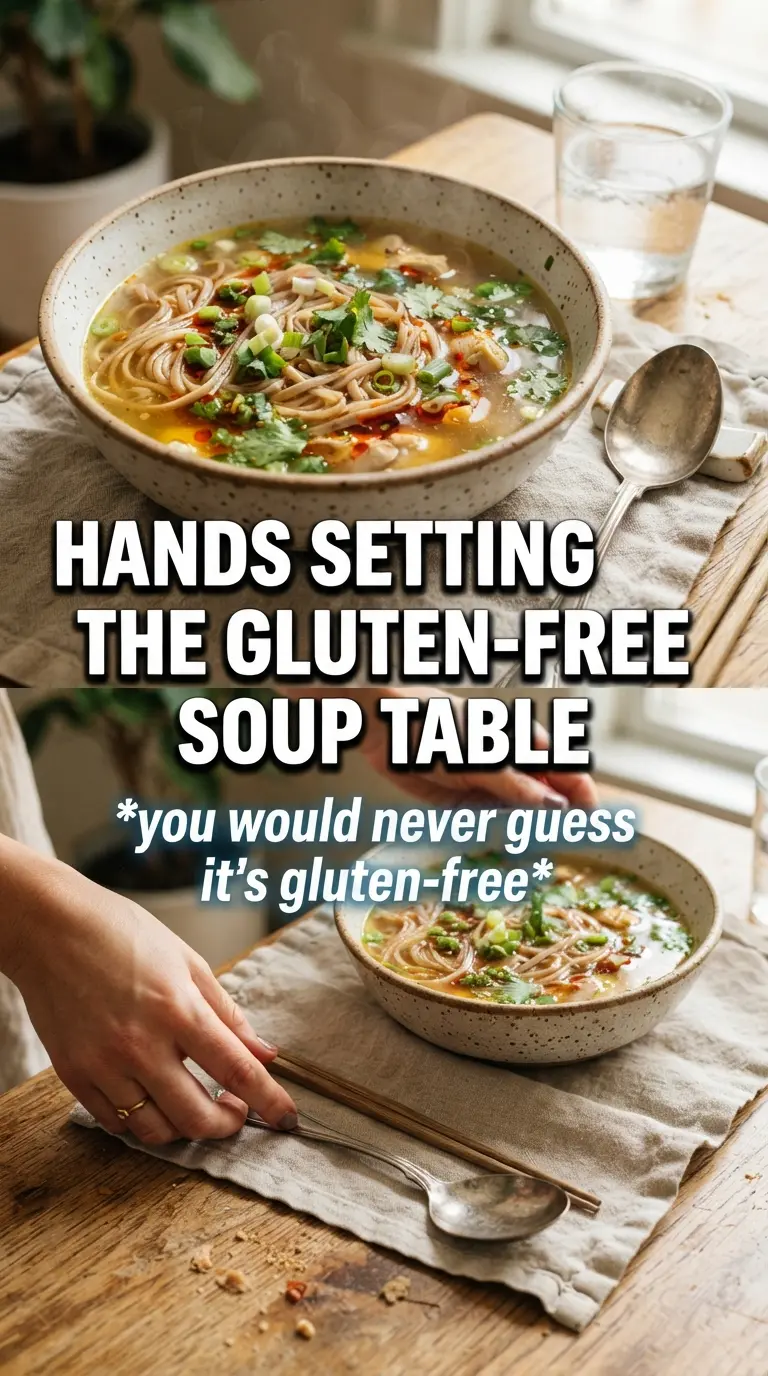
- Chicken breast — Boneless breast cooks quickly and shreds into clean pieces that fit the classic soup texture. Thighs work too if you want a richer result, but they’ll bring a darker broth and a slightly softer bite.
- Certified gluten-free broth — This is the backbone of the soup, so use one that tastes good on its own. If yours is on the salty side, hold back on seasoning until the end and adjust after the noodles are in.
- Brown rice rotini, GF egg noodles, or rice noodles — This is the ingredient that changes the whole experience. Brown rice pasta stays pleasantly firm if you catch it in time, while rice noodles soften faster and need more careful watching.
- Carrots, celery, onion, and garlic — This is the aromatic base that gives the broth body before the chicken even goes in. Dice the onion small and slice the vegetables evenly so they soften at the same pace instead of leaving crunchy bits behind.
- Olive oil — Just enough to sweat the vegetables and start the flavor in the pot. Butter works too, but oil keeps the broth lighter and more classic-tasting.
- Dried thyme and dried parsley — These herbs give the soup that familiar chicken-noodle flavor without overpowering the broth. Fresh thyme can replace dried if that’s what you have; use about three times as much and strip the leaves before adding them.
Building the Soup in the Right Order
Softening the Vegetables First
Warm the olive oil in a large pot, then add the onion, carrots, and celery. Cook them until the onion turns translucent and the carrots start to lose their raw edge, about five minutes. You’re not looking for color here. If the vegetables brown, the broth can pick up a roasted note instead of staying clean and mellow.
Letting the Chicken Poach in the Broth
Stir in the garlic for about a minute, just until it smells sweet and sharp. Then pour in the broth, add the herbs and chicken, and bring the pot to a boil before lowering it to a steady simmer. If the heat stays too high, the chicken can turn stringy on the outside before the inside is cooked through. Gentle simmering gives you tender shreds instead of dry chunks.
Shredding Before the Noodles Go In
Pull the chicken out once it’s cooked through and shreds easily with two forks. Return the shredded meat to the pot, then add the gluten-free pasta and cook it only until just tender. Start checking a minute or two early, because gluten-free pasta can go from firm to swollen fast. As soon as the noodles are done, season with salt and pepper and stop the cooking.
How to Adapt This for Different Needs
Use Chicken Thighs for a Richer Bowl
Thighs bring more fat and a deeper chicken flavor, and they stay tender even if you simmer a little longer than planned. The broth will taste fuller, though it won’t look quite as pale and classic as the breast version.
Make It Dairy-Free Without Changing the Method
This soup is naturally dairy-free as written, so there’s nothing to remove. That’s one reason it’s easy to serve a mixed crowd without adjusting the pot for everyone.
Swap the Pasta Based on What You Want the Texture to Be
Brown rice rotini holds up best for leftovers, while rice noodles give you a softer, more delicate bowl right away. If you use rice noodles, undercook them by a minute and pull the pot off the heat before they go too far.
Storage and Reheating
- Refrigerator: Store for up to 4 days. The noodles will keep absorbing broth, so expect the soup to thicken.
- Freezer: The soup freezes better without noodles. Freeze the broth, chicken, and vegetables, then cook fresh pasta when you reheat.
- Reheating: Warm it gently over low to medium heat until hot. If it looks too thick, add a splash of broth or water before it comes to a boil, because boiling leftovers hard can turn the noodles mealy.
Answers to the Questions Worth Asking
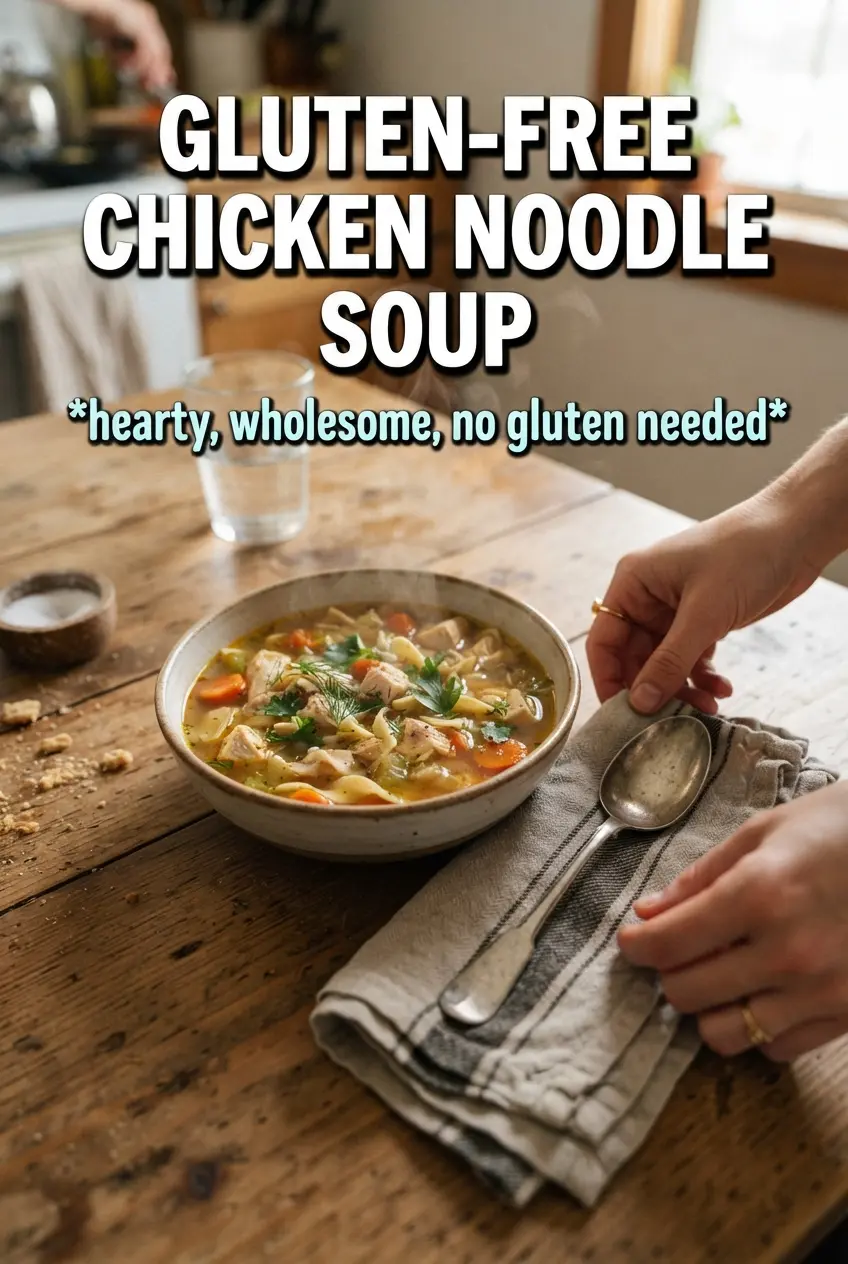
Gluten-Free Chicken Noodle Soup
Ingredients
Equipment
Method
- Heat the olive oil in a large pot over medium heat. Add the onion, carrots, and celery and sauté for 5 minutes, stirring occasionally until slightly softened and fragrant.
- Add the garlic and cook for 1 minute at the same medium heat, stirring to avoid browning. Stir in the chicken broth (certified GF), dried thyme, dried parsley, garlic powder, and chicken.
- Bring the pot to a boil, then reduce to a simmer (gentle bubbles). Simmer for 18-20 minutes until the chicken is cooked through.
- Remove the chicken from the pot and shred it. Return the shredded chicken to the broth.
- Add the gluten-free pasta to the pot. Cook according to package instructions, checking frequently because gluten-free pasta can overcook.
- Season the soup generously with salt and pepper to taste. Garnish with fresh parsley and serve hot.