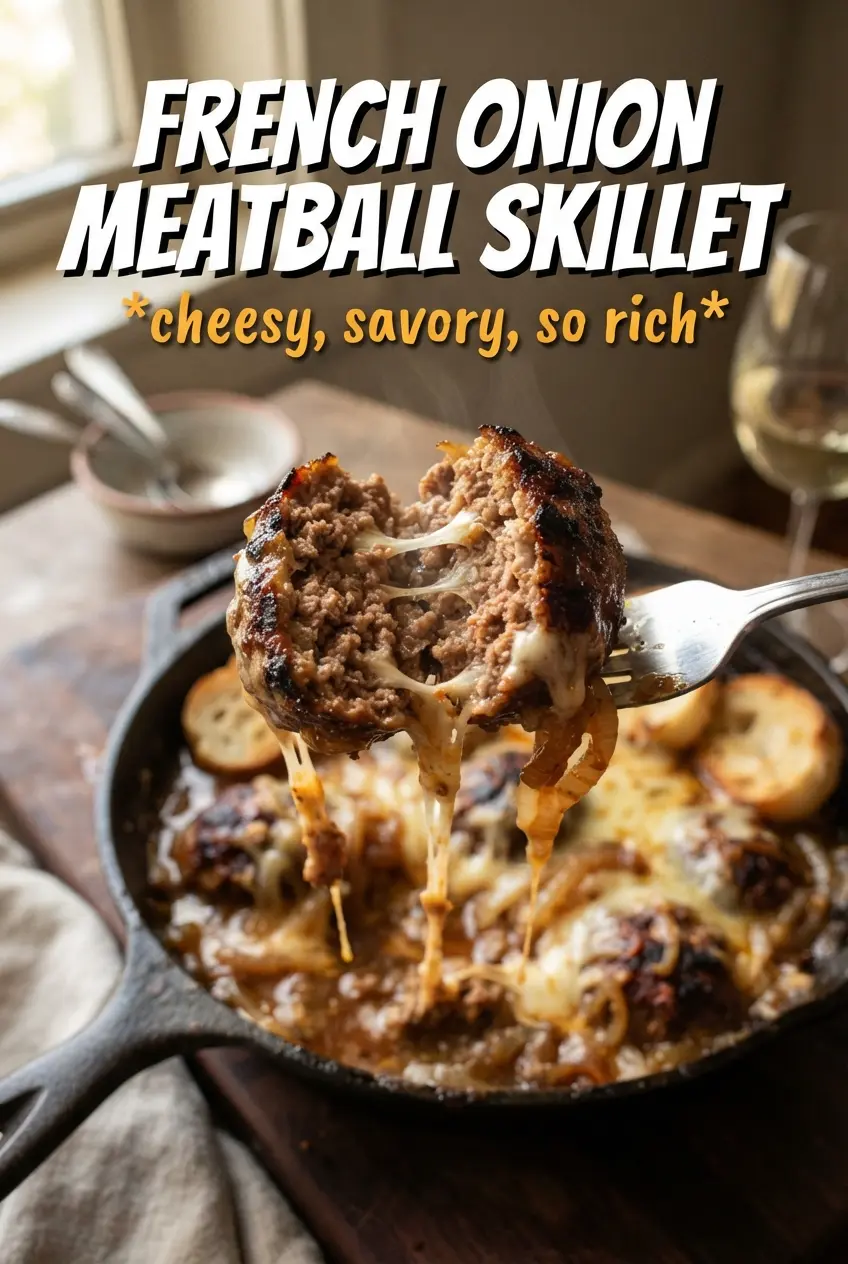
Deeply caramelized onions, juicy meatballs, and a blanket of bubbling Gruyere turn this skillet into the kind of dinner that feels like a French onion soup and a hearty main course got together on purpose. The onions cook down into a sweet, savory broth that clings to the meatballs instead of sitting thinly at the bottom of the pan, and the broiled cheese pulls everything into one rich, spoonable dish.
The key is patience with the onions and confidence with the browning. If you rush the onions, the sauce tastes flat; if you leave them alone long enough to turn soft, jammy, and deeply amber, they give the whole skillet its character. Browning the meatballs first adds a crust and leaves browned bits behind for the onion base to pick up, which is where a lot of the flavor lives.
Below, I’ll walk you through the exact cue for stopping the onions at the right color, how to keep the broth balanced, and what to do if you want to make the skillet ahead for an easier dinner night.
The onions got that deep sweet edge without turning mushy, and the Gruyere broiled into the best cheesy top. I served it with crusty bread and there wasn’t a drop of sauce left in the pan.
Love the bubbling Gruyere and caramelized onion broth in this French Onion Meatball Skillet? Save it to Pinterest for a cozy one-pan dinner with real depth.
The Reason This Skillet Tastes Like French Onion Soup With Enough Substance for Dinner
French onion flavor works because it’s built in layers, not dumped into a pan all at once. The onions need time to give up their water, then slowly brown until the edges turn deep amber and sweet. That slow cooking is what makes the broth taste rounded instead of sharp. If the onions still look pale, the skillet will taste more like oniony broth than actual French onion.
The meatballs matter too. Browning them before they simmer gives you a crust that holds up in the sauce, and it leaves browned bits in the pan that the wine loosens into the broth. Those bits are not a mess to clean. They’re the base of the dish.
- Yellow onions — These are the backbone of the skillet. They caramelize with the best balance of sweetness and savory depth, which is why I’d use them here instead of red onions. If you only have sweet onions, they’ll work, but the final sauce will lean sweeter.
- Dry white wine — This adds the bright, slightly sharp note that keeps the sauce from tasting heavy. A dry Sauvignon Blanc or Pinot Grigio works well. If you need to skip the wine, use extra beef broth plus a small splash of vinegar at the end for some of that lift.
- Gruyere — Gruyere melts smoothly and gives you that nutty, French onion soup finish. Swiss cheese is the closest backup, but it won’t taste quite as layered. Pre-shredded cheese will melt, though freshly shredded gives you a cleaner top.
- Worcestershire — This is doing quiet work in both the meatballs and the onion sauce. It deepens the beefiness and adds a little fermented tang that helps the whole dish taste more complete.
What Each Ingredient Is Actually Doing in This Recipe

- Primary ingredient (the star) — Quality matters most. Choose the best you can find.
- Cooking medium (oil, butter, or broth) — This carries flavors and prevents dryness.
- Seasonings (salt, pepper, spices, herbs) — Layer flavors so nothing overpowers. Build depth gradually.
- Aromatics (garlic, onion, herbs) — Cook with fat to bloom flavors. Become the foundation.
- Supporting ingredients — Complement the main ingredient without overpowering it.
- Sauce or liquid (if applicable) — Brings flavors together. Balance richness with acid.
- Acid (lemon, vinegar, wine, or other) — Brightens and prevents flat-tasting results.
- Final finish (garnish, glaze, or sauce) — Prevents one-dimensional taste and adds visual appeal.
How to Build the Onion Base Without Rushing the Good Part
Browning the Meatballs First
Mix the meatball ingredients just until combined, then roll them into even portions so they brown at the same rate. Set them in the hot butter and let the bottoms sear before turning them. You want color on the outside, not full cooking through; they’ll finish later in the sauce. If the pan looks crowded, work in batches so the meatballs brown instead of steaming.
Caramelizing the Onions Slowly
Add the sliced onions to the same skillet and keep the heat around medium-low. Stir often enough to keep the edges from scorching, but not so much that they never get a chance to sit against the pan and brown. After 30 to 35 minutes, they should look soft, glossy, and a deep golden brown with a little jammy texture. If they start sticking too hard before they color, add a splash of water and keep going; that just means the moisture is moving out of the onions.
Building the Brothy Sauce
Stir in the garlic and thyme for the last minute, then pour in the wine to loosen the browned bits. Let it bubble until the sharp alcohol smell fades. Add the broth and Worcestershire, then taste the sauce before the meatballs go back in. If it seems flat, it usually needs salt, not more cheese later.
Finishing Under the Broiler
Nestle the meatballs into the onions and simmer until they’re cooked through and the sauce has picked up more body. Scatter the Gruyere across the top in an even layer, then broil just until the cheese is melted, blistered in spots, and turning golden at the edges. Don’t walk away here. Broilers move fast, and cheese goes from bubbling to burnt in a blink.
How to Adapt This French Onion Meatball Skillet for Different Kitchens
Gluten-Free Version With the Same Rich Sauce
Swap the breadcrumbs for a gluten-free breadcrumb or crushed gluten-free crackers. The meatballs will still hold together well, and the sauce doesn’t need any flour at all, so the rest of the recipe stays exactly the same. Just check your Worcestershire if you’re cooking strictly gluten-free, since some brands contain malt vinegar.
Dairy-Free Option That Still Gets a Good Finish
Use olive oil instead of butter and skip the Gruyere, then finish with a handful of dairy-free mozzarella-style shreds if you want a top. The sauce will still have plenty of depth from the onions, wine, and Worcestershire, but it won’t have that classic creamy, nutty finish from the cheese. A little extra thyme helps replace some of the richness you lose.
Making It Ahead for an Easier Night
You can brown the meatballs and caramelize the onions a day in advance, then store them separately. Reheat the onions with the broth and wine before adding the meatballs, so the sauce doesn’t seize up in the fridge. Hold the cheese until the end, because broiling works best when the skillet is hot and the top is fresh.
Storage and Reheating
- Refrigerator: Store leftovers in a covered container for up to 4 days. The onions will thicken a little as they chill, which is normal.
- Freezer: Freeze without the cheese topping for best texture. The meatballs and onion sauce freeze well for up to 2 months; thaw overnight before reheating.
- Reheating: Warm gently on the stove over low heat with a splash of broth to loosen the sauce. If you reheat too hard, the meatballs can tighten up and the cheese can turn oily when added back in.
Questions I Get Asked About This Recipe
French Onion Meatball Skillet
Ingredients
Equipment
Method
- In a mixing bowl, combine ground beef, breadcrumbs, egg, Worcestershire, garlic powder, and salt and pepper, then mix until just combined and roll into meatballs. Brown the meatballs in 1–2 batches in butter in a oven-safe skillet over medium-high heat, turning until golden on all sides.
- Once browned, remove the meatballs to a plate while you cook the onions.
- In the same skillet, cook the thinly sliced onions over medium-low heat, stirring occasionally, for 30-35 minutes until deeply caramelized. Add the minced garlic and fresh thyme during the last 2-3 minutes so they soften and become fragrant.
- Pour in the dry white wine to deglaze the pan, scraping up browned bits from the bottom. Add beef broth and Worcestershire, then bring to a gentle simmer.
- Nestle the meatballs into the caramelized onion sauce, making sure they’re partially submerged, then simmer for 10 minutes to heat through and meld flavors. Season with salt and pepper to taste if needed.
- Scatter the shredded Gruyère over the entire surface and broil for 3-5 minutes until golden and bubbly. Let it stand for 2-3 minutes before serving so the sauce thickens slightly.