Rotisserie chicken noodle soup earns its place in the weeknight rotation because it tastes like it simmered all afternoon, but it comes together fast enough for a tired Tuesday. The broth gets depth from the chicken you already bought cooked, the vegetables soften just enough to taste sweet, and the egg noodles turn the whole pot into something comforting without needing a long list of ingredients.
The trick is in the order. Sautéing the onion, carrots, and celery first gives the broth a stronger base, and adding the noodles near the end keeps them from going mushy before you sit down. Pulling the meat from a rotisserie chicken also means you get both the flavor and the convenience of roasted poultry without waiting on raw chicken to cook through.
Below, you’ll find the small details that keep this soup from tasting flat, plus a few easy ways to adapt it when you want to stretch what’s already in the fridge.
The broth tasted like it had been simmering for hours, and the noodles stayed tender instead of bloated. I added a little extra parsley at the end and my kids finished every bowl.
Save this rotisserie chicken noodle soup for the nights when you want a fast, cozy bowl with tender noodles and a broth that tastes homemade.
The Broth Only Tastes Rich If You Build It in the Right Order
Rotisserie chicken gives you a head start, but it does not automatically give you a good soup. If the vegetables go straight into plain broth, the flavor stays thin and the whole bowl tastes like it was assembled instead of cooked. The extra few minutes of sautéing do the heavy lifting here, especially for the onion, carrot, and celery mixture.
The other place people stumble is with the noodles. Egg noodles drink up broth as they sit, so if they go in too early, the soup gets stodgy before the last bowl is served. Add them only after the chicken has had a chance to warm through, then stop cooking the moment they turn tender.
What Each Ingredient Is Actually Doing in This Soup

- Rotisserie chicken — This is the shortcut that makes the soup fast without tasting rushed. Dark and white meat both work, but pull off the skin first so the broth stays clean instead of greasy. If you only have leftover cooked chicken, use that in the same amount.
- Chicken broth — The broth carries the whole soup, so use one you’d happily drink on its own. A good store-bought broth is fine here, but if yours is low-sodium, expect to season more aggressively at the end. That final salt check matters because rotisserie chicken can vary a lot in saltiness.
- Carrots, celery, and onion — This is the classic base for a reason. The onion softens into sweetness, the carrots add gentle body, and the celery keeps the broth tasting savory instead of flat. Dice everything evenly so it softens at the same pace.
- Egg noodles — These cook quickly and give the soup that familiar chicken-noodle texture. If you substitute another pasta, choose something small and shorten the cooking time carefully. Wide noodles or long cook-time pasta can throw off the balance fast.
- Dried thyme and parsley — Thyme gives the broth a woodsy note, while parsley keeps it from tasting heavy. Fresh herbs are nice for garnish, but the dried herbs do the work inside the pot. Don’t skip the garnish if you have it; that fresh finish makes the soup taste brighter.
The Fast Simmer That Keeps the Noodles Tender
Softening the vegetables first
Start by heating the olive oil or butter in a large pot, then cook the onion, carrots, and celery until the onion turns translucent and the carrots start to lose their raw edge. You’re not looking for color here, just a little softness and a sweeter smell coming off the pot. If you rush this part, the broth will taste flat no matter how good the chicken is.
Building the broth
Add the garlic and cook it for about a minute, just until it smells fragrant. Then pour in the broth and stir in the thyme, dried parsley, and garlic powder. Bring it to a boil, then immediately lower it to a steady simmer; a hard boil can make the vegetables break apart and muddy the broth.
Finishing with chicken and noodles
Stir in the shredded chicken first so it can warm through before the noodles go in. Add the egg noodles and cook just until they’re tender with a little bite left in the center. If the pot sits on the heat too long after that, the noodles keep absorbing liquid, so serve it as soon as the texture is right.
How to Adapt This for a Different Pantry
Gluten-Free with the Right Pasta Swap
Use gluten-free egg noodles or another small gluten-free pasta, but cook it separately if you want the best texture. Gluten-free pasta can turn soft faster than wheat noodles, and it often clouds the broth a little if it sits too long. Adding it to each bowl keeps the soup cleaner and lets leftovers stay better.
Dairy-Free and Still Rich-Tasting
Choose olive oil instead of butter, and you’ll still get a full, savory broth. The soup doesn’t depend on dairy for creaminess, so nothing important is lost here. A little extra black pepper at the end helps replace the roundness butter would normally bring.
Extra Veggies When You Want to Stretch It
A handful of frozen peas, a few chopped spinach leaves, or diced zucchini can go in during the last few minutes. Add tender vegetables near the end so they stay bright instead of collapsing into the broth. This is a good way to use what’s in the fridge without changing the soup’s structure.
Storage and Reheating
- Refrigerator: 3 to 4 days. The noodles will keep absorbing broth, so the soup gets thicker by the next day.
- Freezer: Freezes best without the noodles. If you want to freeze it, leave the pasta out and add freshly cooked noodles when you reheat.
- Reheating: Warm it gently on the stove over medium-low heat. If the soup has thickened, add a splash of broth or water before reheating so the noodles don’t turn soft and swollen.
Questions I Get Asked About This Recipe
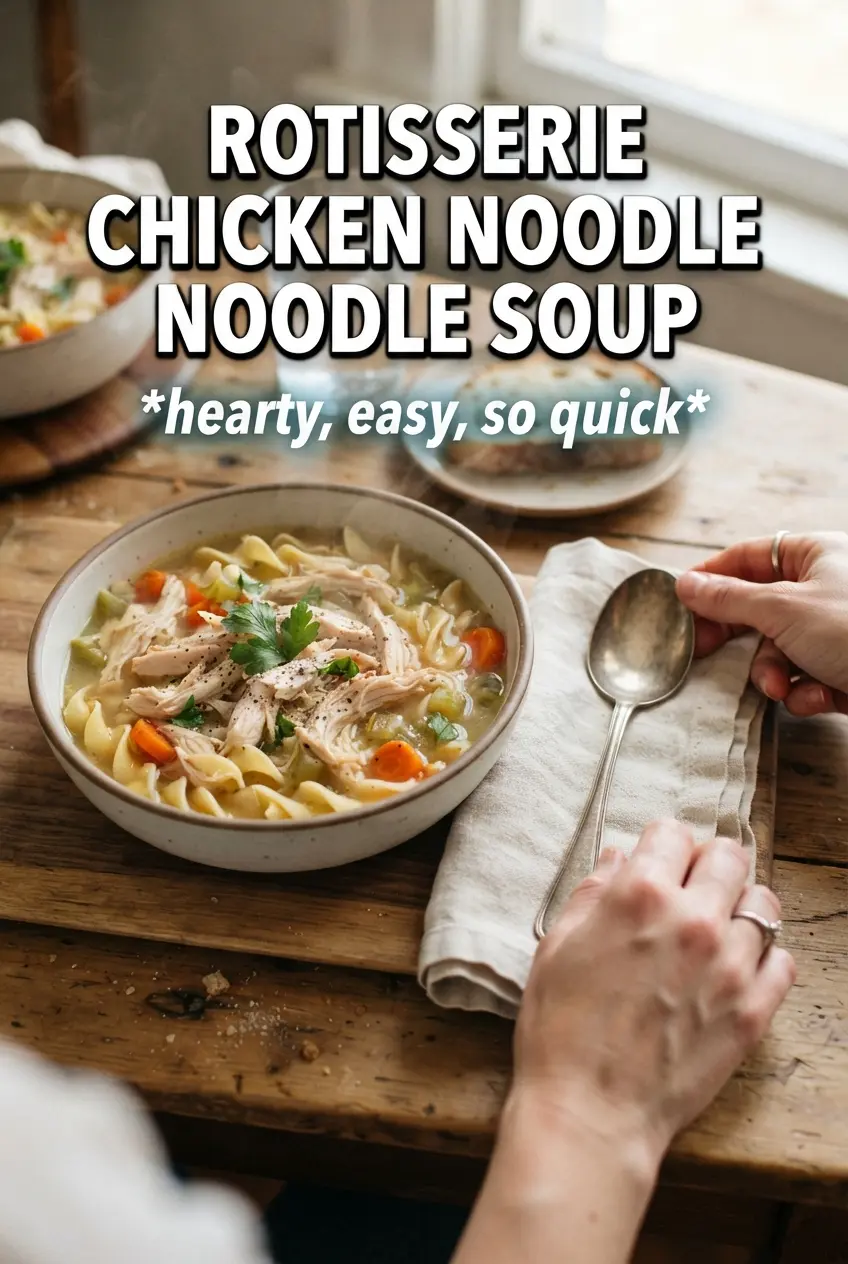
Rotisserie Chicken Noodle Soup
Ingredients
Equipment
Method
- Heat the olive oil or butter in a large pot over medium heat, then sauté the onion, carrots, and celery for 5 minutes, stirring until they start to soften and smell fragrant.
- Add the garlic and cook for 1 minute, scraping the bottom of the pot so it doesn’t stick, then pour in the chicken broth.
- Stir in the dried thyme, dried parsley, and garlic powder, then bring the soup to a boil with active bubbling across the surface.
- Add the rotisserie chicken and stir until it’s warmed through and evenly distributed in the broth.
- Simmer for 10 minutes so the flavors meld, watching for gentle bubbles rather than a hard boil.
- Add the egg noodles and cook for 6–8 minutes until tender, stirring occasionally to prevent sticking.
- Season generously with salt and pepper to taste, then garnish with fresh parsley for a fresh green finish just before serving.