Creamy Parmesan Chicken Noodle Soup lands somewhere between a classic chicken noodle and a silky cream soup, and that’s exactly why it earns a permanent place in the rotation. The broth stays light enough to feel like soup, but the parmesan and cream give it a rich, velvety finish that clings to the noodles instead of sliding right off them. Every spoonful feels comforting without turning heavy.
The key is building the base in layers. The vegetables soften first, the flour cooks out for a minute or two so the broth doesn’t taste raw, and the parmesan goes in at the end over lower heat so it melts into the soup instead of turning grainy. Freshly grated parmesan matters here because pre-shredded cheese is coated to prevent clumping, and that coating can work against you in a cream soup.
Below you’ll find the small details that make this soup dependable: when to add the noodles so they stay tender, how to keep the cream from splitting, and the easiest way to adjust the thickness if you want it a little more brothy or a little more substantial.
The parmesan melted in smooth and the broth turned silky without getting too thick. I added the noodles at the end like you said and they stayed perfectly tender instead of mushy by dinner.
Love a creamy soup with tender noodles and real parmesan depth? Save this Chicken Noodle Soup for the night you want comfort that feels a little more special.
The Reason the Soup Stays Creamy Instead of Turning Heavy
The biggest mistake in cream soups is rushing the dairy and cheese. If the broth is boiling hard when the cream and parmesan go in, the soup can turn greasy or grainy fast. This version stays smooth because the flour is cooked into the butter first, which gives the broth a little body before the cream even shows up.
There’s also a timing detail that matters more than people think: the noodles go in after the cream, not before. Egg noodles drink up liquid fast, and if they sit in the pot too long, they keep soaking until the soup turns into a thick casserole. Cook them until they’re just tender, then get the heat down and finish with parmesan and spinach.
- Butter and flour — This is the quick roux that keeps the soup from feeling thin. Cook it long enough to lose the raw flour taste, but not so long that it browns.
- Freshly grated parmesan — This is what gives the broth its savory depth. Pre-grated cheese can work in a pinch, but freshly grated melts more smoothly and tastes cleaner.
- Heavy cream — Use the real thing here. Half-and-half will work if that’s what you have, but the soup will be lighter and a little less plush.
- Egg noodles — These thicken the soup as they cook, which is part of the charm. If you want leftovers to hold up better, cook them just shy of done.
What Each Ingredient Is Doing in the Pot

The vegetables build the backbone of the soup. Onion, carrots, and celery soften in butter so they taste sweet instead of sharp, and the garlic only needs a minute because burnt garlic will take over the whole pot.
The chicken breast cooks directly in the broth, which keeps the method simple and lets it stay juicy as long as you don’t boil it hard. Dicing it before it goes in helps it cook fast and evenly. Spinach is best added at the very end because it only needs a minute or two to wilt, and any longer turns it dark and tired.
- Chicken breast — Dicing it before cooking helps it stay tender and cook through in the same time it takes the noodles to finish. Thighs work too if you want a richer, more forgiving result.
- Chicken broth — Use one that tastes good on its own, because it’s the main flavor base. If yours is very salty, wait to season until the end.
- Heavy cream — Add it after the chicken is cooked and the heat is lowered to a gentle simmer. High heat is the fastest way to break a cream soup.
- Spinach — Baby spinach is the easiest choice because it wilts quickly and disappears into the soup without getting stringy.
- Nutmeg — Just a small amount rounds out the cream and parmesan. It shouldn’t taste like dessert; it should quietly make the soup taste fuller.
Building the Soup in the Right Order
Softening the Vegetables First
Melt the butter in a large pot and cook the onion, carrots, and celery until the onion turns translucent and the carrots start to lose their raw edge. You want gentle sizzling, not browning. If the pot runs too hot, the butter can scorch before the vegetables soften, and the base will taste harsh instead of sweet.
Cooking Out the Flour
Once the garlic goes in for a minute, stir in the flour and keep it moving for 1 to 2 minutes. The mixture should look pasty and coat the vegetables. That short cook time matters because raw flour can make the broth taste dusty, but if you brown it too much, the soup loses its pale, creamy look.
Simmering the Chicken and Broth
Pour in the broth gradually while whisking so the flour dissolves cleanly, then add the chicken and Italian seasoning. Let the soup simmer, not boil, until the chicken is cooked through. A hard boil will tighten the chicken and make the broth look cloudy and rough around the edges.
Finishing with Cream, Noodles, and Cheese
Stir in the cream and bring the soup back to a very gentle simmer before adding the egg noodles. Cook them until just tender, then lower the heat and stir in 1 cup of parmesan until it melts fully. Add the spinach and nutmeg at the end, then season with salt and pepper after tasting, because the parmesan can change how salty the soup feels.
How to Adapt This for a Different Pantry or a Different Bowl
Dairy-Free Version
Use a full-bodied unsweetened oat or cashew cream in place of the heavy cream, and swap the parmesan for a dairy-free parmesan-style alternative. The soup will still be creamy, but it won’t have the same savory sharpness, so taste and season a little more carefully at the end.
Gluten-Free Swap
Skip the flour and use a cornstarch slurry instead: mix 2 tablespoons cornstarch with a splash of cold broth, then stir it into the simmering soup before the cream goes in. Use gluten-free noodles if needed, but watch them closely because they can go from tender to soft fast.
Make It Heartier
Add an extra cup of broth and another handful of spinach if you want a soup that eats more like a full meal. You can also stir in a little more parmesan at the end for a thicker finish, but do it off the heat so the cheese melts smoothly.
Using Rotisserie Chicken
If you want to shorten the cook time, skip simmering raw chicken and stir in shredded cooked chicken after the noodles are tender. The soup will be faster, but it loses a little of the gentle chicken flavor that comes from cooking the meat right in the broth.
Storage and Reheating
- Refrigerator: Store up to 4 days. The noodles will keep soaking up broth, so expect the soup to thicken.
- Freezer: It freezes, but the cream and noodles won’t be as nice after thawing. For best results, freeze the soup before adding noodles and cream, then finish those fresh when you reheat.
- Reheating: Warm it gently over low heat on the stove with a splash of broth or water. Don’t let it boil, or the cream can separate and the noodles can turn soft and bloated.
Answers to the Questions Worth Asking
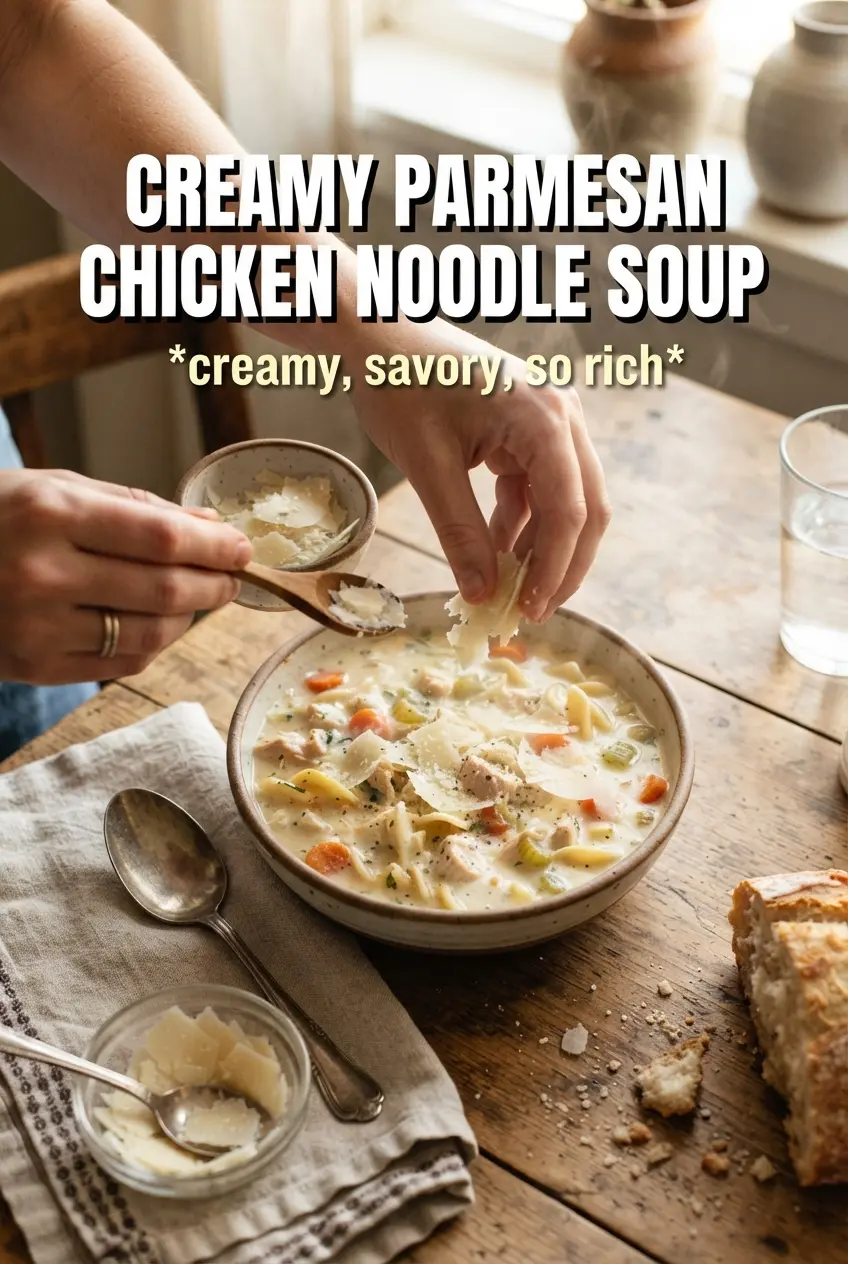
Creamy Parmesan Chicken Noodle Soup
Ingredients
Equipment
Method
- Melt the butter in a large pot over medium heat, then sauté the onion, carrots, and celery for 5 minutes until softened and fragrant.
- Add the garlic and cook for 1 minute, then whisk in the flour and cook for 1–2 minutes to remove the raw flour taste.
- Gradually pour in the chicken broth while whisking, then add the chicken and Italian seasoning.
- Simmer for 15 minutes until the chicken is cooked through and no longer pink in the center.
- Stir in the heavy cream and bring to a gentle simmer, then add the egg noodles.
- Cook for 6–8 minutes until the noodles are tender, stirring occasionally so they don’t stick.
- Reduce the heat and stir in 1 cup of the parmesan until fully melted and smooth.
- Add the baby spinach and cook for 2 minutes until wilted.
- Stir in the nutmeg, then season with salt and pepper to taste.
- Serve hot with the remaining parmesan sprinkled on top.