Rotisserie chicken noodle soup turns leftover chicken into a bowl that tastes like you started from scratch, but without the long simmer or extra work. The broth stays light and savory, the noodles cook right in the pot, and the shredded chicken soaks up just enough flavor to taste like it belongs there. It’s the kind of dinner that quietly fixes the day.
This version works because it leans on the chicken you already have and builds the soup in layers. The vegetables soften first so they can give the broth a little sweetness, then the dried herbs bloom in the hot liquid before the noodles go in. The chicken gets added near the end so it stays tender instead of stringy and tired. A squeeze of lemon at the finish wakes up the whole pot and keeps the broth from tasting flat.
Below, I’ll walk through the one timing detail that matters most, the ingredient swaps that still keep the soup balanced, and the storage note that helps you reheat it without turning the noodles mushy.
The broth tasted like it had simmered all afternoon, but the chicken stayed juicy because I added it at the very end. The lemon at the finish made the whole pot taste brighter.
Save this leftover rotisserie chicken noodle soup for the nights when you need a fast, brothy dinner that still tastes homemade.
The Shortcut That Keeps Rotisserie Chicken Tender, Not Stringy
The biggest mistake with leftover chicken soup is letting the chicken simmer too long. Rotisserie chicken is already cooked, so it doesn’t need a long bath in the broth. If it stays on the heat while the noodles finish, the meat dries out and starts tasting shredded in the wrong way — thin, chewy, and a little tired.
The better move is to let the broth and vegetables do the early work, then add the chicken only after the noodles are almost done. That gives the chicken just enough time to warm through and soak up the broth without losing its texture. The lemon at the end matters for the same reason: it lifts the soup after the noodles and chicken have softened the flavor.
What Each Ingredient Is Actually Doing in This Bowl
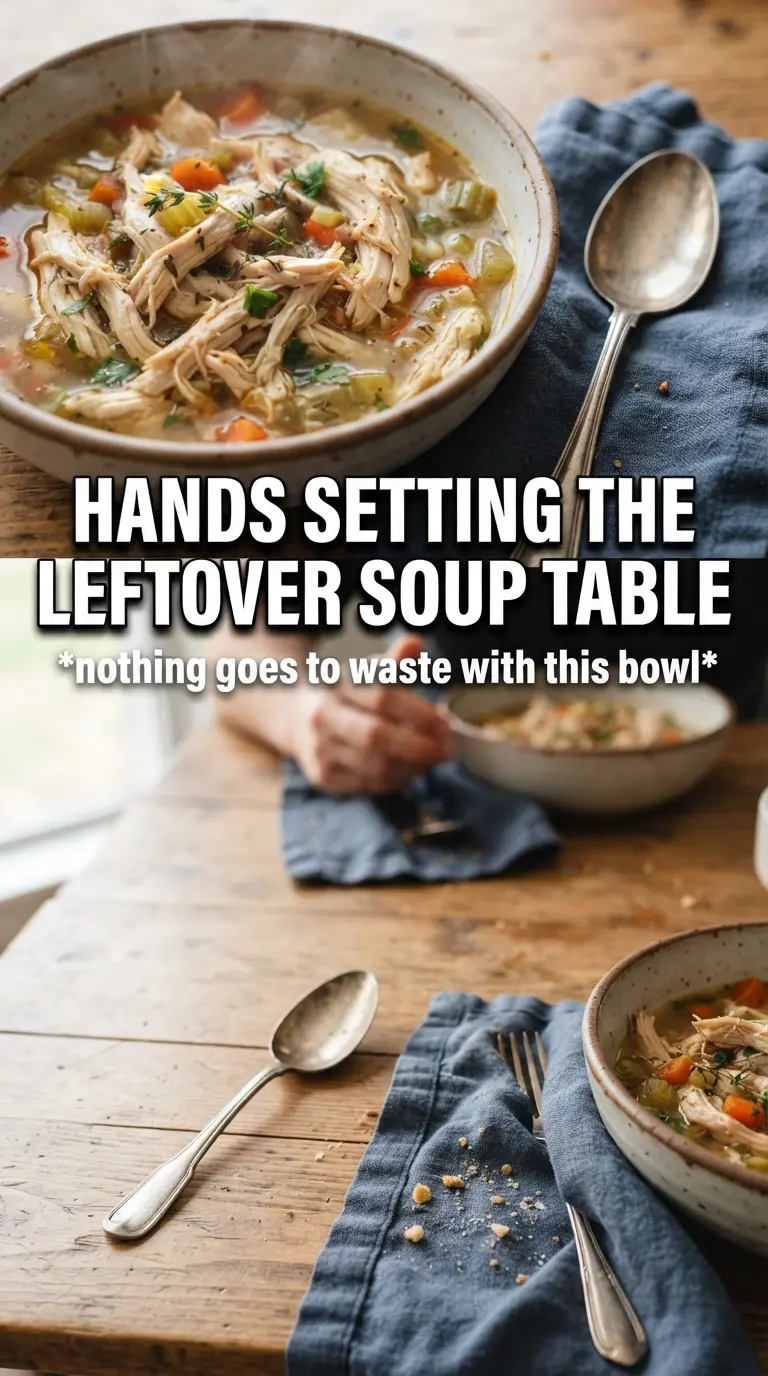
- Rotisserie chicken — This is the whole point of the soup. Dark meat stays the juiciest, but any pulled chicken works here. Take the skin off and shred the meat into bite-size pieces so it warms quickly and distributes evenly through the bowl.
- Chicken broth — Since this soup moves fast, the broth has to carry the flavor. A good boxed broth is fine, but if yours tastes thin, add a pinch more salt at the end and don’t skip the lemon. That brightness makes a basic broth taste fuller.
- Carrots, celery, and onion — This is the classic base for a reason. They soften into the broth and give it body without making the soup heavy. Dice the onion finely and slice the carrots and celery on the thinner side so they’re tender by the time the noodles are done.
- Egg noodles — Egg noodles give the soup that old-fashioned comfort-food texture and they cook fast. If you use a different pasta, watch the pot closely because shape and size change the timing. Wide noodles hold the broth best, but small pasta is fine if that’s what you have.
- Lemon juice — This is the finishing move, not a garnish. It sharpens the broth and keeps the soup from tasting flat after the noodles go in. Start with half a lemon, then taste before adding more.
Building the Broth in the Right Order
Softening the Vegetables First
Melt the butter or warm the oil in a large pot, then add the onion, carrots, and celery. Cook them until the onion turns translucent and the carrots start to lose their raw edge, about 4 to 5 minutes. If the heat is too high, the vegetables will brown before they soften, and that gives the broth a harsh edge instead of a clean savory base.
Blooming the Herbs Before the Liquid Goes In
Stir in the garlic and cook just until it smells fragrant, about 1 minute. Then add the broth, thyme, parsley, and garlic powder. This short step wakes up the dried herbs and keeps the garlic from tasting raw. Once the broth is in, bring it to a boil only long enough to get the noodles cooking — after that, the soup should settle into a lively simmer, not a hard boil.
Cooking the Noodles Without Losing the Broth
Add the egg noodles when the broth is at a boil and cook them until they’re almost tender, usually 5 to 6 minutes. They should still have a little bite when you add the chicken, because they’ll finish softening in the last few minutes. If you cook them completely before adding the chicken, they’ll turn too soft by the time the soup hits the table.
Warming the Chicken and Finishing the Bowl
Stir in the shredded rotisserie chicken and let it heat through for 3 to 4 minutes. Keep the soup at a gentle simmer so the chicken stays juicy. Finish with lemon juice, then taste for salt and pepper. The seasoning should taste rounded and bright, not flat or overly salty, and the parsley goes on last for a fresh finish.
How to Adapt This for a Different Pantry or a Different Diet
Gluten-Free Noodle Swap
Use a gluten-free egg noodle or a small gluten-free pasta shape, but cook it just shy of done. Some gluten-free pastas soften quickly and can turn mushy if they sit in hot broth too long, so keep an eye on texture and serve right away.
Dairy-Free Version That Still Tastes Rich
Use olive oil instead of butter. You’ll lose a little roundness, but the broth still tastes full because the onions, carrots, celery, and lemon carry the flavor. If you want a slightly richer finish, add a small extra splash of olive oil right before serving.
No Egg Noodles in the Pantry
Small pasta shapes like ditalini, elbows, or broken spaghetti all work, but they change the feel of the soup. Thin pasta gives you a lighter bowl, while tubular shapes hold more broth in each bite. Just adjust the cook time based on the package and add the chicken near the end as usual.
Storage and Reheating
- Refrigerator: Store for up to 4 days. The noodles will absorb broth as it sits, so expect the soup to thicken.
- Freezer: It freezes best without the noodles. Freeze the broth, vegetables, and chicken, then cook fresh noodles when you reheat it.
- Reheating: Warm gently on the stove over medium-low heat. If it looks too thick, add a splash of broth or water before it gets hot; boiling it hard will make the noodles break apart and the chicken dry out.
Answers to the Questions Worth Asking
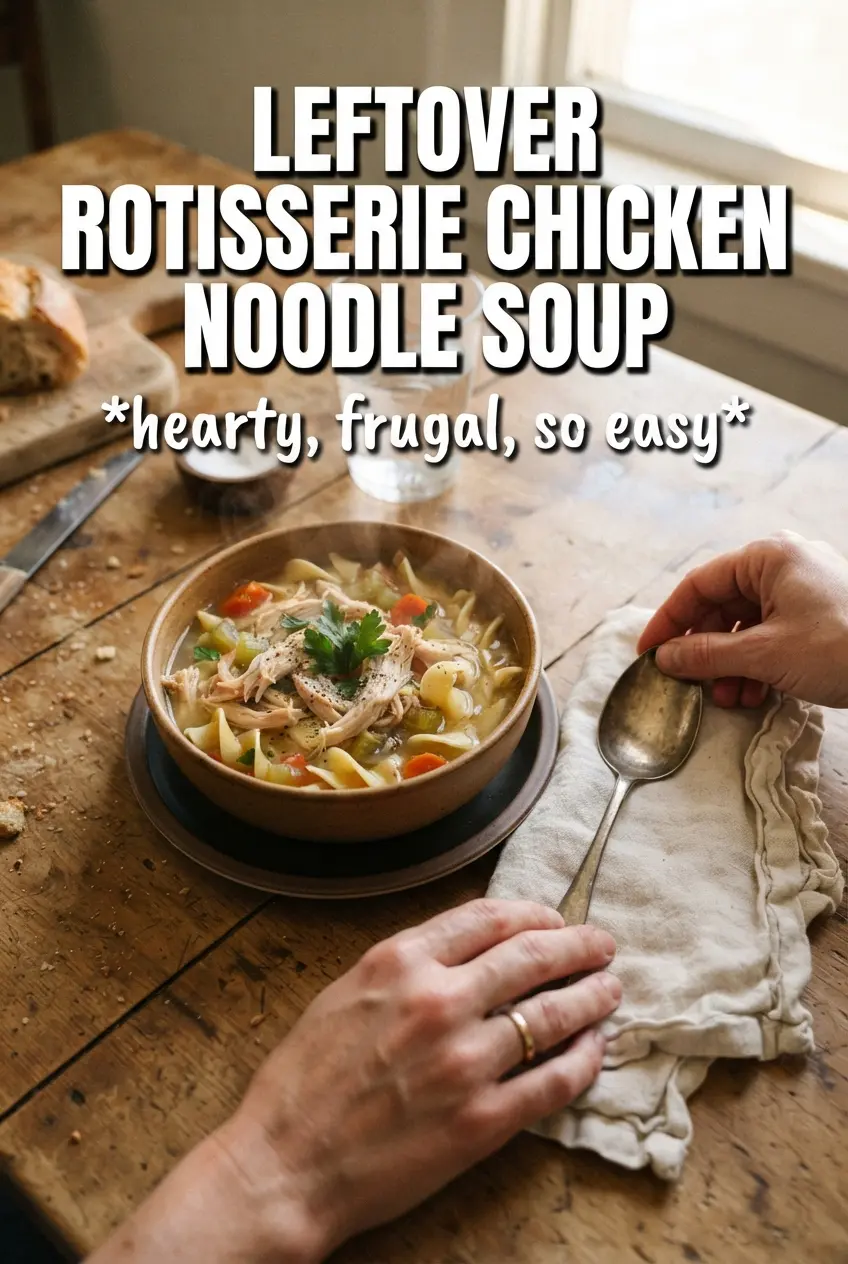
Leftover Rotisserie Chicken Noodle Soup
Ingredients
Equipment
Method
- Melt the butter or olive oil in a large pot over medium heat, then sauté the onion, carrots, and celery for 4-5 minutes until softened with light browning.
- Add the minced garlic and cook for 1 minute until fragrant, keeping it from browning.
- Pour in the chicken broth and add the dried thyme, dried parsley, and garlic powder, stirring to combine.
- Bring the mixture to a boil.
- Add the egg noodles and cook for 5-6 minutes until almost tender, stirring occasionally so they don’t stick.
- Add the shredded leftover rotisserie chicken and simmer for 3-4 minutes until heated through.
- Squeeze in the lemon juice and season with salt and pepper to taste.
- Garnish with fresh parsley and serve hot.