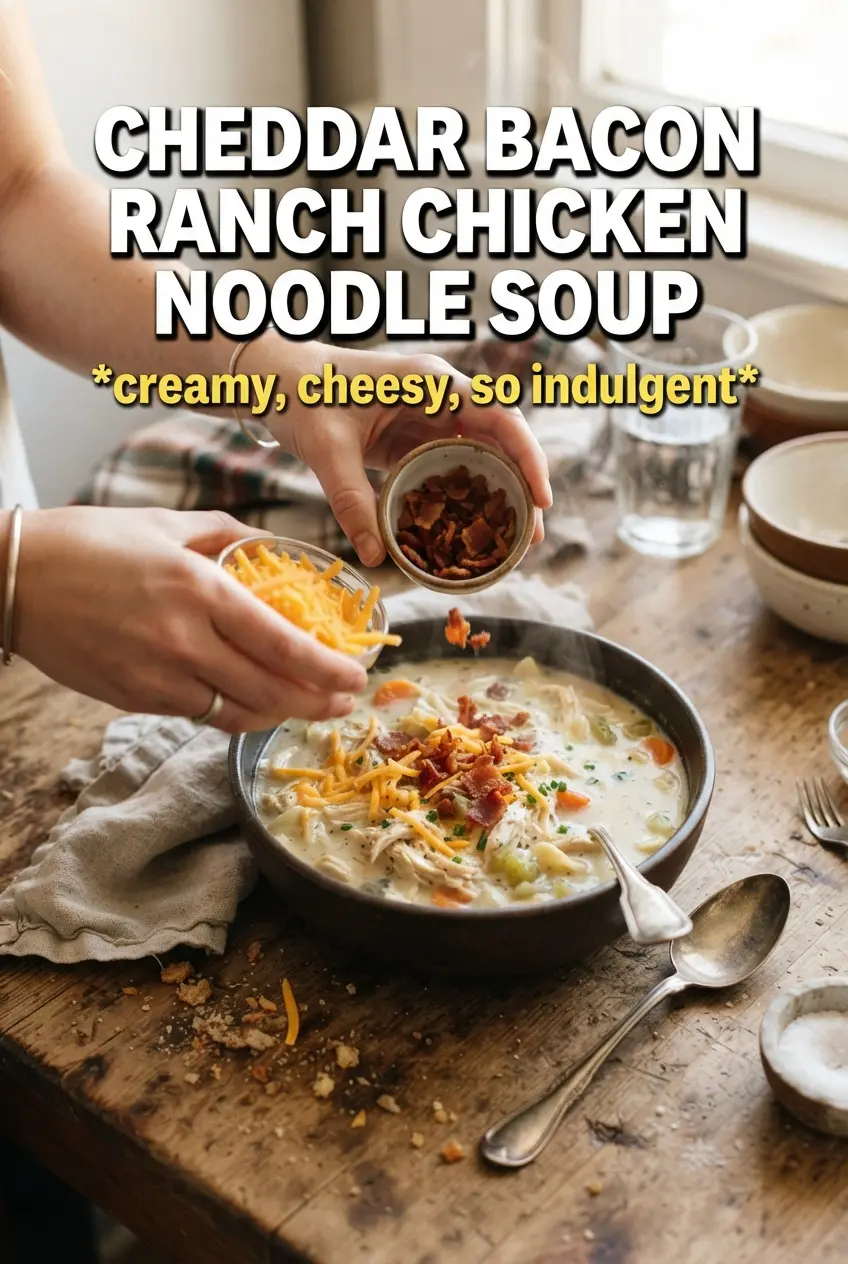
Cheddar bacon ranch chicken noodle soup lands in that sweet spot between cozy and bold: creamy enough to feel like comfort food, but packed with enough sharp cheddar, smoky bacon, and ranch seasoning to keep every spoonful interesting. The broth turns rich and orange-gold, the noodles soak up all that flavor, and the shredded chicken gives it enough substance to pass as dinner on its own.
What makes this version work is the order. The vegetables soften first so they don’t stay raw in the finished soup, the ranch seasoning goes into the broth so it has time to bloom, and the cream cheese melts in before the cheddar so the base stays smooth instead of turning grainy. Bacon drippings add depth if you have them, but butter works just fine when you don’t. The result is a soup that tastes like it simmered longer than it did.
Below you’ll find the part that matters most: how to keep the cheese silky, when to add the noodles so they don’t go mushy, and the small substitutions that still give you a thick, satisfying bowl.
The cream cheese melted in smooth and the broth stayed thick without getting gluey. My kids kept picking out the bacon and asking for more noodles, which never happens with soup here.
Save this cheddar bacon ranch chicken noodle soup for the nights when you want a creamy, hearty bowl with smoky bacon and sharp cheddar in every bite.
The Secret to Keeping the Cheese Sauce Smooth in Soup
The biggest mistake in a soup like this is adding the cheese too early or over too much heat. Once the broth is boiling, it can handle the noodles and chicken, but cream cheese and cheddar need a gentler hand. If the pot is too hot when the dairy goes in, the fat separates and the soup can turn grainy instead of velvety.
The fix is simple: lower the heat before you stir in the cream cheese, then add the heavy cream and cheddar after the base is no longer bubbling hard. The cream cheese helps stabilize the soup, which is why this version holds together better than a brothier chicken noodle soup. Sharp cheddar gives you the strongest flavor, and it matters here because mild cheese gets lost under the ranch seasoning and bacon.
What Each Ingredient Is Actually Doing in This Bowl

- Chicken breast — Cooked and shredded chicken gives the soup enough body to feel like a full meal. Rotisserie chicken works well and saves time, and thighs can be used if you want a richer, slightly softer texture.
- Bacon — The bacon is doing more than garnish here. Its drippings help start the vegetables, and the crumbled pieces give the finished soup a smoky saltiness that balances the cream and cheese.
- Ranch seasoning — This is the shortcut that makes the broth taste like more than chicken soup with dairy added at the end. A homemade ranch blend can work, but the packet is consistent and strong enough to stand up to the cream and cheddar.
- Cream cheese and heavy cream — Cream cheese is what gives the soup its thick, clingy texture. Heavy cream adds smoothness without thinning it back out, so don’t swap in milk unless you want a lighter, looser soup.
- Sharp cheddar — Use sharp cheddar, not mild. You need a cheese with enough character to show up after it melts, and pre-shredded cheese works in a pinch but won’t melt quite as smoothly as freshly grated.
- Egg noodles — These cook fast and give the soup that classic chicken noodle feel. Add them at the right point so they stay tender instead of turning bloated and soft while the soup sits.
The 20 Minutes That Matter Most
Starting the Vegetables in the Bacon Drippings
Cook the onion, carrots, and celery until the onion turns translucent and the carrots start to soften at the edges. This is where the soup builds its background flavor, so don’t rush it. If the pan looks dry, add butter, but keep the heat moderate so the onion doesn’t brown before the carrots have a chance to soften. Garlic only needs about a minute at the end; any longer and it turns sharp instead of fragrant.
Building the Broth Before the Dairy Goes In
Once the broth and ranch seasoning go in, bring the pot to a real boil so the noodles cook properly. That boil also helps dissolve the seasoning evenly through the liquid. Add the noodles while the broth is active, then drop the heat once they’re tender. If you simmer them too gently, they can go uneven and gluey instead of staying supple.
Melting the Cream Cheese Without Breaking the Soup
Turn the heat down before the cream cheese goes in and stir until there are no soft white streaks left. It helps if the cream cheese was softened first, because cold cubes take longer to melt and encourage overcooking while you wait. Once it’s smooth, add the heavy cream and cheddar gradually. The soup should look glossy and lightly thickened, not bubbling hard or looking oily on top.
Finishing With Bacon and Green Onions
Stir in most of the bacon near the end so it stays meaty instead of softening into the broth. Save a little for the top because that crisp, salty finish makes each bowl taste finished. The green onions bring a sharp fresh bite that cuts through the richness. Taste before serving, then season with salt and pepper only if it needs it, because the bacon, cheese, and ranch already bring plenty of salt.
How to Adapt This for Lighter, Lusher, or Dairy-Free Bowls
Use Rotisserie Chicken for a Faster Weeknight Version
Shredded rotisserie chicken works perfectly here and cuts the active cooking down even more. Add it at the same point you’d add cooked breast meat so it warms through without drying out. The flavor stays rich because the bacon, ranch, and cheese are already doing the heavy lifting.
Make It Gluten-Free With a Simple Swap
Use a certified gluten-free ranch seasoning and swap the egg noodles for your favorite gluten-free noodle shape. Cook the noodles separately if the brand tends to get soft fast, then add them to each bowl before ladling in the soup. That keeps the texture from turning mushy while the leftovers sit.
Skip the Bacon and Keep the Savory Depth
If you don’t eat pork, start the vegetables in butter and add an extra pinch of salt at the end if needed. The soup will lose the smoky edge, but the ranch, cheddar, and garlic still give it a full, savory backbone. Smoked paprika can help replace some of that bacon-like warmth without taking over the bowl.
Stretch It for a Crowd
You can add an extra cup of broth and another handful of noodles if you need the soup to serve more people. Keep the cheese and cream ratios close to the original so the broth doesn’t thin out too far. If you scale it up, use a larger pot than you think you’ll need; once the noodles go in, the soup thickens quickly.
Storage and Reheating
- Refrigerator: Store in an airtight container for up to 4 days. The noodles will keep absorbing broth, so expect the soup to thicken as it sits.
- Freezer: This soup doesn’t freeze beautifully because the dairy and noodles can change texture. If you want to freeze it, do so before adding the noodles, cream cheese, cheddar, and cream, then finish those fresh after thawing.
- Reheating: Warm it gently over medium-low heat, stirring often. If it looks too thick, add a splash of broth, not milk, which can separate more easily in a rich soup.
Answers to the Questions Worth Asking
Cheddar Bacon Ranch Chicken Noodle Soup
Ingredients
Equipment
Method
- In a Dutch oven over medium heat, sauté onion, carrots, and celery in bacon drippings or butter for 5 minutes until softened. Stir in garlic and cook 1 minute until fragrant.
- Add chicken broth and ranch seasoning mix, then bring the mixture to a boil. Keep it at a steady boil before the next step.
- Add egg noodles and cook for 5 minutes, stirring occasionally, until tender. Add shredded chicken and most of the bacon, then let it warm through.
- Reduce heat to low and stir in softened cream cheese until fully melted and smooth. Scrape along the bottom of the pot to prevent lumps.
- Stir in heavy cream and shredded cheddar until melted and the soup looks glossy and creamy. Keep heat low so the cheese melts evenly.
- Season with salt and pepper to taste, adjusting until the flavor pops. Look for a balanced, creamy ranch flavor.
- Serve immediately, topped with remaining bacon and green onions. The bacon bits should look crisp and the green onions should add a fresh pop of color.