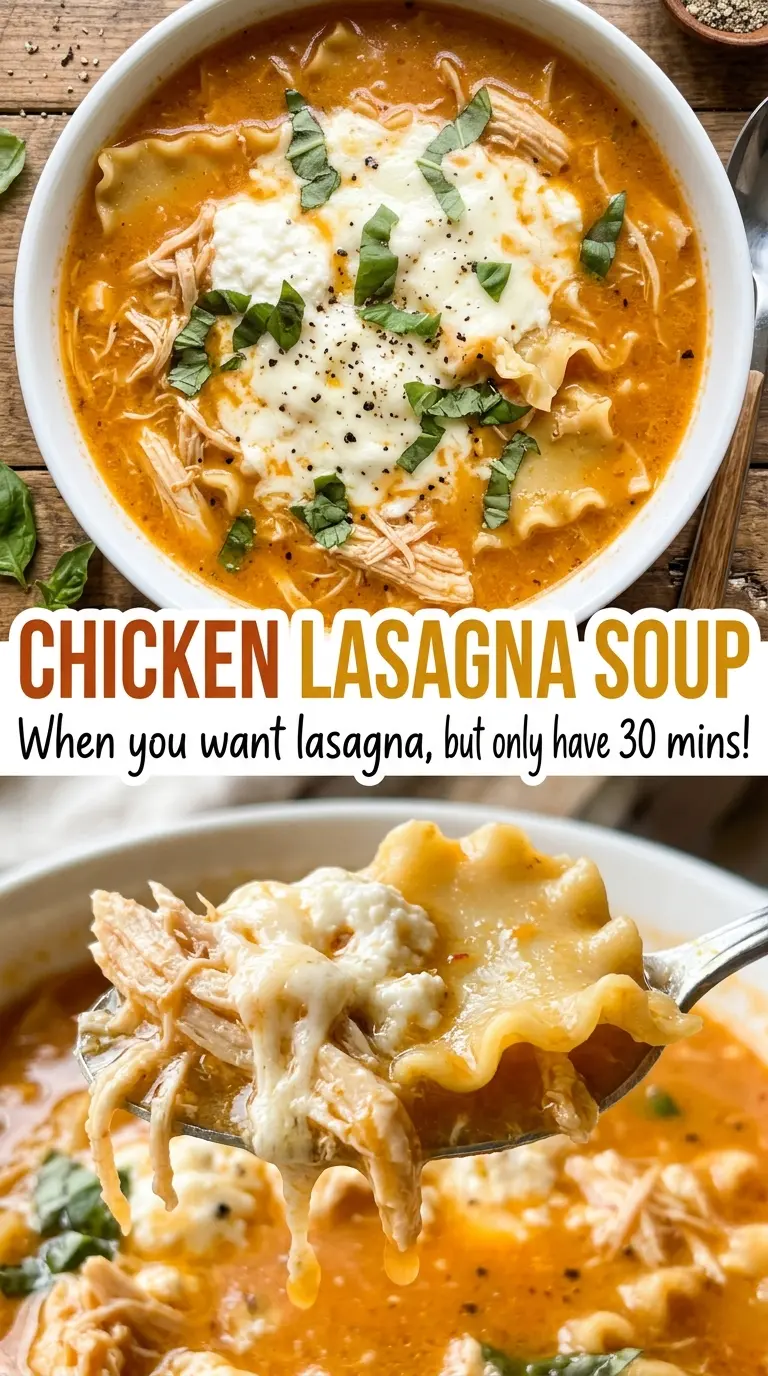
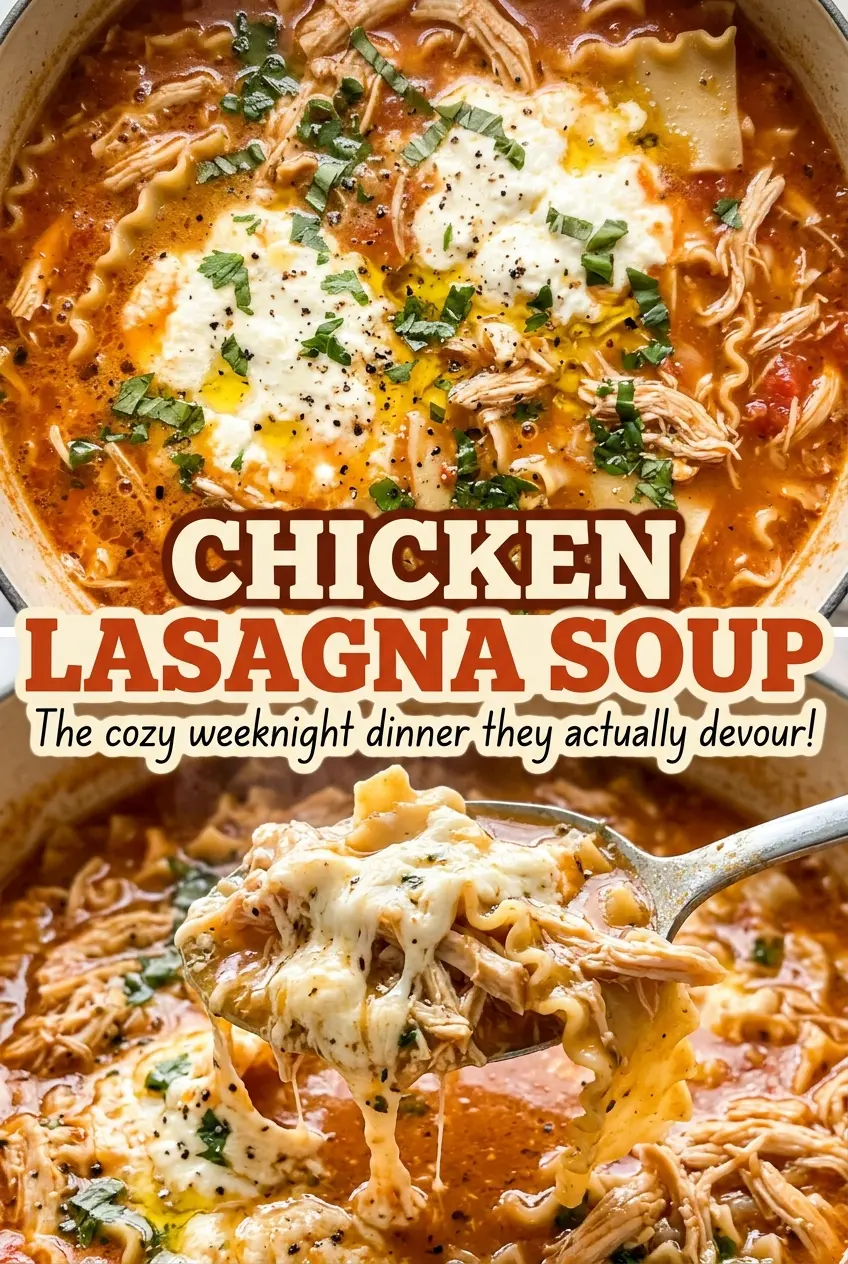
Chicken lasagna soup brings all the comfort of a baked pan of lasagna into one pot, with tender chicken, broken noodles, and a tomato broth that tastes like it simmered all afternoon. The best bowls have that same mix of richness and brightness you want from lasagna, but without the layering, baking, or long wait. The cheese dollop melting into the center is what pulls it all together.
What makes this version work is the order. Browning the chicken first builds flavor in the pot, and the tomato paste gets cooked with the onion and garlic so it loses that raw edge and turns deeper and sweeter. The broth should taste a little bold before the noodles go in, because the pasta will drink up some of that seasoning as it cooks.
Below, I’ll show you how to keep the noodles from going mushy and how to get that ricotta-mozzarella topping creamy instead of grainy. A couple of small choices make a big difference here, especially if you want leftovers that still taste good the next day.
The noodles stayed tender without falling apart, and that ricotta-mozzarella topping melted into the soup just like a baked lasagna layer. My husband went back for seconds and said it tasted even better the next day.
Save this chicken lasagna soup for the nights when you want lasagna comfort without layering a single pan.
The Reason the Noodles Go In Last, Not First
The biggest mistake with soup versions of pasta dishes is cooking the noodles too early. Lasagna noodles keep absorbing liquid as they sit, and once they cross that line, they turn soft and bloated instead of pleasantly tender. In this pot, the noodles should finish cooking in the broth, then the soup should be served soon after so the texture stays right.
The other thing to watch is the cheese. If you stir the ricotta mixture directly into the pot, it disappears into the broth and loses that thick, creamy contrast. Spoon it into each bowl instead. That keeps the soup brothy and gives every serving the same rich center.
What Each Ingredient Is Actually Doing in This Bowl
- Chicken breast or thighs — Thighs stay a little juicier, but breast works well if you don’t overcook it. Dice the chicken small so it cooks fast and fits onto the spoon with the noodles.
- Tomato paste — This is the quiet backbone of the soup. Cooking it with the onion and garlic for a minute or two deepens the flavor and keeps the broth from tasting flat.
- Crushed tomatoes and diced tomatoes — The crushed tomatoes build body, while the diced tomatoes leave little pops of texture. Using both gives the soup more dimension than either one alone.
- Lasagna noodles — Break them into rough pieces, not tiny shards. Bigger pieces mimic the layered feel of lasagna and hold up better in the bowl.
- Ricotta, mozzarella, and parmesan — Ricotta gives the dollop its creaminess, mozzarella brings the melt, and parmesan sharpens the finish. Stir the cheeses together right before serving so the mixture stays light and spoonable.
- Italian seasoning, basil, oregano, and red pepper flakes — These build the lasagna flavor without relying on a long simmer. The red pepper flakes are optional in spirit, but a small amount helps the tomato broth taste fuller.
Building the Broth Before the Pasta Has a Chance to Take Over
Browning the Chicken First
Cook the chicken in a hot pot until the edges take on some color, then pull it out. That browned fond left behind is part of the soup’s depth, and if the pot looks a little sticky, that’s a good sign. Don’t crowd the chicken or it will steam instead of sear. You want surface color, not gray cubes sitting in liquid.
Cooking Out the Tomato Paste
Sauté the onion until it softens, then add the garlic and tomato paste together. The paste should darken slightly and smell sweeter after a minute or two; that’s when the raw tomato edge cooks off. If you add the broth too soon, the paste never fully blooms and the soup tastes sharper than it should.
Simmering the Noodles to the Right Bite
Once the broth is boiling, add the broken lasagna noodles and drop the heat to a steady simmer. Stir a few times while they cook so they don’t stick to the bottom or clump in the center of the pot. Pull the soup from the heat when the noodles are tender but still have a little firmness at the center. They’ll keep softening in the hot broth, especially if the pot sits covered.
Finishing with the Cheese Dollop
Mix the ricotta, mozzarella, parmesan, and basil in a bowl until it looks thick and fluffy. Spoon a generous mound into each bowl, then ladle the soup around it so the heat softens the cheese without fully dissolving it. That gives you the best part of lasagna in every serving: creamy, stretchy, and a little salty against the tomato broth.
How to Adapt This for Different Tastes and Leftovers
Use ground chicken instead of diced chicken
Ground chicken gives you a softer, more classic soup texture and cooks a little faster. Brown it well so it doesn’t taste bland, and break it up finely with a spoon before adding the tomatoes. You’ll lose the chunkier bite of diced chicken, but the broth turns a little silkier.
Make it dairy-free without losing body
Skip the ricotta-mozzarella topping and use a spoonful of dairy-free cashew cream or a thick plant-based ricotta-style spread instead. The soup itself already has enough tomato and chicken flavor to stand on its own, but you’ll miss the salty, creamy finish that the cheese dollop brings.
Make it gluten-free with a pasta swap
Use a sturdy gluten-free noodle that can hold up in soup, and watch the simmer time closely because those noodles go from firm to soft fast. If you’re using a rice- or corn-based pasta, undercook it by a minute and let the soup finish the job off the heat. That keeps the texture from turning grainy or falling apart.
Storage and Reheating
- Refrigerator: Store the soup for up to 4 days. The noodles will continue to soften, so expect a thicker, more stew-like texture on day two.
- Freezer: Freeze the soup without the noodles if you can. Pasta gets soft after thawing, so for the best texture, freeze the broth and chicken separately and cook fresh noodles when serving.
- Reheating: Warm it gently on the stove over medium-low heat. If it looks too thick, add a splash of broth or water before heating through. High heat can break the tomatoes and make the noodles mushy fast.
Answers to the Questions Worth Asking
Chicken Lasagna Soup
Ingredients
Equipment
Method
- Heat olive oil in a large pot over medium-high heat, then add the diced chicken and cook until browned, about 6–8 minutes. Remove the chicken to a plate or bowl and set aside.
- Add the diced onion to the same pot and sauté for 4 minutes. Add the minced garlic and tomato paste and cook for 2 minutes.
- Stir in the crushed tomatoes, diced tomatoes, chicken broth, Italian seasoning, dried basil, dried oregano, and red pepper flakes. Bring the mixture to a boil over medium-high heat, about 3–5 minutes.
- Return the browned chicken to the pot and add the broken lasagna noodles. Simmer for 10–12 minutes, stirring occasionally, until the noodles are tender and the chicken is cooked through.
- Season the soup with salt and pepper to taste. Taste and adjust as needed for balance.
- Mix the ricotta, shredded mozzarella, and parmesan together to form a thick dollop. Serve in each bowl with a generous spoonful and top with fresh basil.