Ground beef stroganoff lands in the kind of dinner rotation that earns its place fast: creamy, savory, and built from ingredients that know how to work together. The mushrooms bring depth, the Worcestershire and Dijon keep the sauce from tasting flat, and the sour cream gives it that classic tang without turning the whole pan heavy. Piled over egg noodles, it eats like comfort food without needing much fuss.
What makes this version work is the order. The beef browns first, then the mushrooms and onions cook in the same skillet so every bit of flavor stays in the sauce. The flour goes in before the broth, which helps the gravy thicken smoothly instead of turning thin and broken later. The sour cream and cream cheese go in off the heat, because dairy sauces like this can split if you rush them.
Below you’ll find the small details that keep the sauce silky, plus a few smart swaps if you’re working around what’s already in your kitchen. The difference between good stroganoff and great stroganoff usually comes down to heat control and timing, not extra ingredients.
The sauce thickened up beautifully and stayed creamy after I stirred in the sour cream off the heat. My husband asked if I could put this on the weekly menu.
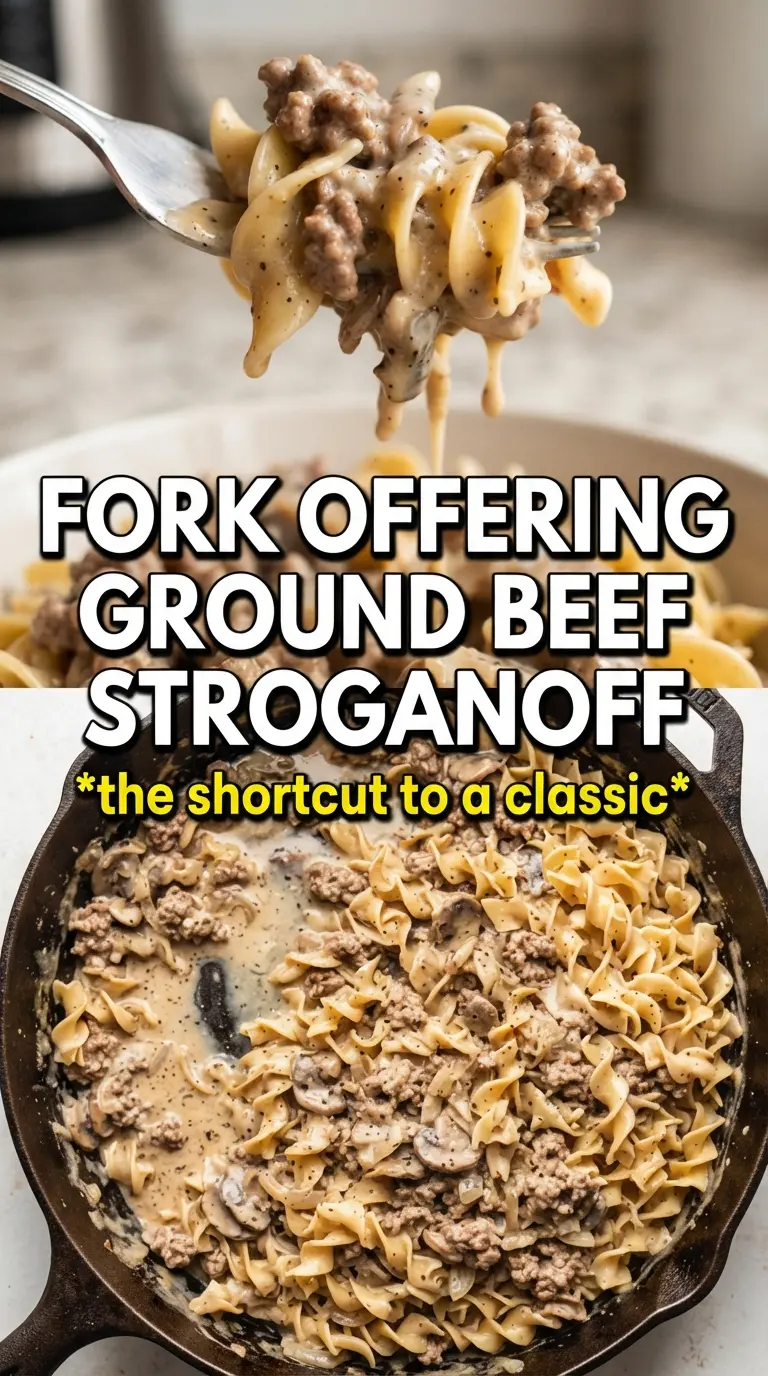
Save this ground beef stroganoff for a creamy skillet dinner with tender noodles, savory mushrooms, and a sauce that stays smooth.
The Trick to Stroganoff That Stays Creamy Instead of Turning Grainy
The failure point in stroganoff is usually heat. Sour cream and cream cheese both want gentle warmth, not a hard simmer. If the pan is bubbling when they go in, the sauce can look fine for a minute and then turn sandy or separated as the dairy tightens up.
The other thing that goes wrong is skipping the flour step or not letting it coat the meat and vegetables. That flour is what gives the broth something to cling to, so the sauce thickens into a glossy gravy instead of staying thin. Let the broth simmer long enough to lose its raw flour taste and you’ll get a cleaner, richer finish.
- Ground beef — An 80/20 blend gives you enough fat for flavor, but drain off the excess after browning so the sauce doesn’t turn greasy. Leaner beef works too, just add a little olive oil if the pan looks dry.
- Cremini mushrooms — These hold their shape and bring a deeper, earthier flavor than white buttons. If you only have white mushrooms, they still work, but let them cook until their liquid evaporates so the sauce doesn’t taste watery.
- Sour cream and cream cheese — This combination makes the sauce tangy and plush. Full-fat versions melt in more smoothly; low-fat sour cream is more likely to split, so use it only if you keep the heat very low and stir it in off the burner.
- Worcestershire and Dijon — These are the background notes that keep the sauce from tasting one-dimensional. They don’t make the dish taste like mustard or steak sauce; they sharpen the beef and mushrooms so the whole pan tastes more seasoned.
- Egg noodles — Their soft, broad shape catches the sauce better than most pasta. Cook them just to tender, because they keep soaking up sauce while they sit.
What Each Ingredient Is Actually Doing in This Recipe
- Primary ingredient (the star) — Quality matters most. Choose the best you can find.
- Cooking medium (oil, butter, or broth) — This carries flavors and prevents dryness.
- Seasonings (salt, pepper, spices, herbs) — Layer flavors so nothing overpowers. Build depth gradually.
- Aromatics (garlic, onion, herbs) — Cook with fat to bloom flavors. Become the foundation.
- Supporting ingredients — Complement the main ingredient without overpowering it.
- Sauce or liquid (if applicable) — Brings flavors together. Balance richness with acid.
- Acid (lemon, vinegar, wine, or other) — Brightens and prevents flat-tasting results.
- Final finish (garnish, glaze, or sauce) — Prevents one-dimensional taste and adds visual appeal.
Building the Sauce in the Right Order
Browning the Beef First
Cook the ground beef in a large skillet until it loses its pink color and starts to pick up browned bits on the bottom. Those bits matter later because they dissolve into the sauce when the broth goes in. Drain off the extra fat before you move on, or the final sauce can feel heavy instead of silky.
Cooking Down the Mushrooms and Onion
Add the onion and mushrooms to the same skillet and let them cook until the mushrooms release their moisture and the pan starts to sound a little drier again. That usually takes about 6 to 7 minutes. If you rush this stage, the mushrooms will taste steamed and the sauce won’t have the deep savory base it needs.
Thickening Before the Dairy Goes In
Stir in the flour after the beef returns to the pan so it coats everything evenly, then add the broth, Worcestershire, and Dijon. Bring it to a simmer and let it cook until the liquid turns glossy and lightly coats the back of a spoon. This is where the sauce gets its body; if it still looks thin, give it a couple more minutes before adding the dairy.
Finishing Off the Heat
Take the pan off the burner before stirring in the sour cream and cream cheese. The residual heat is enough to melt them smooth without shocking the sauce into separation. If the cream cheese is still stubborn, whisk gently and keep the pan off the heat until it loosens.
What to Change When You Don’t Have the Exact Ingredients
Use ground turkey for a lighter skillet dinner
Ground turkey works well here, but it needs more help than beef. Add a tablespoon of butter or oil when you brown it so the pan has enough richness, and season a little more assertively because turkey has a milder base flavor.
Make it gluten-free with a cornstarch slurry
Swap the flour for 1 1/2 tablespoons cornstarch mixed with 2 tablespoons cold water. Stir it into the simmering broth and let it bubble for a minute or two to thicken, then add the dairy off the heat. The sauce will be a little glossier and less velvety than the flour version, but it still coats noodles nicely.
Skip the sour cream if you need a dairy-free version
A plain unsweetened dairy-free cream alternative can stand in for the sour cream, but it won’t bring the same tang. Add an extra teaspoon of Dijon and a small splash of lemon juice at the end to bring some of that brightness back without thinning the sauce too much.
Use sour cream that’s a little lighter and a sauce that’s a little looser
If you want a less rich finish, reduce the cream cheese to 2 ounces and add a splash more broth at the end. The sauce won’t cling as thickly to the noodles, but it will still taste balanced and creamy rather than heavy.
Storage and Reheating
- Refrigerator: Store the stroganoff in an airtight container for up to 4 days. The sauce thickens as it chills, and the noodles will absorb some of it.
- Freezer: The beef and mushroom base freezes well for up to 2 months, but the dairy can separate a bit after thawing. For the best texture, freeze the sauce before adding the sour cream and cream cheese, then stir those in after reheating.
- Reheating: Warm it gently on the stove over low heat with a splash of broth or milk. High heat is the mistake here; it can make the sauce grainy and dry out the noodles before the center is hot.
Answers to the Questions Worth Asking
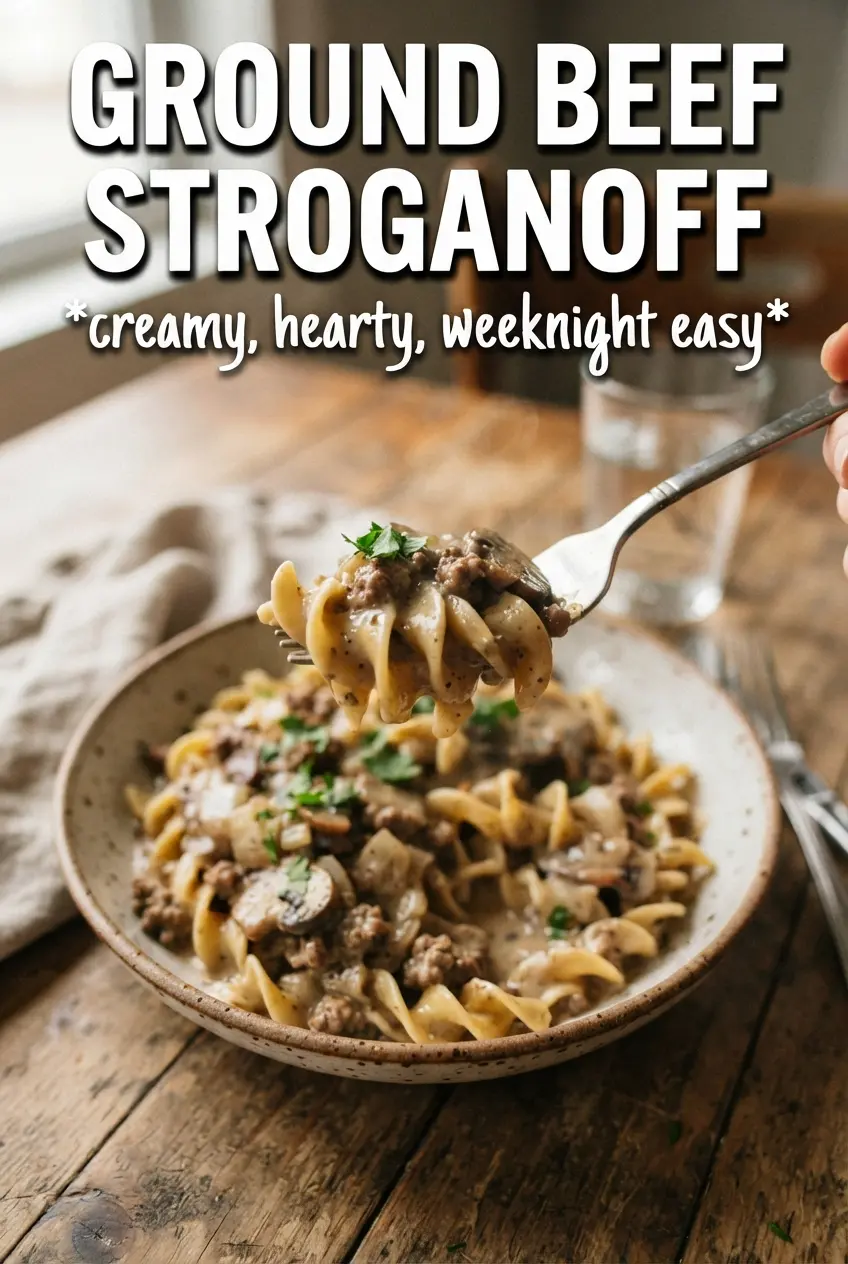
Ground Beef Stroganoff
Ingredients
Equipment
Method
- Brown the ground beef in a large skillet over medium-high heat, then drain off excess fat.
- Sauté the onion and sliced cremini mushrooms in the same skillet over medium heat for 6-7 minutes until softened, then add the minced garlic and cook 1 minute.
- Return the beef to the skillet and sprinkle in the all-purpose flour, stirring to coat the meat and mushrooms.
- Add the beef broth, Worcestershire sauce, and Dijon mustard, bring to a simmer, and cook 5-7 minutes until the sauce thickens.
- Remove from heat, then stir in the sour cream and softened cream cheese until smooth.
- Season with salt and pepper to taste, then serve over the cooked egg noodles and top with fresh parsley and paprika.