Sticky honey BBQ sauce clings to every ridge of rigatoni, and the sausage gets those dark caramelized edges that make each bite taste bigger than the ingredient list suggests. The sauce stays glossy instead of turning heavy, the pasta holds onto it, and the cheddar melts in just enough to round out the barbecue tang without burying it.
What makes this version work is the balance. Dijon sharpens the sweetness, smoked paprika gives the sauce a deeper grilled note, and a little reserved pasta water helps the sauce loosen just enough to coat the noodles instead of sitting in a puddle at the bottom of the pan. Browning the sausage first matters too — those browned bits in the skillet become part of the sauce, which is where a lot of the payoff comes from.
Below, I’ll walk through the parts that matter most so you can keep the sauce glossy, the pasta saucy, and the sausage caramelized instead of bland. There’s also a few swaps and storage notes if you want to make it work with what you already have in the kitchen.
The sauce thickened up beautifully and coated the rigatoni instead of pooling at the bottom. My husband kept going back for seconds because the sausage got those caramelized edges and the honey BBQ flavor wasn’t too sweet.
Save this Honey BBQ Sausage Pasta for a saucy weeknight dinner with caramelized sausage, glossy rigatoni, and a smoky-sweet barbecue finish.
The Trick to Keeping Honey BBQ Sauce Glossy Instead of Gummy
The biggest mistake in a dish like this is letting the sauce cook down too far before the pasta goes in. Honey and BBQ sauce can turn sticky fast, and if you reduce them until they look thick in the skillet, they often seize up once the cheddar and pasta hit the pan. What you want is a sauce that still moves a little when you stir it. It should coat the spoon, not cling in paste-like streaks.
The other point that matters is the order. The sausage gets browned first so the skillet picks up flavor, then the onion and pepper soften in that same pan, and only then does the sauce go in. That layering keeps the dish from tasting flat. If your sausage isn’t taking on color, the pan is crowded or the heat is too low. Give the slices space and let them sit long enough to pick up those crisp edges.
What Each Ingredient Is Actually Doing in This Dish
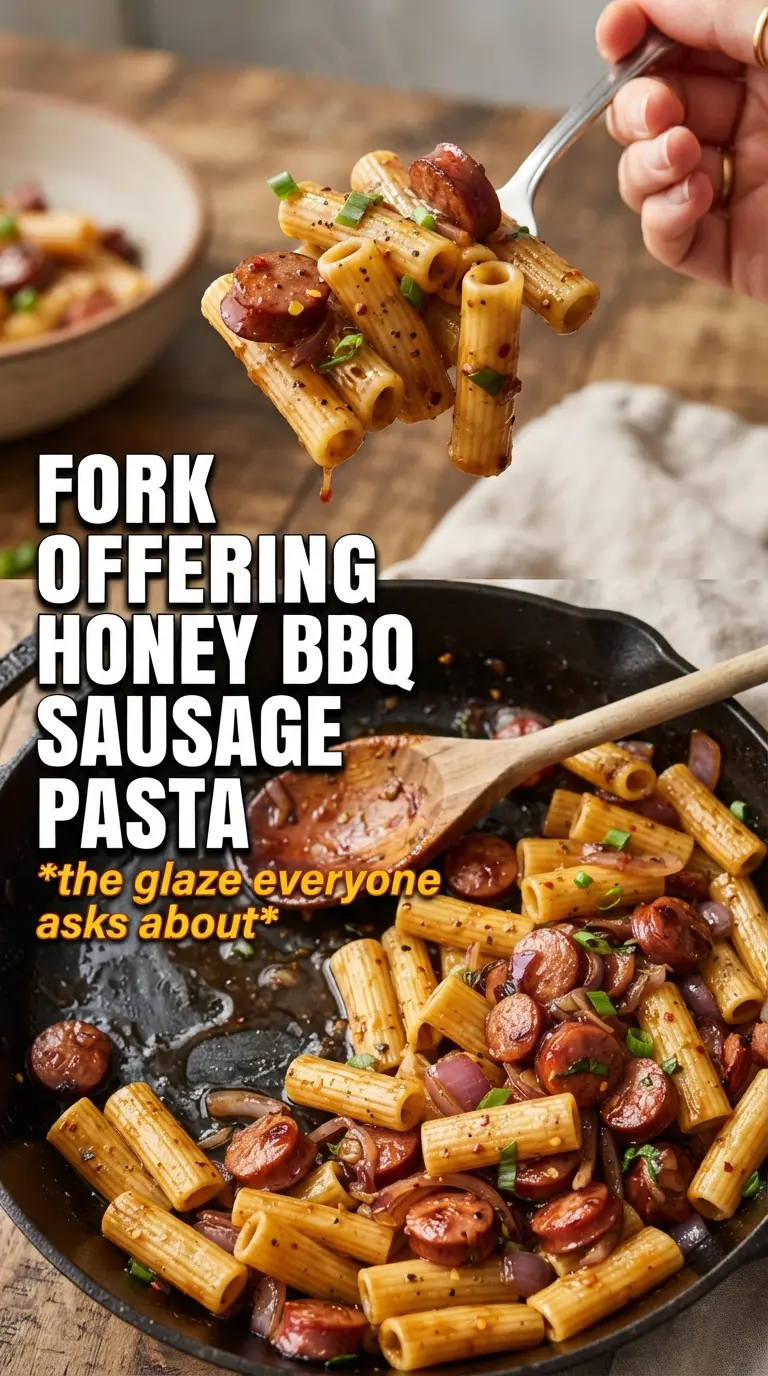
- Smoked sausage — This brings salt, fat, and a built-in smoky flavor that stands up to the sweet sauce. Slice it thick enough to brown instead of steam, and use a good-quality smoked sausage if you can; that’s where the dish gets most of its backbone.
- Rigatoni — The tubes catch sauce inside and out, which makes every bite taste coated. Penne works in a pinch, but rigatoni gives you more sauce clinging to the ridges and a better texture against the sausage.
- BBQ sauce and honey — BBQ sauce gives the base flavor, while honey smooths out the tang and helps the sauce glaze the pasta. If your barbecue sauce already runs sweet, cut the honey back a little so the finished dish doesn’t turn cloying.
- Dijon mustard — This is the quiet ingredient that keeps the sauce from tasting one-note. It sharpens the sweet barbecue base and makes the sauce taste more balanced without reading as mustardy.
- Chicken broth — Broth loosens the sauce and adds savory depth that water can’t give you. If all you have is water, the dish will still work, but the sauce will taste a little flatter.
- Cheddar — The cheese melts into the sauce and adds body, but it also helps smooth out the sweetness. Shred it yourself if you can; pre-shredded cheese can melt a little grainy because of the anti-caking coating.
- Pasta water — The starch in reserved pasta water helps the sauce cling to the noodles. Add it a splash at a time so the sauce stays glossy and loose enough to coat instead of tightening into a sticky mass.
The 20 Minutes That Build the Whole Pan
Browning the Sausage First
Get the skillet hot before the sausage goes in, then let the slices sit long enough to develop a deep brown edge. If you keep stirring, they’ll turn gray and lose the caramelized flavor that makes this dish taste finished. Once both sides are browned, take the sausage out so it doesn’t overcook while you build the sauce.
Softening the Vegetables Without Losing Them
Add the onion and bell pepper to the same pan and cook them until the onion turns translucent and the peppers lose their raw crunch. They should soften, not collapse into mush. Garlic and smoked paprika go in near the end because they burn fast, and burnt garlic makes the sauce taste harsh instead of smoky.
Simmering the Sauce to the Right Consistency
Whisk the BBQ sauce, honey, broth, and Dijon together, then let it bubble gently for about five minutes. You want it slightly thickened and glossy, but still loose enough that the pasta can absorb some of it. If it looks thick before the pasta goes in, it’ll probably end up tight after the cheddar is added.
Finishing with Pasta, Cheese, and the Final Toss
Add the cooked rigatoni and a splash of pasta water, then bring the sausage back into the skillet. Stir in the cheddar off the heat or over low heat so it melts smoothly instead of turning grainy. The finished dish should look saucy and shiny, with the cheese making the sauce creamy but not heavy.
How to Adapt This for a Different Pantry or a Different Table
Gluten-Free Without Losing the Sauce
Use a gluten-free rigatoni or penne with a sturdy shape, since delicate pasta can break when you toss it in the sauce. Check the sausage and BBQ sauce labels too, because either one can hide gluten. The texture will still be hearty, and the sauce stays the same.
Dairy-Free Version
Leave out the cheddar and add an extra splash of pasta water plus a little more broth at the end so the sauce still coats the noodles. You’ll lose some of the creamy finish, but the smoky-sweet barbecue flavor still comes through cleanly. A handful of chopped herbs on top helps brighten the dish.
Using Chicken or Turkey Sausage
Chicken or turkey sausage works well if you want something lighter, but it needs a little more help with browning because it’s leaner. Let it get a deeper sear before you pull it from the pan, and don’t skip the smoked paprika. That’s what keeps the dish from tasting too mild.
Storage and Reheating
- Refrigerator: Store leftovers in an airtight container for up to 4 days. The pasta will absorb more sauce as it sits, so it gets a little thicker by day two.
- Freezer: It freezes, but the texture softens once thawed. For the best result, freeze in portions for up to 2 months and expect the pasta to be a bit less firm after reheating.
- Reheating: Reheat gently on the stove or in the microwave with a splash of broth or water to loosen the sauce. The common mistake is blasting it too hot, which makes the cheese separate and the pasta dry out.
Answers to the Questions Worth Asking
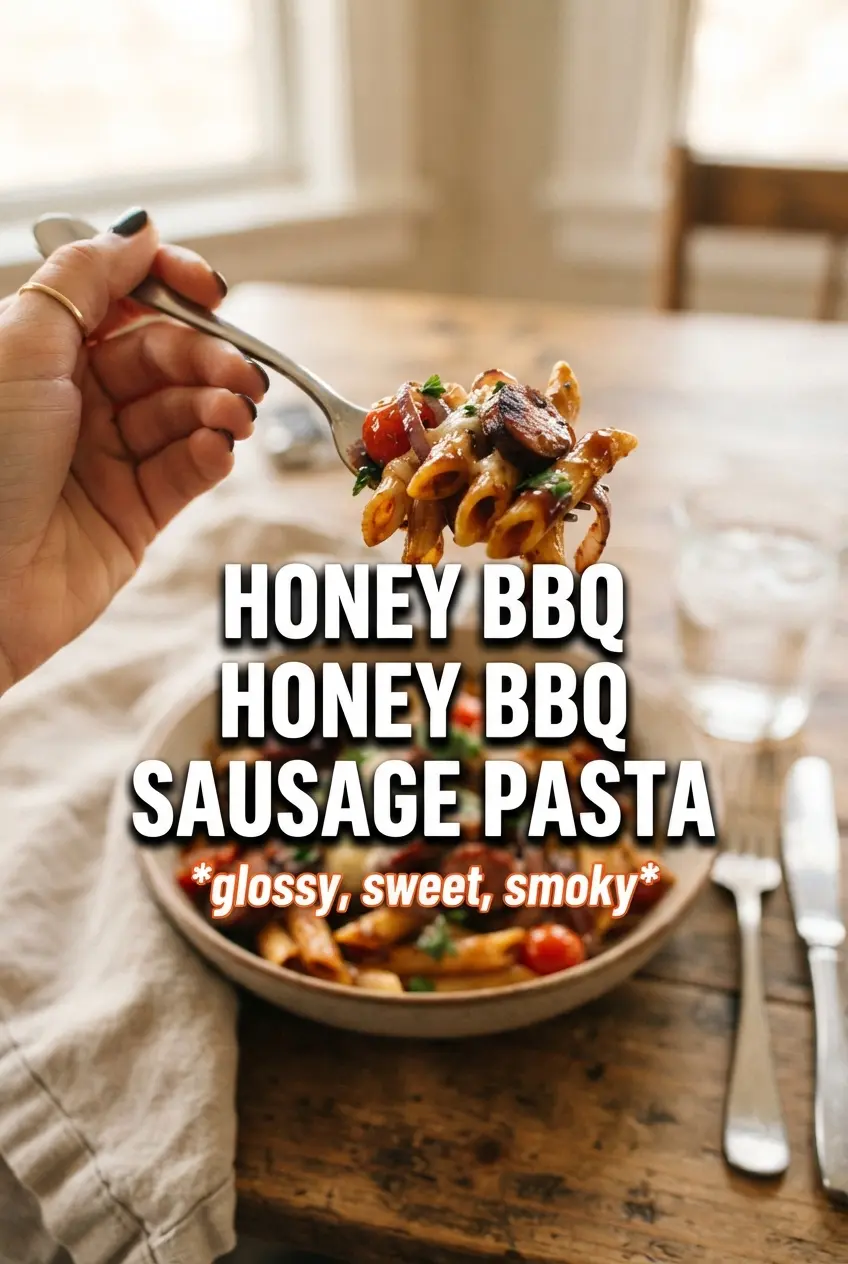
Honey BBQ Sausage Pasta
Ingredients
Equipment
Method
- Bring a large pot of salted water to a boil, then cook rigatoni until al dente. Before draining, reserve 1/2 cup pasta water and set pasta aside.
- Heat a large skillet over medium-high heat, then add the sliced smoked sausage. Cook until caramelized on both sides, then remove to a plate.
- In the same skillet, add diced onion and red bell pepper and sauté for 4 minutes. Add minced garlic and smoked paprika and cook for 1 minute, stirring until fragrant.
- Whisk BBQ sauce, honey, chicken broth, and Dijon mustard until smooth. Pour into the skillet and simmer for 5 minutes to thicken slightly.
- Add cooked rigatoni and reserved 1/2 cup pasta water to the skillet and toss to coat. Return caramelized sausage to the skillet and stir to combine.
- Add shredded cheddar and stir until melted and glossy. Season with salt and pepper to taste.
- Sprinkle green onions and parsley over the top. Serve hot so the sauce stays clingy and the sausage edges remain caramelized.