Meatballs and gravy land on the table with that kind of quiet confidence that makes everyone move a little faster. The meatballs stay tender instead of dense, the onions melt into a deep brown gravy, and the whole pan tastes like it took far more effort than it actually did. Spoon it over mashed potatoes and you get the kind of meal that disappears before anyone stops talking long enough to ask for seconds.
What makes this version work is restraint in the meatball mix and patience with the gravy. The beef, breadcrumbs, Parmesan, and egg hold together without getting heavy, but the real flavor comes from browning the meatballs first and then using the same skillet for the gravy. Those browned bits on the bottom turn into the savory base of the sauce, and the onions need time to soften and caramelize before the flour goes in. That’s what keeps the gravy tasting rich instead of flat.
Below, I’ll walk through the small choices that matter most: how to keep the meatballs tender, how to build a gravy that turns glossy instead of pasty, and what to change if you want to make it a little lighter or gluten-free.
The meatballs stayed tender and the gravy thickened up beautifully without getting gluey. I served it over mashed potatoes and my husband went back for the last spoonful of sauce.
Save these tender meatballs and rich onion gravy for the kind of comfort dinner that tastes even better spooned over mashed potatoes.
The Browning Step That Gives the Gravy Its Depth
The biggest mistake with meatballs and gravy is rushing straight to the sauce without getting any color on the meatballs or the onions. Pale meatballs and translucent onions give you a gravy that tastes one-note. Browning creates the savory foundation, and that foundation is what makes the finished dish taste like it simmered all afternoon.
Don’t cook the meatballs all the way through in the skillet. You only want a deep golden crust on the outside before they go back into the gravy. They finish cooking in the sauce, which keeps them juicy and gives the gravy time to pick up flavor from the meat and the pan drippings.
What Each Ingredient Is Actually Doing in This Dish

- Ground beef — An 80/20 blend gives the meatballs enough fat to stay tender and flavorful. Very lean beef works, but the texture turns tighter and the gravy has less built-in richness.
- Breadcrumbs and egg — These are the binders that keep the meatballs light. Too much breadcrumb makes them bready; too little and they can fall apart while browning. If you need a gluten-free version, use gluten-free breadcrumbs or crushed gluten-free crackers in the same amount.
- Parmesan — It adds saltiness and a little savory depth to the meatballs. You can skip it if needed, but the flavor gets a touch flatter.
- Worcestershire sauce — This shows up in both the meatballs and the gravy because it adds the kind of background savoriness that makes the whole dish taste rounded, not heavy.
- Onion — Thin slices matter here. They soften faster, brown more evenly, and melt into the gravy instead of staying stringy.
- Beef broth — Use a broth you actually like drinking. A thin or bland broth makes a thin or bland gravy, because this is the main liquid in the sauce.
- Dijon mustard — You don’t taste mustard exactly; you taste lift. It sharpens the gravy and keeps the flavor from leaning too dark and one-dimensional.
Building the Gravy Without a Pasty Texture
Mix the meatballs just until they come together
Combine the beef, breadcrumbs, Parmesan, egg, garlic, onion powder, Worcestershire, salt, and pepper with a light hand. If you work the mixture like bread dough, the meatballs will turn dense and springy. Stop as soon as everything looks evenly distributed, then roll them into 1.5-inch balls so they cook at the same rate.
Brown first, finish later
Heat the skillet over medium-high and brown the meatballs on several sides until they pick up a deep golden crust. They don’t need to be cooked through yet. Transfer them to a plate so you can build the gravy in the same pan without crowding the skillet or steaming the meat.
Cook the onions long enough to matter
Melt the butter, add the sliced onion, and let it cook for about 10 minutes until it softens and turns golden brown at the edges. This step is where the gravy gets its sweetness and depth. If the onions are still pale when the flour goes in, the sauce can taste raw and sharp instead of rich.
Whisk the liquid in gradually
Stir the flour into the onions and cook it for a minute to lose the raw flour taste, then pour in the beef broth slowly while whisking. Add the Worcestershire sauce and Dijon, then let the gravy simmer until it thickens enough to coat a spoon. If it looks lumpy, keep whisking and give it a minute; if it looks too thick, loosen it with a splash more broth.
Simmer the meatballs until tender
Return the meatballs to the skillet and spoon gravy over the top. Let them simmer gently for about 15 minutes until they’re cooked through and the sauce has tightened around them. Keep the heat at a steady simmer, not a hard boil, or the meatballs can get tough and the gravy can reduce too fast.
How to Adapt This for Different Kitchens and Diets
Gluten-Free Meatballs and Gravy
Swap the breadcrumbs for certified gluten-free breadcrumbs and use a gluten-free beef broth. For the gravy, replace the flour with a 1:1 gluten-free flour blend or a cornstarch slurry added near the end. Cornstarch thickens faster, so use less than you would flour and let it simmer just until glossy.
Using Ground Turkey or Chicken
You can swap in ground turkey or chicken, but the meatballs need a little help because the meat is leaner. Add an extra tablespoon of oil to the skillet when browning and keep a close eye on the simmer so they don’t dry out. The gravy carries more of the flavor in this version, so use a good broth and don’t skip the onion browning.
Make It a Full One-Pan Dinner
Serve the meatballs over mashed potatoes, egg noodles, or buttered rice. Mashed potatoes are the best match if you want the gravy to feel extra cozy, while noodles soak up the sauce more quickly and make the meal stretch a little farther. Add a simple green vegetable on the side and the whole plate feels balanced without needing anything complicated.
Storage and Reheating
- Refrigerator: Store in an airtight container for up to 4 days. The gravy will thicken as it chills, which is normal.
- Freezer: Freeze the meatballs and gravy together for up to 3 months. Let it cool fully first, then pack it in a freezer-safe container. The texture stays good, though the gravy may need a splash of broth after thawing.
- Reheating: Reheat gently on the stove over low heat with a little broth or water stirred in. High heat can tighten the meatballs and make the gravy separate or turn too thick before the center is hot.
Answers to the Questions Worth Asking
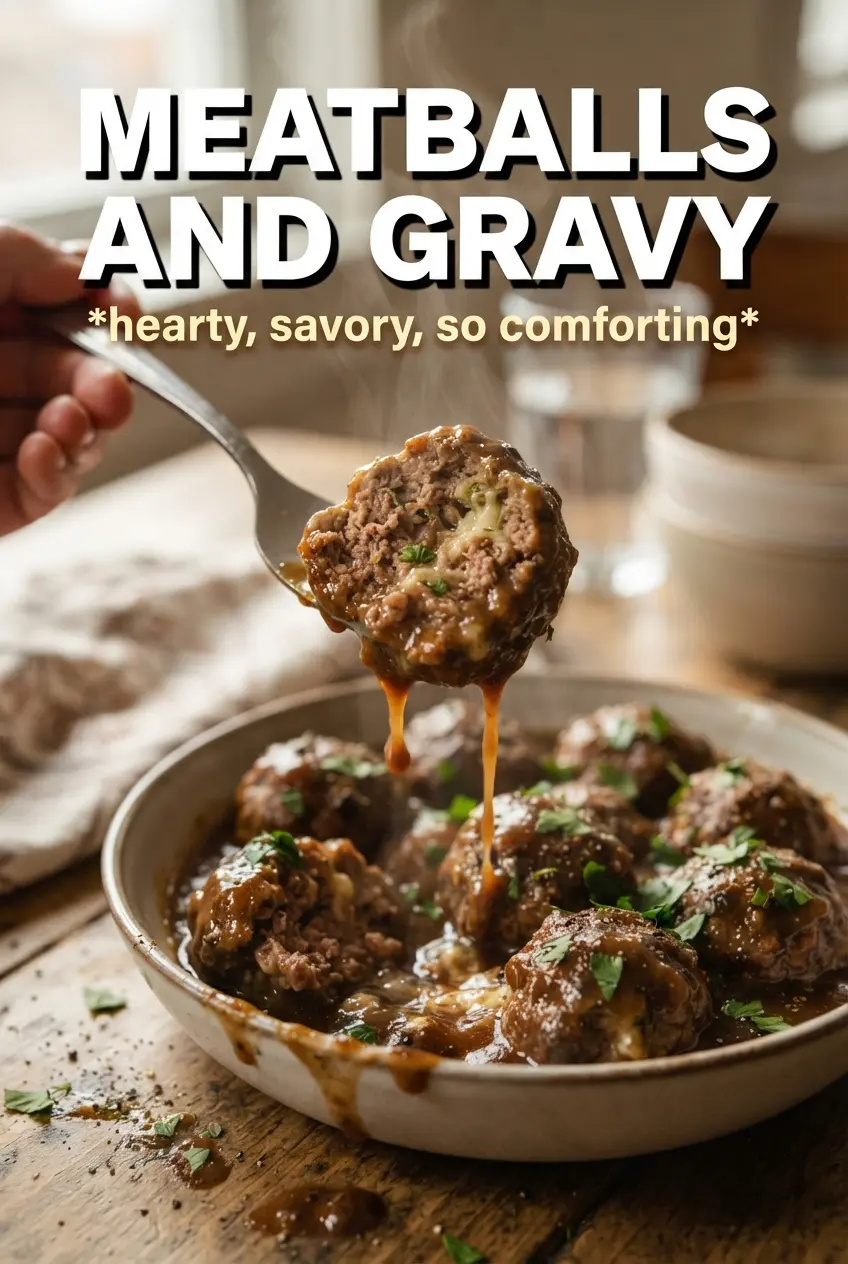
Meatballs and Gravy
Ingredients
Equipment
Method
- In a large bowl, mix ground beef, breadcrumbs, parmesan, egg, minced garlic, onion powder, Worcestershire sauce, salt, and pepper until just combined.
- Roll the mixture into 1.5-inch meatballs and set them on a plate.
- Heat a large skillet over medium-high heat and brown the meatballs until golden, about 2–3 minutes per side.
- Transfer the browned meatballs to a plate and set aside while you make the gravy.
- Melt butter in the same skillet and cook the thinly sliced onion, stirring, until caramelized—about 10 minutes.
- Whisk in flour and cook for 1 minute to form a smooth roux.
- Gradually whisk in beef broth, Worcestershire sauce, and Dijon mustard.
- Simmer the gravy until thickened, stirring occasionally, about 5–7 minutes.
- Return meatballs to the gravy and simmer 15 minutes, until cooked through and the sauce clings to them.
- Serve meatballs and gravy over mashed potatoes and scatter with fresh parsley.