These creamy Cajun chicken and rice bowls hit that sweet spot between fast weeknight dinner and something that tastes like it took a little more effort than it did. The sauce is rich and orange-red, the chicken stays juicy, and the rice soaks up every bit of that spiced creaminess. A bowl like this doesn’t need much else to feel complete.
What makes this version work is the order of the cooking. The chicken gets a hard, hot sear first, then the same pan builds the sauce so the browned bits stay in play instead of going down the drain. Cream cheese helps the sauce cling without turning thin, and the corn and bell pepper bring just enough sweetness to keep the Cajun seasoning from feeling one-note.
Below, I’m walking through the part that matters most: how to keep the sauce smooth instead of grainy, and how to time the rice so everything lands hot at the same time.
The sauce turned out silky and thick enough to coat the rice without getting gloppy, and the Cajun seasoning had just the right kick. My husband went back for seconds and asked if I could put this in the regular rotation.
Pin these creamy Cajun chicken and rice bowls for a skillet dinner with bold seasoning, tender chicken, and a sauce that clings to every grain of rice.
The Reason the Sauce Stays Creamy Instead of Breaking
The biggest mistake with a dish like this is pushing the heat too hard once the dairy goes in. Cream and cream cheese don’t like a rolling boil. They thicken best when the pan is hot enough to bubble gently, not rage. If the sauce gets grainy, it’s usually because the cream cheese was added straight from the fridge or the pan was too hot when the dairy hit it.
That’s why the chicken comes out before the sauce starts. You need the pan space for the vegetables and the liquid, and you want those browned bits left behind to flavor the base. Stir the cream cheese in while the broth and cream are warm, and keep the simmer calm. The sauce should look smooth, glossy, and just thick enough to coat a spoon.
What Each Ingredient Is Actually Doing in This Bowl

- Chicken breast — Thin slices cook quickly and stay tender. If the pieces are too thick, the outside overcooks before the center is done, so slicing them thin matters more than the exact pan time.
- Cajun seasoning — This is the backbone of the dish, so use one you like the taste of on its own. Some blends are saltier than others, which is why the final seasoning happens at the end instead of dumping in salt at the start.
- Cream cheese — This gives the sauce body and helps it cling to the rice. Let it soften a bit before adding it so it melts evenly instead of leaving little white specks in the sauce.
- Heavy cream and chicken broth — The broth keeps the sauce from feeling too heavy, while the cream gives it the richness you want. Half-and-half will work in a pinch, but the sauce will be thinner and need a little more simmer time.
- Bell pepper and corn — These add sweetness and color, which keeps the bowl from tasting flat. Frozen corn works well here; just add it straight from the freezer and give it a minute or two more to heat through.
- Rice — Long grain rice is the right choice because it stays separate under the sauce instead of turning sticky. Warm rice is best, since cold rice can cool the sauce too much before you get to the table.
Building the Bowl in the Right Order
Season and Sear the Chicken
Coat the chicken with part of the Cajun seasoning, then cook it in butter over medium-high heat until the edges are browned and the center is cooked through. You want color here, not pale steaming. If the pan is crowded, the chicken will release liquid and turn gray instead of getting that deep savory crust. Pull it out as soon as it’s done so it stays juicy while you finish the sauce.
Cook the Vegetables in the Same Pan
Add the bell pepper and garlic to the same skillet and cook just until the garlic smells fragrant and the pepper starts to soften. The goal is to lift all the browned flavor from the pan, not to cook the vegetables until limp. Stir in the rest of the Cajun seasoning and smoked paprika right here so the spices bloom in the fat before the liquid goes in.
Turn the Liquid Into Sauce
Pour in the broth and cream, then add the cream cheese cubes and stir until they disappear into the liquid. Keep the heat at a steady simmer, not a boil. If the cream cheese isn’t melting smoothly, the heat is probably too high or the cubes are too cold. Give it a minute and stir patiently; rushing this stage is how the sauce turns lumpy.
Finish and Serve Over Rice
Stir in the corn and let everything simmer until the sauce thickens enough to coat the back of a spoon. It should look creamy and lightly spoonable, not watery and not paste-thick. Spoon it over warm rice, then top with the sliced chicken, green onions, and parsley so the herbs stay bright instead of sinking into the sauce.
How to Adapt These Bowls for Different Kitchens
Make it dairy-free without losing the creamy texture
Use full-fat coconut milk in place of the cream and a dairy-free cream cheese substitute for the body. The sauce will taste a little less tangy and a little more rounded, but it will still cling well to the rice if you keep the simmer gentle.
Turn it into a gluten-free dinner with no extra work
This recipe is naturally gluten-free as written as long as your Cajun seasoning and broth are certified gluten-free. That’s the one place people get tripped up, since some seasoning blends and boxed broths use additives or fillers.
Swap the chicken for shrimp
Shrimp works well if you want a faster version, but it needs a much shorter cook time. Sauté the vegetables and build the sauce first, then add the shrimp at the end and cook just until pink and curled so it doesn’t turn rubbery.
Storage and Reheating
- Refrigerator: Store the chicken and sauce separately from the rice if you can, for up to 4 days. The sauce will thicken as it chills, which is normal.
- Freezer: The sauce can be frozen, but dairy-based sauces sometimes separate a little when thawed. Freeze in a sealed container for up to 2 months and reheat gently, stirring well.
- Reheating: Warm the sauce over low heat with a splash of broth or water to loosen it, then spoon it over freshly warmed rice. High heat is the fastest way to make the sauce split, so go slow.
Answers to the Questions Worth Asking
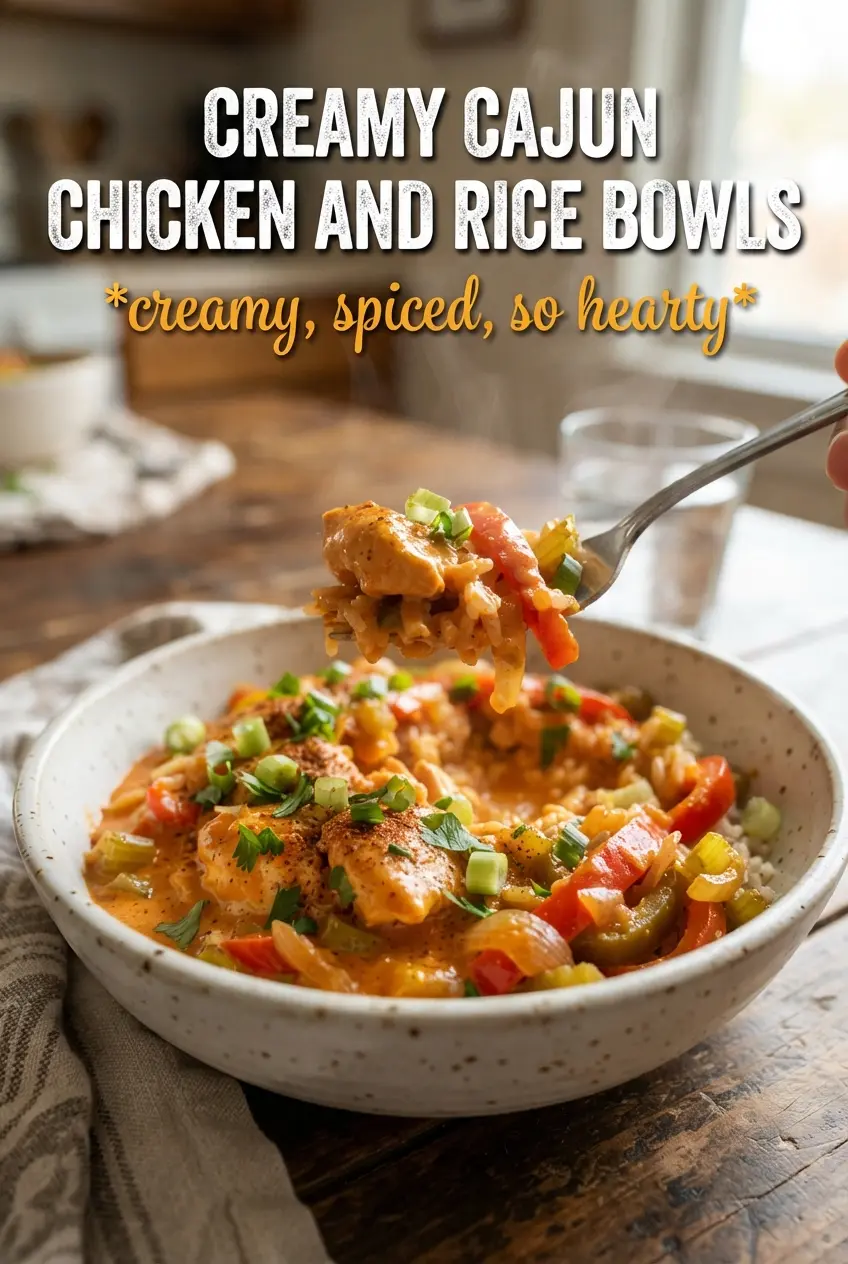
Creamy Cajun Chicken And Rice Bowls
Ingredients
Equipment
Method
- Season the sliced chicken with 1 tablespoon Cajun seasoning. Heat butter in a cast iron skillet over medium-high heat and cook chicken until cooked through, 4-5 minutes per side.
- Remove the chicken from the pan and slice it into thin pieces. Keep it warm while you build the sauce.
- Sauté the diced bell pepper and minced garlic in the same skillet for 3 minutes. Stir so they soften and become fragrant.
- Add the remaining Cajun seasoning and smoked paprika to the skillet. Cook for about 30 seconds until the spices smell toasted.
- Pour in the chicken broth and add the heavy cream. Stir well and bring the mixture to a simmer.
- Add the cubed cream cheese and stir until melted and smooth. Scrape the bottom of the pan to fully incorporate the sauce.
- Add the corn kernels to the creamy sauce and simmer. Cook for 5 minutes until the sauce is creamy and coats the back of a spoon.
- Serve the sauce over the cooked long-grain rice in bowls. Top with sliced Cajun chicken and scatter with green onions.