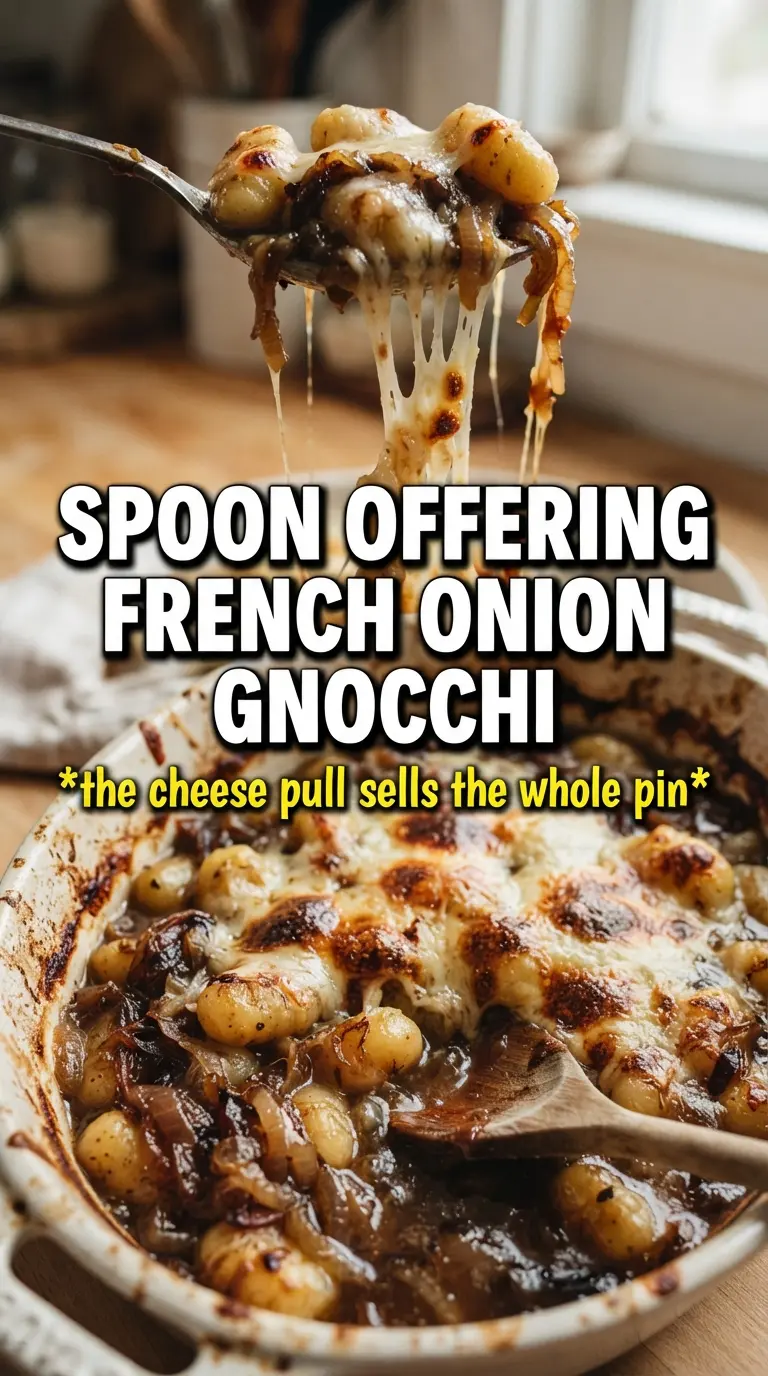
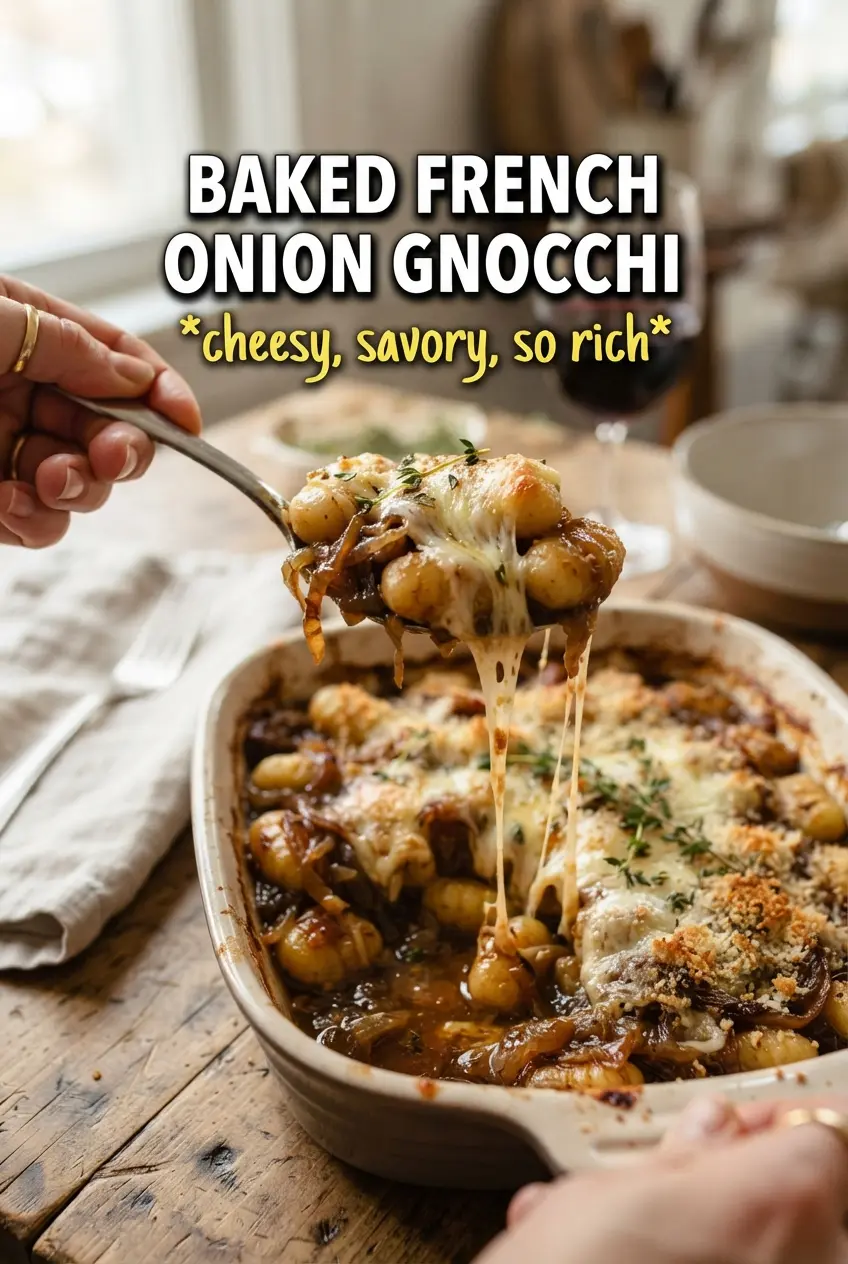
Deeply caramelized onions, pillowy gnocchi, and a bubbling Gruyere crust make this baked French onion gnocchi feel like the best part of onion soup and a cozy pasta bake all at once. The onions cook down until sweet and jammy, then the gnocchi goes straight into that rich broth so it can finish in the sauce instead of getting boiled separately and turned bland or slippery.
The texture is what makes this one worth repeating. You get a savory onion base with just enough cream to round it out, but the broth still stays brothy enough to keep the gnocchi tender under the cheese. Dry white wine or sherry adds the sharp edge that keeps the sauce from tasting flat, and Gruyere melts into that nutty, bronzed top you want from anything French onion-inspired.
Below, I walk through the part that matters most: how to caramelize the onions without rushing them, how to keep the sauce balanced, and what to do if you want to change it up for what you already have in the kitchen.
The onions turned a deep caramel color and the gnocchi cooked right in the sauce without getting mushy. My husband kept going back for more and asked if I could make it again next week.
Save this baked French onion gnocchi for the night you want a bubbling Gruyere topping and soft gnocchi in a rich onion broth.
The Part Most French Onion Dishes Get Wrong: The Onions Need Time, Not Heat
Caramelized onions are the backbone of this dish, and the only way to get them right is to go low and slow. If the heat is too high, the onions brown on the outside before they soften all the way through, which gives you a harsh, almost burnt flavor instead of the deep sweetness that makes French onion anything worth eating. The goal is a soft, jammy pile that turns amber and glossy in the pan.
Once the onions start releasing liquid, they’ll look like too much for the pan. That’s normal. They shrink down a lot, and that liquid is part of the browning process. Keep stirring often enough that nothing catches on the bottom, but don’t keep cranking the heat to hurry it along. A little patience here pays off in the final sauce.
- Onions — Yellow onions are the best choice because they turn sweet and savory as they cook. White onions work in a pinch, but they’re sharper and don’t develop quite the same depth.
- Dry white wine or dry sherry — This lifts the browned bits off the pan and adds the kind of acidity onion soup needs. If you skip it, the dish gets heavier and flatter. Use a dry wine, not anything sweet.
- Gruyere — This cheese melts smoothly and browns into a nutty crust instead of turning greasy. Swiss cheese can stand in, but the flavor will be milder and less complex.
- Potato gnocchi — Shelf-stable gnocchi works well because it cooks right in the sauce and holds its shape. Fresh gnocchi is fine too, but it can soften a little faster, so keep an eye on the bake time.
- Beef broth and Worcestershire sauce — These bring the savory backbone that keeps the dish from tasting like onions and cream alone. Use a good broth if you can; it’s doing a lot of work here.
What Each Ingredient Is Actually Doing in This Recipe
- Primary ingredient (the star) — Quality matters most. Choose the best you can find.
- Cooking medium (oil, butter, or broth) — This carries flavors and prevents dryness.
- Seasonings (salt, pepper, spices, herbs) — Layer flavors so nothing overpowers. Build depth gradually.
- Aromatics (garlic, onion, herbs) — Cook with fat to bloom flavors. Become the foundation.
- Supporting ingredients — Complement the main ingredient without overpowering it.
- Sauce or liquid (if applicable) — Brings flavors together. Balance richness with acid.
- Acid (lemon, vinegar, wine, or other) — Brightens and prevents flat-tasting results.
- Final finish (garnish, glaze, or sauce) — Prevents one-dimensional taste and adds visual appeal.
How to Build the Sauce So the Gnocchi Stays Tender and the Top Still Browns
Cooking the onions all the way down
Melt the butter with the olive oil and add the sliced onions with a pinch of salt. Cook them over medium-low heat, stirring often, until they collapse and turn deep golden brown with a sweet smell, not a sharp raw one. If they start sticking hard or darkening too fast, the heat is too high and the edges will taste bitter before the center is ready.
Deglazing for the browned bits
Pour in the wine or sherry and scrape the bottom of the pan right away. Those browned bits are concentrated flavor, and the liquid loosens them into the sauce instead of leaving them stuck to the skillet. Let the wine cook off for a minute or two so the sauce doesn’t taste boozy or thin.
Building the broth and cream base
Stir in the garlic and thyme for just a minute, then add the broth, Worcestershire, and cream. Bring it to a gentle simmer, not a hard boil. If the liquid boils too aggressively after the cream goes in, it can look broken or greasy instead of silky.
Baking until the cheese is bronzed
Add the uncooked gnocchi and stir so every piece is coated in the sauce, then cover the top with Gruyere. Bake or broil until the sauce is bubbling at the edges, the gnocchi are tender, and the top is deeply melted with a few browned spots. Pull it as soon as the cheese is golden; if it goes too far, the gnocchi can over-soften and the sauce will tighten up too much.
What to Change When You Want a Different Version of This Dish
Make it vegetarian without losing the French onion feel
Swap the beef broth for a deeply flavored vegetable broth and add an extra teaspoon of Worcestershire-style seasoning if you use a vegetarian version. The dish will be a little lighter, but the caramelized onions and Gruyere still give it enough depth to feel full and satisfying.
Make it gluten-free with one label check
Use gluten-free gnocchi and confirm your Worcestershire sauce is gluten-free, since some brands contain malt vinegar or other wheat-based ingredients. The texture stays close to the original, so this is one of the easiest swaps to make.
Use mozzarella or Swiss when Gruyere is out of reach
Swiss gives you a milder, cleaner melt, while mozzarella gives you more stretch and less nuttiness. Either one works, but neither brings the same toasted, savory edge that Gruyere does, so the dish will taste softer and less distinctly French onion.
Make it richer for a special-occasion table
Stir in a spoonful of crème fraîche at the end instead of more cream if you want a tangier, slightly thicker sauce. It adds richness without making the sauce feel heavy, and it holds up well under the broiler.
Storage and Reheating
- Refrigerator: Store leftovers in an airtight container for up to 3 days. The gnocchi will absorb more sauce as it sits, so the texture gets thicker and less brothy.
- Freezer: Freezing isn’t ideal here. The cream sauce can separate and the gnocchi turn softer after thawing, so this dish is best made fresh.
- Reheating: Warm it covered in a 350°F oven with a splash of broth or water until hot in the center. The biggest mistake is blasting it in the microwave, which makes the gnocchi rubbery and dries out the top before the middle is hot.
Answers to the Questions Worth Asking
Baked French Onion Gnocchi
Ingredients
Equipment
Method
- Melt the unsalted butter with the olive oil in a large oven-safe skillet, then add the thinly sliced onions. Cook over medium-low heat for 35-40 minutes, stirring occasionally, until deeply caramelized and glossy.
- Pour in the dry white wine or dry sherry to deglaze the skillet, scraping up the browned bits. Cook for 2 minutes until the liquid reduces slightly.
- Add the minced garlic and fresh thyme, then stir to coat the onions. Cook for 1 minute until fragrant.
- Add the beef broth, Worcestershire sauce, and heavy cream, then bring the mixture to a simmer. Maintain a gentle simmer for 1-2 minutes so it looks smooth and slightly thickened.
- Add the uncooked potato gnocchi to the skillet and stir to coat in the sauce. Season with salt and pepper to taste so the gnocchi are evenly covered.
- Scatter the shredded Gruyère over the top in an even layer. Spread it so the surface is covered for a golden crust.
- Bake (or broil) at 425F for 15-18 minutes, until the gnocchi are cooked through, the sauce is bubbling at the edges, and the cheese is golden. Let it stand for 3-5 minutes after baking so the sauce clings to the gnocchi.