Deeply golden broth, tender shredded chicken, and soft noodles make this flu-fighting chicken noodle soup the kind of pot you keep coming back to when you want something warm, bright, and genuinely soothing. The ginger and garlic give it a sharp, aromatic edge, while lemon and apple cider vinegar wake up the broth at the end so it tastes full, not flat.
What sets this version apart is the layering. The chicken simmers with the vegetables and spices long enough to flavor the broth, and the turmeric and cayenne bring warmth without turning the soup hot enough to overpower everything else. Bone-in chicken gives you a richer base, but the finish matters just as much: a little honey smooths the edges, and the lemon goes in at the end so the soup stays lively instead of bitter.
Below, I’ve included the timing that keeps the noodles from going mushy and the small adjustments that matter if you want to make it your own. This is one of those soups that tastes even better when you understand why each step is there.
The broth turned out so flavorful, and the ginger with the lemon at the end made it taste bright instead of heavy. The noodles were still perfect the next day because I didn’t overcook them.
Save this chicken noodle soup for the days when you want a bright, ginger-garlic broth with real comfort in every spoonful.
The Broth Needs Time Before the Noodles Ever Go In
The biggest mistake with chicken noodle soup is rushing the broth stage and throwing in the noodles too early. Once the noodles go in, they start drinking up liquid fast, and the broth loses its clean, restorative feel. This soup works because the chicken, vegetables, ginger, garlic, turmeric, and thyme simmer long enough to build a broth that already tastes complete before the pasta shows up.
Bone-in chicken matters here because it gives the broth more body and a deeper savory base than boneless pieces do. If all you have is boneless chicken, the soup will still work, but the broth will be lighter and a little less round. The lemon juice and vinegar at the end aren’t there for brightness alone — they sharpen the broth so the ginger and garlic stay noticeable after the soup has simmered.
- Bone-in chicken — This gives you the richest broth and better flavor in the meat itself. If you use boneless chicken, pull it earlier so it doesn’t dry out, and add a splash more broth if the pot tastes thin.
- Fresh ginger and garlic — These are what make the soup feel warming and restorative. Ground ginger won’t give the same clean bite, so fresh really matters here.
- Apple cider vinegar and lemon juice — These wake up the broth at the end. Add them after the noodles are cooked so the acid stays bright instead of cooking off.
- Egg noodles — They turn soft quickly and keep absorbing liquid as the soup sits. If you want leftovers that hold better, cook them just until tender and don’t let the soup boil hard once they’re in.
What Each Ingredient Is Actually Doing in This Recipe

- Primary ingredient (the star) — Quality matters most. Choose the best you can find.
- Cooking medium (oil, butter, or broth) — This carries flavors and prevents dryness.
- Seasonings (salt, pepper, spices, herbs) — Layer flavors so nothing overpowers. Build depth gradually.
- Aromatics (garlic, onion, herbs) — Cook with fat to bloom flavors. Become the foundation.
- Supporting ingredients — Complement the main ingredient without overpowering it.
- Sauce or liquid (if applicable) — Brings flavors together. Balance richness with acid.
- Acid (lemon, vinegar, wine, or other) — Brightens and prevents flat-tasting results.
- Final finish (garnish, glaze, or sauce) — Prevents one-dimensional taste and adds visual appeal.
Building the Soup in the Right Order
Starting the Broth
Put the chicken, carrots, celery, onion, garlic, ginger, broth, turmeric, cayenne, and thyme into a large pot and bring it up to a boil before lowering it to a steady simmer. You want movement in the pot, not a hard, rolling boil, because aggressive boiling makes the broth cloudy and can tighten the chicken. After about 25 to 30 minutes, the chicken should be cooked through and tender enough to shred without a fight.
Shredding for Better Texture
Lift the chicken out as soon as it’s done and let it cool just enough to handle, then shred it into pieces that are big enough to feel substantial in the bowl. If the meat falls apart into dry little threads, it probably simmered too long. Return it to the pot while the broth is still hot so it soaks up flavor before the noodles go in.
Cooking the Noodles at the End
Add the egg noodles only after the chicken is back in the pot, then cook them for 6 to 8 minutes until they’re tender but still have a little bite. The broth should look slightly thicker from the starch, but it shouldn’t turn gluey. If you keep cooking after the noodles are done, they’ll swell and take over the soup.
Finishing with Brightness
Stir in the honey, lemon juice, and apple cider vinegar off the heat or over very low heat, then season with salt and pepper to taste. This final step is what makes the soup taste balanced instead of flat or overly savory. Serve it with extra lemon wedges so each bowl can be adjusted right at the table.
How to Adapt This Soup Without Losing What Makes It Work
Make it gluten-free with the right noodle swap
Use gluten-free egg-style noodles or another sturdy gluten-free pasta, but cook it separately if you want leftovers that don’t turn soft. Gluten-free noodles can go from tender to broken faster than wheat noodles, so keeping them out of the pot until serving gives you a cleaner result.
Make it dairy-free without changing the broth
This recipe is naturally dairy-free as written, which is part of why it feels so light and easy to eat when you don’t want anything heavy. Keep the broth bright with the lemon and vinegar at the end so you don’t miss the richness that cream would normally add.
Use rotisserie chicken for a faster version
If you’re short on time, use shredded rotisserie chicken and simmer the vegetables, spices, and broth first, then add the chicken near the end just long enough to heat through. You lose a little of the broth depth you’d get from bone-in chicken, but you gain speed without giving up the ginger-garlic flavor.
Make it extra comforting for a bigger appetite
Add more noodles only if you plan to eat the soup right away, since they’ll keep absorbing liquid as it sits. If you want a heartier bowl without diluting the broth, increase the chicken and carrots instead of piling in extra pasta.
Storage and Reheating
- Refrigerator: Store for up to 4 days. The noodles will continue to soften and the broth will thicken a bit as it chills.
- Freezer: The soup freezes well if you leave the noodles out and add them fresh when reheating. If the noodles are already in the soup, they’ll turn mushy after freezing and thawing.
- Reheating: Warm gently over medium-low heat until steaming. Don’t boil it hard, or the chicken can dry out and the noodles can break apart.
Questions I Get Asked About This Recipe
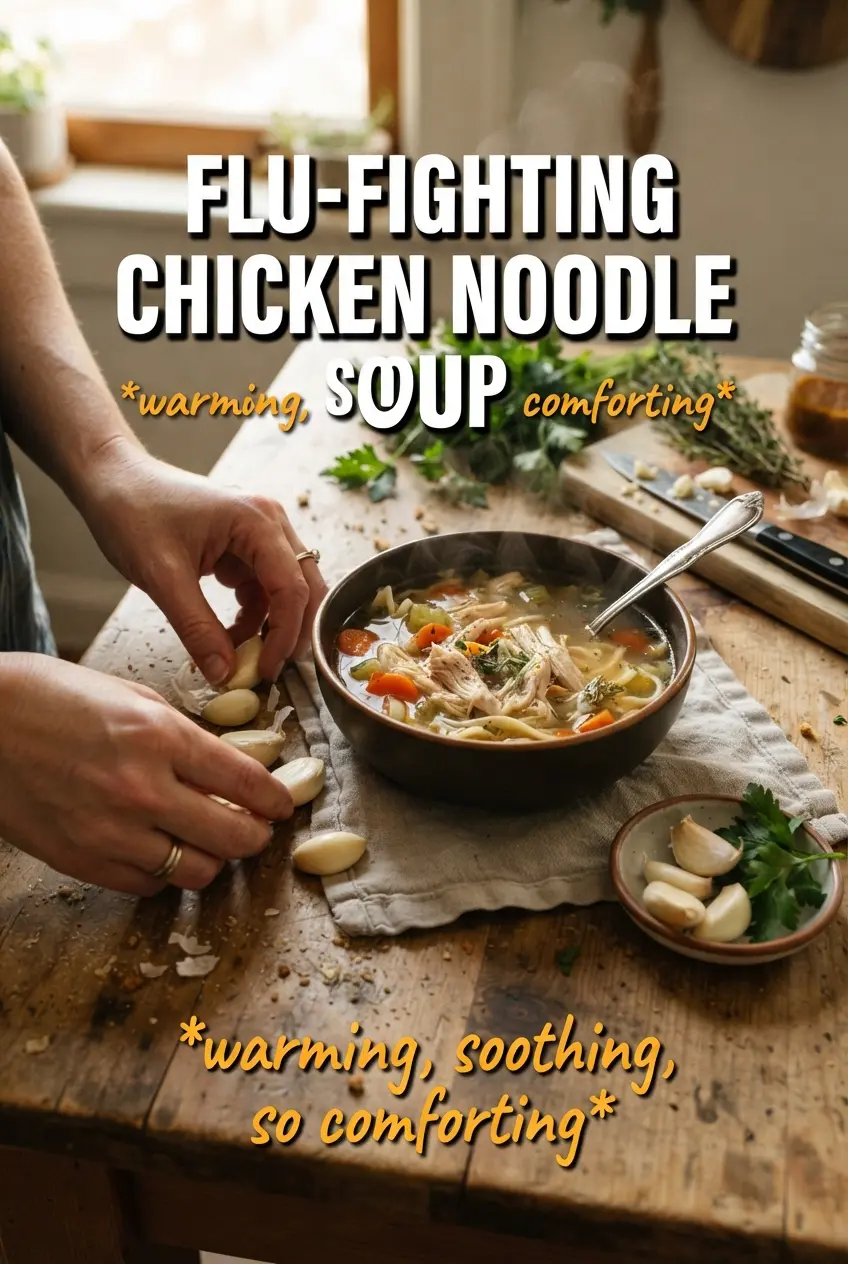
Flu-Fighting Chicken Noodle Soup
Ingredients
Equipment
Method
- Combine chicken, carrots, celery, onion, garlic, ginger, chicken broth, turmeric, cayenne pepper, and dried thyme in a large pot.
- Bring to a boil, then reduce heat and simmer for 25-30 minutes until the chicken is cooked, with a steady bubbling surface.
- Remove the chicken, shred it, and return the shredded chicken to the pot.
- Add egg noodles and cook for 6-8 minutes until tender, stirring occasionally so they cook evenly.
- Stir in honey, lemon juice, and apple cider vinegar, then season with salt and black pepper to taste.
- Serve hot and top with fresh parsley and extra lemon wedges for squeezing.