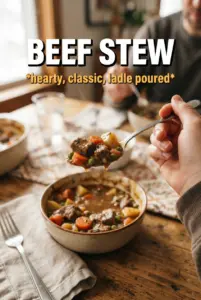
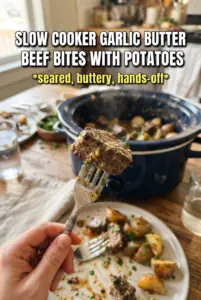
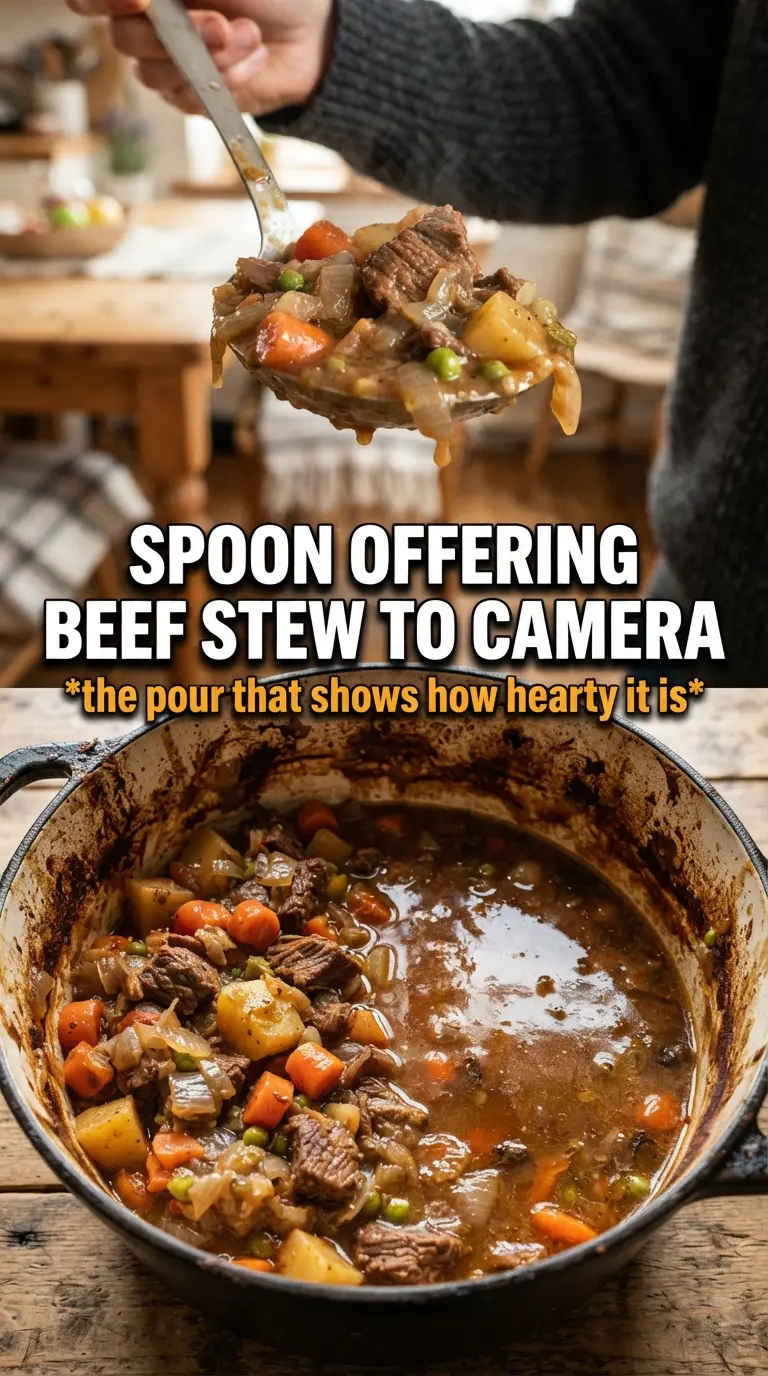
Deep mahogany broth, fall-apart beef, and vegetables that still hold their shape are what turn beef stew into a pot you keep coming back to all winter long. The best bowls have enough body to coat a spoon, enough acidity to keep the gravy from tasting heavy, and enough slow-cooked flavor that a few minutes of prep pay off all evening.
This version leans on a proper sear, tomato paste, and red wine to build a stew that tastes like it simmered all day even though most of the work is hands-off. Tossing the beef in flour before browning helps the broth thicken naturally, and adding the potatoes later keeps them from collapsing into the pot. The peas go in at the end so they stay bright instead of turning dull and mushy.
Below, I’ll walk you through the few steps that matter most, plus the small adjustments that keep the broth rich and the beef tender. If you’ve had stew come out thin, bland, or stringy before, the details here will help.
The broth thickened up beautifully and the beef was fork-tender after about 75 minutes. I loved that the potatoes held their shape and the peas stayed bright at the end.
Save this beef stew for the night you want a rich, wine-kissed broth, tender beef, and a one-pot dinner that tastes even better the next day.
The Sear Is What Gives Beef Stew Its Real Flavor
Beef stew goes flat when the meat steams instead of browns. That deep crust on the beef is where the savory flavor starts, and it only happens if the pan is hot, the pieces are dry, and you leave enough room for actual browning. Crowding the pan drops the temperature fast and leaves you with gray meat and a thin broth.
The flour coating does two jobs here. It helps the beef brown a little more evenly, and it gives the broth enough body to cling to the vegetables without turning gluey. The trick is to shake off the excess and sear in batches so the flour doesn’t scorch before the meat gets color.
What Each Ingredient Is Actually Doing in This Stew
- Beef chuck — This is the cut that turns tender after a long simmer. Chuck has enough connective tissue to soften into that classic stew texture; leaner beef gets dry before the broth has time to develop. Cut it into even 1.5-inch cubes so the pieces finish at the same time.
- Yukon gold potatoes — These hold their shape better than russets and give the stew a creamy bite without falling apart. If you swap in russets, expect them to break down more and thicken the broth a bit more.
- Red wine — Wine adds depth and a little acidity, which keeps the stew from tasting one-note. Use something dry and drinkable; there’s no need for an expensive bottle, but avoid anything sweet. If you don’t want to cook with wine, use extra broth plus a splash of balsamic vinegar for brightness.
- Tomato paste and diced tomatoes — The paste concentrates the base flavor and helps darken the broth, while the diced tomatoes bring a gentle acidity that lifts the whole pot. Cooking the paste for a minute or two before adding liquid keeps it from tasting raw.
- Frozen peas — They’re not just for color. Added at the end, they give you a fresh pop against the rich broth and tender beef. If they go in too early, they turn dull and lose their sweetness.
The 20 Minutes That Build the Stew Base
Brown the Beef in Batches
Season the beef, toss it with flour, then sear it in hot olive oil until the surfaces are deeply browned, not just tan. You want a crust that releases from the pan with some resistance. If the meat sticks hard or starts to steam, the pan is too crowded or not hot enough. Pull the browned pieces out before they overcook; they’ll finish in the stew later.
Cook the Vegetables Until the Onions Lose Their Edge
Add the onion, carrots, and celery to the same pot and scrape up the browned bits as they soften. After about five minutes, the onion should look translucent and the vegetables should smell sweet instead of sharp. Stir in the garlic and tomato paste and cook for two minutes more so the paste darkens slightly. That step matters because raw tomato paste gives the stew a metallic edge.
Deglaze, Then Let It Simmer Slowly
Pour in the wine and stir until the bottom of the pot is clean. Then add the broth, tomatoes, Worcestershire, thyme, bay leaves, and the browned beef. Bring the pot up to a boil first, then drop it to a steady simmer and cover it. If the liquid is bubbling hard, the beef tightens up instead of softening, so keep the heat low enough that you see only gentle movement at the surface.
Add the Potatoes at the Right Time
Once the beef is nearly tender, stir in the potatoes and keep simmering until they’re cooked through but not falling apart. This usually takes about 20 minutes. If they go in at the beginning, they soak up liquid and collapse before the beef is done. Finish with the peas for the last few minutes, then remove the bay leaves and season the stew with salt and pepper.
How to Adapt This Beef Stew for Different Kitchens and Schedules
Gluten-Free Beef Stew
Swap the all-purpose flour for a gluten-free flour blend or use cornstarch only at the very end if you want the broth thicker. The flavor stays the same, but the texture will be slightly lighter unless you let the stew reduce uncovered for the last 10 minutes.
No-Wine Version
Use an extra cup of beef broth and add 1 to 2 teaspoons of balsamic vinegar or red wine vinegar at the end. You’ll lose the deep wine note, but the stew will still taste balanced and rich instead of flat.
Extra-Hearty Vegetable Swap
You can swap the peas for mushrooms, parsnips, or turnips if you want a more earthy pot. Add firmer vegetables with the potatoes and mushrooms after the onions have softened so they keep some texture instead of disappearing into the broth.
Storage and Reheating
- Refrigerator: Keeps well for 4 days. The broth thickens as it chills, and the flavor gets deeper overnight.
- Freezer: Freezes well for up to 3 months. Cool it completely first, then portion it into containers, leaving a little room for expansion.
- Reheating: Reheat gently on the stove over medium-low heat, stirring occasionally and adding a splash of broth or water if needed. Don’t boil it hard or the beef can tighten up and the potatoes can break apart.
Answers to the Questions Worth Asking
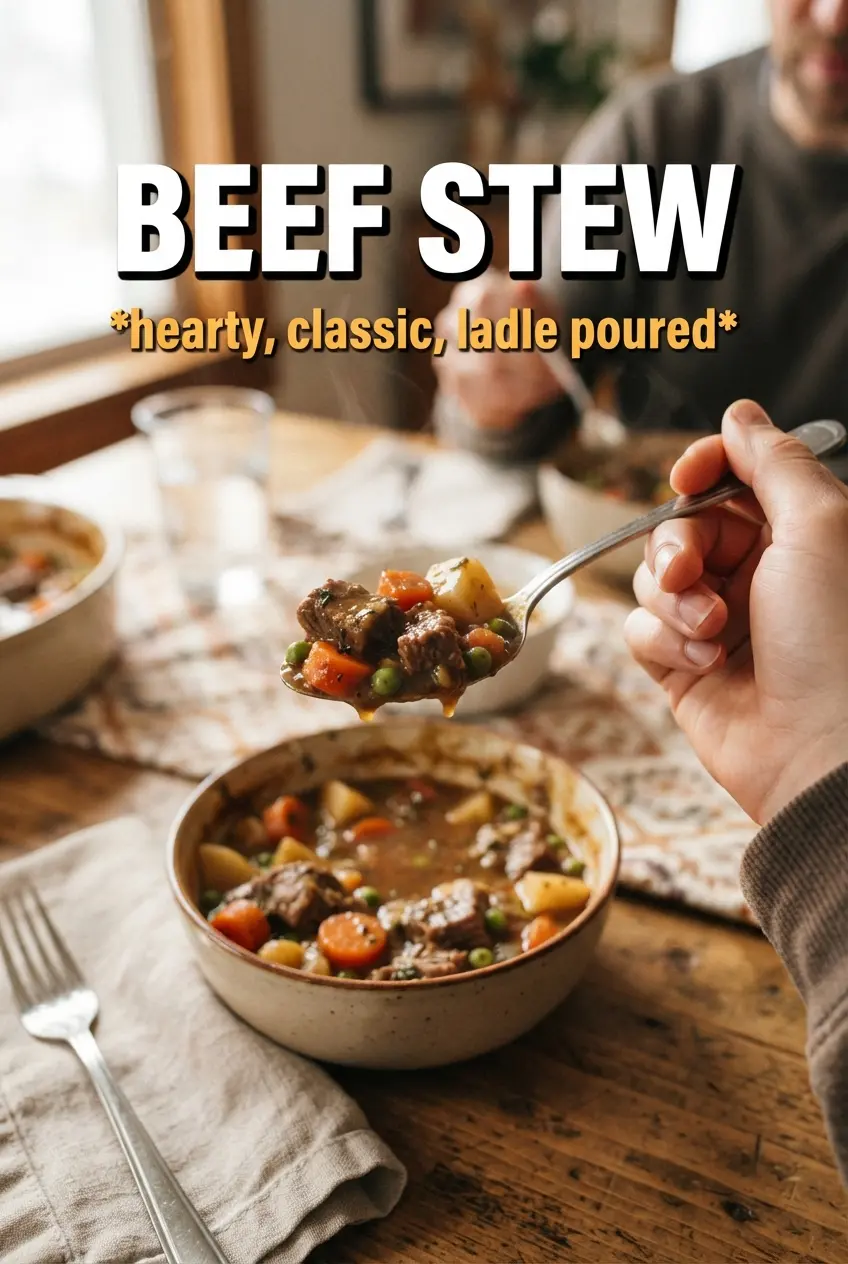
Beef Stew
Ingredients
Equipment
Method
- Season the beef by tossing the cubes with the all-purpose flour until evenly coated. You should see a dry, lightly dusted surface on each piece.
- Heat olive oil in a Dutch oven over high heat and sear the beef in batches until deeply browned, about 3 to 5 minutes per batch. Remove the beef and set aside when you get dark, crisp edges.
- In the same pot, sauté the onion, carrots, and celery for 5 minutes. Stir until the onion softens and the vegetables start to look glossy.
- Add the garlic and tomato paste and cook for 2 more minutes. Keep stirring until fragrant and slightly darkened.
- Deglaze with the red wine, scraping up the browned bits from the bottom of the pot. Let it bubble for about 1 to 2 minutes so the liquid reduces slightly.
- Add the beef broth, diced tomatoes, Worcestershire, dried thyme, bay leaves, and the browned beef. Stir to combine so everything is submerged in the mahogany broth.
- Bring the stew to a boil, then reduce the heat, cover, and simmer for 60 to 75 minutes until the beef is very tender. It should be fork-tender with visible softening at the edges.
- Add the cubed Yukon gold potatoes and cook for 20 more minutes. The potatoes should be tender when pierced with a fork.
- Add the frozen peas and cook for 3 minutes. They should turn bright green and heat through without going dull.
- Remove the bay leaves, then season with salt and pepper to taste. Taste and adjust until the broth is balanced and savory.