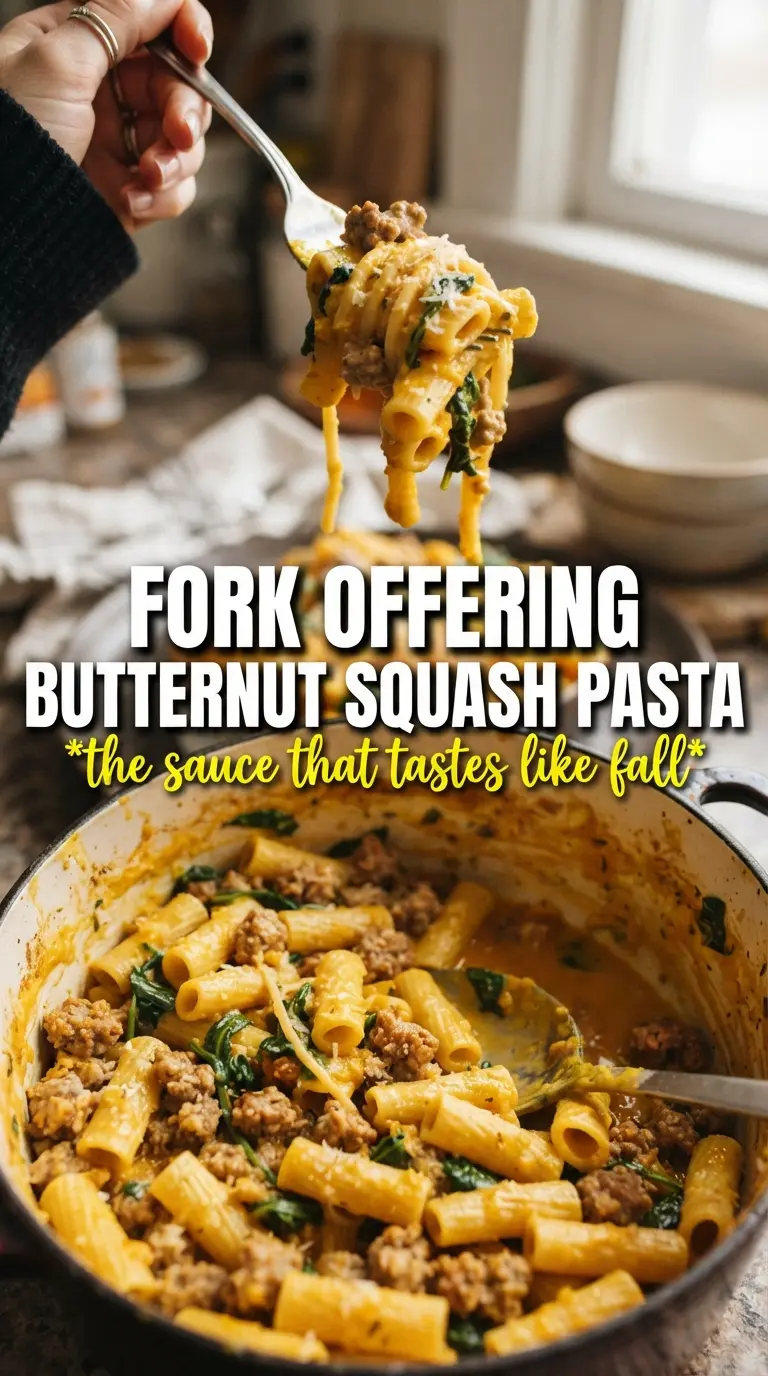
Creamy butternut squash pasta gets its best texture when the sauce lands somewhere between silky and clingy, coating every ridge of rigatoni without turning heavy. Add savory Italian sausage and a handful of spinach, and you get a weeknight dinner that tastes like it took a lot more effort than it did. The squash brings gentle sweetness, the sausage brings salt and depth, and the parmesan pulls everything into a sauce that settles right into the pasta instead of sliding off it.
The key is building the sauce in the same skillet you used for the sausage. Those browned bits left behind are doing a lot of work, and the pasta water helps turn the squash and cream into something that feels finished instead of flat. I also like a small pinch of nutmeg here. It doesn’t make the dish taste like nutmeg; it just sharpens the squash and keeps the sauce from tasting one-note.
Below, I’ve broken down the part that matters most: how to keep the sauce smooth, how to use the pasta water the right way, and what to do if you want to swap in a different pasta or make the dish a little lighter.
The sauce turned out silky and coated the rigatoni instead of pooling at the bottom of the bowl. I followed the pasta water tip and it came together in about 5 minutes after the squash went in.
Save this creamy butternut squash pasta with sausage and spinach for a cozy pasta night with a smooth orange sauce and no fussy steps.
The Trick to Keeping Butternut Squash Sauce Creamy Instead of Grainy
Butternut squash puree can go from velvety to pasty fast if it gets pushed too hard over high heat. The cream doesn’t need a hard boil to thicken; it needs a gentle simmer so the squash can relax into it and the parmesan can melt without clumping. If the sauce looks tight before the pasta goes in, a splash of reserved pasta water loosens it in the best way because the starch helps the sauce cling.
The other place people stumble is the cheese. Add parmesan after the squash and cream have simmered together for a few minutes, not before. That keeps the sauce smooth and gives you a glossy finish instead of a sandy one.
- Butternut squash puree — This is the base of the sauce, so use a puree that tastes clean and sweet, not watery. Canned puree works well here, and homemade puree is great if it’s thick and fully blended. If your puree seems loose, simmer it a minute or two longer before adding cheese.
- Heavy cream — This gives the sauce body and keeps the squash from tasting sharp or thin. Half-and-half will work in a pinch, but the sauce won’t be as plush. If you use a lighter dairy option, keep the heat low so it doesn’t separate.
- Italian sausage — The sausage does the heavy lifting on flavor and salt. Mild or hot both work, and the hot version gives the sauce more edge. If you want a leaner result, use chicken sausage, but add a little extra olive oil because you’ll lose some of the fat that carries flavor.
- Reserved pasta water — This is not optional if you want the sauce to cling properly. The starch in the water helps emulsify the cream and squash into a smoother coating. Add it a splash at a time until the sauce looks glossy and moves easily through the pan.
- Parmesan — Freshly grated parmesan melts better and gives the sauce a cleaner finish than the shelf-stable kind. Pre-grated cheese often contains anti-caking agents that can make the sauce a little sandy. Grate it fine so it disappears into the sauce instead of sitting in little specks.
What Each Ingredient Is Actually Doing in This Recipe
- Primary ingredient (the star) — Quality matters most. Choose the best you can find.
- Cooking medium (oil, butter, or broth) — This carries flavors and prevents dryness.
- Seasonings (salt, pepper, spices, herbs) — Layer flavors so nothing overpowers. Build depth gradually.
- Aromatics (garlic, onion, herbs) — Cook with fat to bloom flavors. Become the foundation.
- Supporting ingredients — Complement the main ingredient without overpowering it.
- Sauce or liquid (if applicable) — Brings flavors together. Balance richness with acid.
- Acid (lemon, vinegar, wine, or other) — Brightens and prevents flat-tasting results.
- Final finish (garnish, glaze, or sauce) — Prevents one-dimensional taste and adds visual appeal.
Building the Sauce in the Same Pan You Browned the Sausage In
Brown the sausage until it leaves fond behind
Cook the sausage in a large skillet until it’s deeply browned and no longer looks wet, breaking it into crumbles as it cooks. You want browned bits stuck to the bottom of the pan; that is flavor, not mess. If there’s a lot of grease, drain off the excess, but leave enough to cook the onion without sticking.
Soften the onion before adding the garlic
Let the diced onion cook until it turns translucent and starts to take on a little color at the edges. That usually takes about 4 minutes, and rushing this stage leaves the sauce tasting raw underneath the sweetness of the squash. Add the garlic at the end of this stage so it perfumes the pan instead of burning.
Let the squash and cream simmer, not boil
Stir in the puree, cream, nutmeg, and red pepper flakes, then bring the mixture to a gentle simmer. If it boils hard, the dairy can separate and the sauce can turn greasy. After a few minutes, it should look smoother and a little thicker, with a sheen on top.
Finish with parmesan, pasta, and spinach
Stir in the parmesan off the hottest part of the burner if your skillet runs hot, then add the pasta and a little reserved water. Toss until the sauce coats every piece and the spinach collapses into dark green ribbons. Return the sausage last so it stays juicy instead of overcooking in the sauce.
Three Ways to Make This Pasta Fit What You Have on Hand
Make It Dairy-Free Without Losing the Creamy Texture
Use full-fat coconut cream or an unsweetened dairy-free cooking cream in place of the heavy cream, and swap the parmesan for a dairy-free parmesan-style topping if you like. The sauce will be a little less sharp and a little richer, but the squash still gives you that velvety body. Keep the heat low so the alternative cream stays smooth.
Use Turkey Sausage for a Lighter Version
Turkey sausage works well, but it won’t leave behind as much fat or as deep a browned flavor. Add a small drizzle of olive oil when you sauté the onion so the pan still carries the seasonings properly. The dish ends up a little leaner but still hearty.
Go Gluten-Free With the Right Pasta Shape
Use a sturdy gluten-free penne or rigatoni that can hold up to tossing in sauce. Some gluten-free pastas soften fast, so pull them when they still have a little bite and finish them in the skillet with the sauce. That final toss helps them absorb flavor without turning mushy.
Swap the Spinach for Kale When You Want More Texture
Chopped kale works, but it needs a little more time than spinach to soften. Add it a minute or two earlier and splash in a bit of pasta water so it steams in the sauce. The result is heartier and a little earthier, with more bite in the finished dish.
Storage and Reheating
- Refrigerator: Store leftovers in an airtight container for up to 4 days. The sauce will thicken as it chills, and the pasta will absorb some of it.
- Freezer: This freezes, but the cream sauce can loosen a bit after thawing. Freeze in individual portions for up to 2 months, and expect the texture to be slightly softer when reheated.
- Reheating: Warm gently on the stovetop over low heat with a splash of water or cream to bring the sauce back together. The biggest mistake is blasting it in the microwave until the dairy splits and the pasta dries out.
Questions I Get Asked About This Recipe
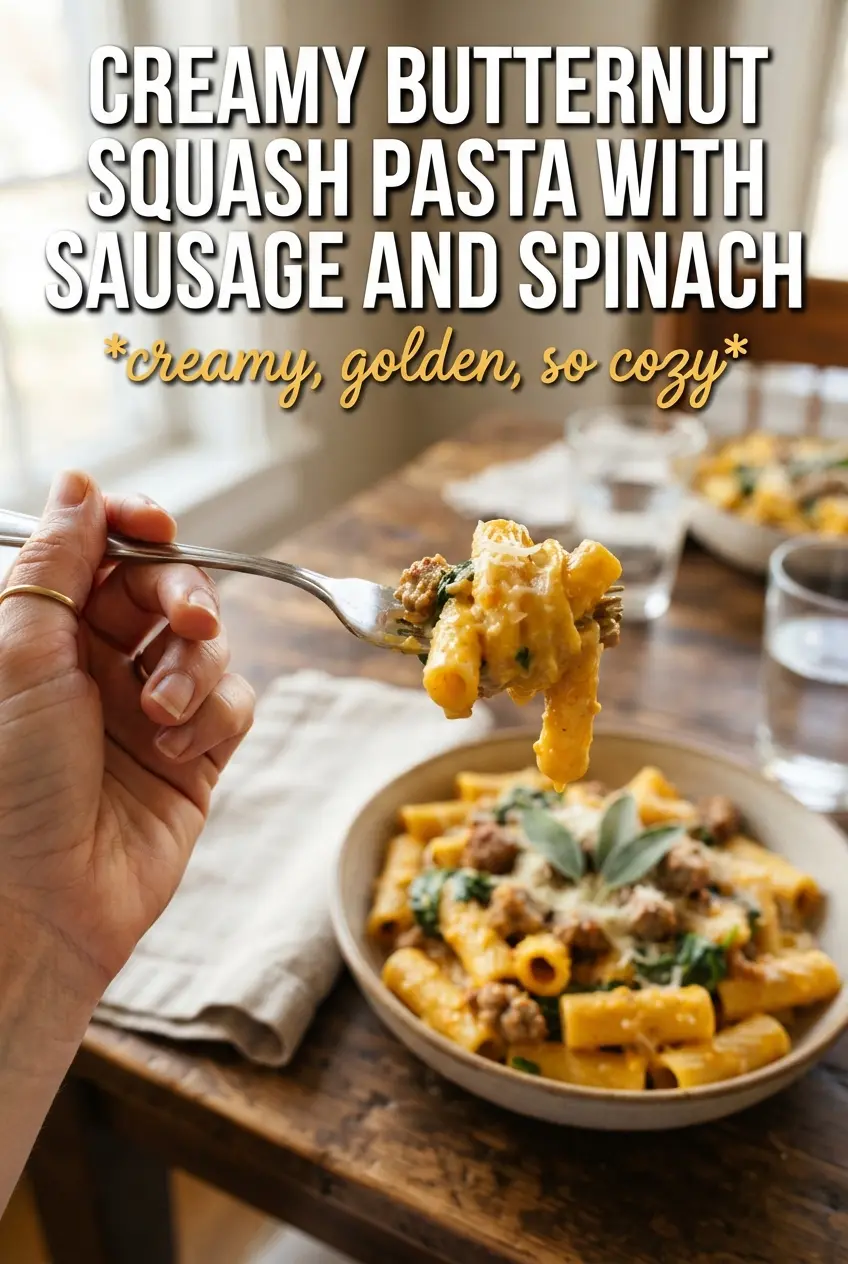
Creamy Butternut Squash Pasta With Sausage And Spinach
Ingredients
Equipment
Method
- Bring a large pot of salted water to a boil, then cook rigatoni or penne until al dente, about 9–11 minutes. Reserve 1/2 cup pasta cooking water before draining, and set pasta aside.
- Brown Italian sausage in a large skillet over medium-high heat until crumbled and cooked through, about 8–10 minutes. Drain excess fat and set sausage aside.
- Sauté onion in the same skillet for 4 minutes over medium heat, stirring until softened. Add garlic and Italian seasoning and cook for 2 minutes, until fragrant.
- Add butternut squash puree and heavy cream to the skillet, stirring to combine. Stir in nutmeg and red pepper flakes and bring the mixture to a gentle simmer.
- Simmer the sauce for 5 minutes, stirring occasionally, until slightly thickened. Add parmesan and stir until smooth and fully melted.
- Toss the cooked pasta into the skillet with the reserved pasta cooking water, coating everything evenly. Add baby spinach and toss until wilted, about 1–2 minutes.
- Return the browned sausage to the pan and season with salt and pepper to taste. Stir until everything is hot and the sauce clings to the pasta.