Soft gnocchi, browned sausage, and a velvety butternut squash sauce land in the same skillet and turn into one of those dinners that disappears fast. The sauce clings to every pillow of gnocchi instead of pooling underneath, the sausage brings enough salt and richness to keep the squash from tasting flat, and the crispy sage gives each bite a little snap of warmth at the end.
The trick is building the flavor in layers. Browning the sausage first gives you the savory base, then the sage fries in the leftover butter so it perfumes the pan without burning. From there, the squash puree and cream melt together into a sauce that tastes rounded and full, not sweet or one-note, especially once the parmesan and nutmeg go in. If your squash puree is thin, the sauce can get loose, so roast and blend it until it’s thick and smooth.
Below, I’ll walk through the part that keeps the sauce silky, the ingredient choices that matter most, and a few smart swaps if you need to work with what’s already in your kitchen.
The sauce coated the gnocchi perfectly and never turned watery, even after sitting on the stove for a few minutes. My husband went back for seconds before I’d even plated mine.
Save this creamy butternut squash gnocchi for the nights when you want a rich skillet dinner with crispy sage and barely any cleanup.
The Fastest Way to Ruin This Dish Is Overcooking the Gnocchi
Potato gnocchi only needs a short cook, and that’s why this recipe works so well. The sauce is already thick and rich, so the gnocchi should stay tender and a little springy, not turn mushy and fall apart in the pan. If they overcook in water before they ever hit the skillet, they’ll go soft fast once they’re tossed with the sauce.
The same rule applies to the sauce itself. Butternut squash puree can be naturally sweet and a little dense, which is a good thing here, but it needs enough cream and parmesan to taste balanced. Let it simmer until it looks glossy and coats the back of a spoon. If it starts to separate or look greasy, the heat is too high and the cheese went in too aggressively.
- Cook the gnocchi until it floats and gives just a little when pressed. That’s enough.
- Keep the sauce at a gentle simmer, not a boil, so the dairy stays smooth.
- Add the gnocchi to the sauce at the end so it soaks up flavor without breaking down.
What Each Ingredient Is Actually Doing in This Dish

The squash puree is the backbone of the sauce, and it matters more than people think. Roasted squash puree has a deeper, more caramelized taste than steamed or boiled squash, which keeps the sauce from tasting dull. If you’re using store-bought puree, check that it’s thick and unsweetened. Thin puree will need a longer simmer, or the sauce will feel loose.
Italian sausage brings the salt, fat, and a lot of the savory depth, so use one you actually like the taste of. Mild sausage gives the dish a softer, rounder finish, while hot sausage adds a little kick that plays nicely against the sweet squash. The butter and sage are doing different jobs: butter carries flavor and helps fry the sage, while the sage leaves give you that crisp, earthy finish you’d miss if you skipped them.
- Potato gnocchi — Shelf-stable gnocchi works well here because the sauce is rich enough to coat it. Fresh gnocchi cooks even faster, so keep an eye on it and pull it as soon as it floats.
- Italian sausage — Pork sausage gives the best texture and flavor, but chicken sausage works if you want something lighter. Just know the sauce may need a touch more salt.
- Butternut squash puree — Use thick puree for the best body. If yours is watery, simmer it longer before adding the gnocchi.
- Heavy cream — This is what makes the sauce silky. Half-and-half can work in a pinch, but the sauce won’t cling as well.
- Parmesan — Freshly grated parmesan melts more smoothly than the pre-shredded kind, which can stay grainy.
- Sage — Fresh leaves are worth using here. They crisp up in the butter and give the dish its sharp, woodsy finish.
Building the Skillet Sauce in the Right Order
Brown the Sausage First
Start with the sausage in a large skillet and break it into small crumbles as it cooks. You want deep brown edges and no pink left, because that browned fond left behind in the pan is part of the sauce’s flavor. If the pan looks crowded, the sausage will steam instead of brown, so give it enough room to actually sizzle.
Fry the Sage in the Butter
Once the sausage comes out, add the butter and let it melt before the sage goes in. The leaves should sizzle immediately and go crisp in under a minute, with the edges darkening just a little. Pull them before they turn black, because they keep cooking for a few seconds after they leave the pan.
Build the Sauce Slowly
Add the garlic to the sage butter and stir just until fragrant. Then add the squash puree and cream and let the mixture come together over medium-low heat. This is where people get into trouble by rushing; high heat can split the dairy and make the sauce look broken before the cheese even melts.
Finish With Cheese and Gnocchi
Stir in the parmesan, nutmeg, and red pepper flakes, then let the sauce simmer until it looks smooth and glossy. Add the cooked gnocchi and sausage back to the skillet and toss until every piece is coated. If the sauce tightens too much, loosen it with a splash of pasta water or a little extra cream, but only after the gnocchi is in the pan.
How to Adapt This for a Different Pantry
Dairy-Free Version With Coconut Cream
Use full-fat coconut cream instead of heavy cream and a dairy-free parmesan alternative, then taste carefully at the end. The sauce will still be rich, but the coconut adds a faint sweetness, so lean a little harder on the salt and red pepper flakes to keep the dish balanced.
Make It Gluten-Free Without Changing the Sauce
Use gluten-free gnocchi and keep the rest of the recipe the same. The sauce and sausage are already naturally gluten-free as long as your sausage brand doesn’t add fillers, so this swap mostly changes the texture of the dumplings, not the overall dish.
Swap In Chicken Sausage for a Lighter Finish
Chicken sausage works well if you want less richness, especially with spinach or apple varieties. You’ll lose some of the deep porky drippings, so don’t skip the butter and let the garlic and sage do a little more of the flavor lifting.
Storage and Reheating
- Refrigerator: Store leftovers in an airtight container for up to 3 days. The sauce will thicken as it chills.
- Freezer: It freezes, but the cream sauce can turn a little grainy after thawing, so I’d only freeze it if you have to.
- Reheating: Warm it gently in a skillet over low heat with a splash of cream or milk. Don’t blast it in the microwave on high, or the sauce can split and the gnocchi can turn gummy.
Questions I Get Asked About This Recipe
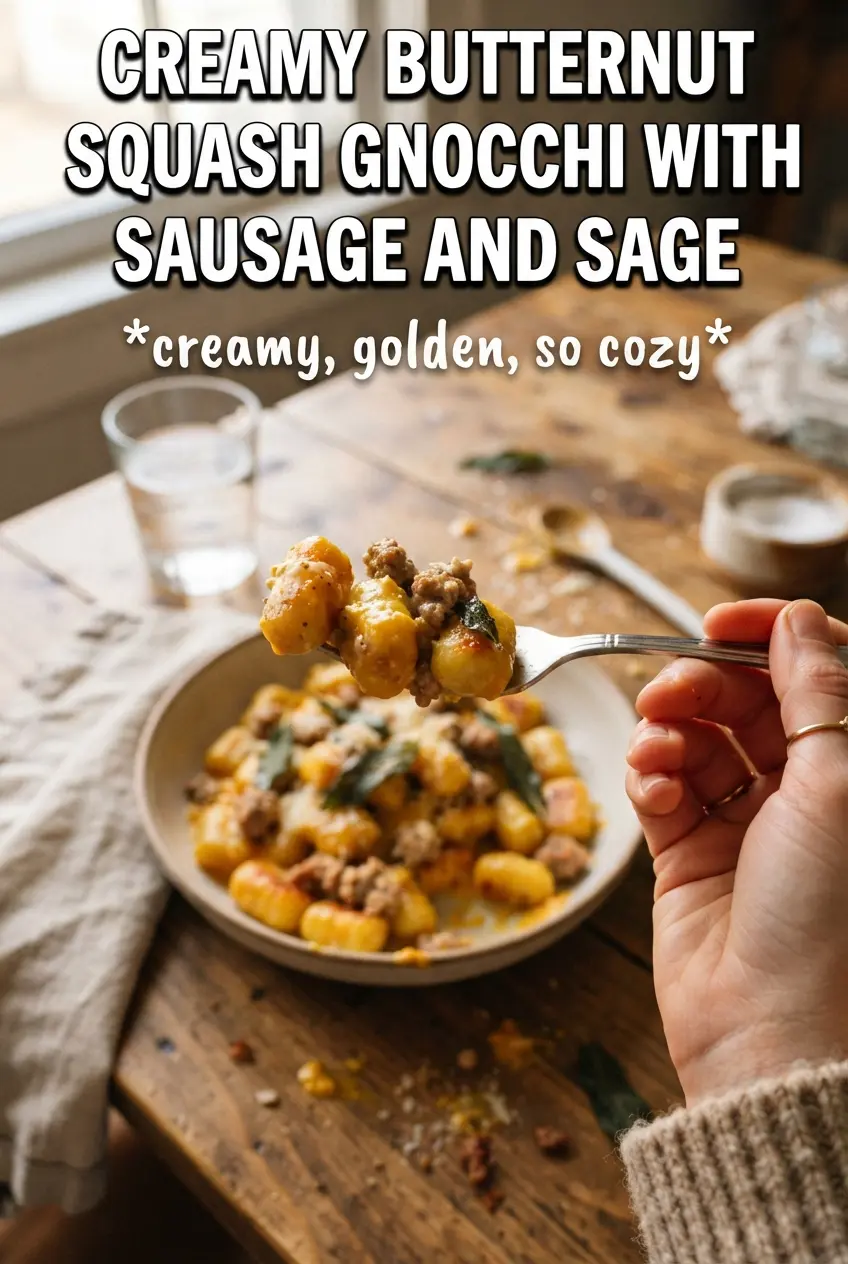
Creamy Butternut Squash Gnocchi With Sausage And Sage
Ingredients
Equipment
Method
- Heat a large skillet over medium-high heat, then brown the Italian sausage until cooked through. Drain off excess fat and set the sausage aside.
- In the same skillet, melt the unsalted butter and fry the fresh sage leaves until crisp and darkened at the edges, about 1–2 minutes. Remove the sage leaves to a plate to crisp further.
- Reduce heat to medium and sauté the minced garlic in the butter for 1 minute until fragrant. Stir in the butternut squash puree and heavy cream.
- Add the grated parmesan, nutmeg, and red pepper flakes, then simmer for 5 minutes, stirring often, until the sauce is smooth. Keep the simmer gentle to prevent separation.
- Cook the potato gnocchi according to package instructions, then add the cooked gnocchi directly into the simmering sauce. Toss gently to coat as the sauce clings to the gnocchi.
- Return the browned sausage to the skillet and toss everything together until hot. Season with salt and pepper to taste.
- Serve immediately by topping with crispy sage leaves and extra parmesan. Add the sage right before serving for best crunch and aroma.