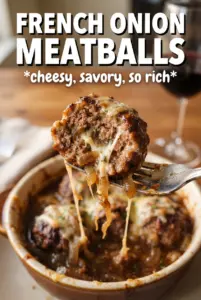
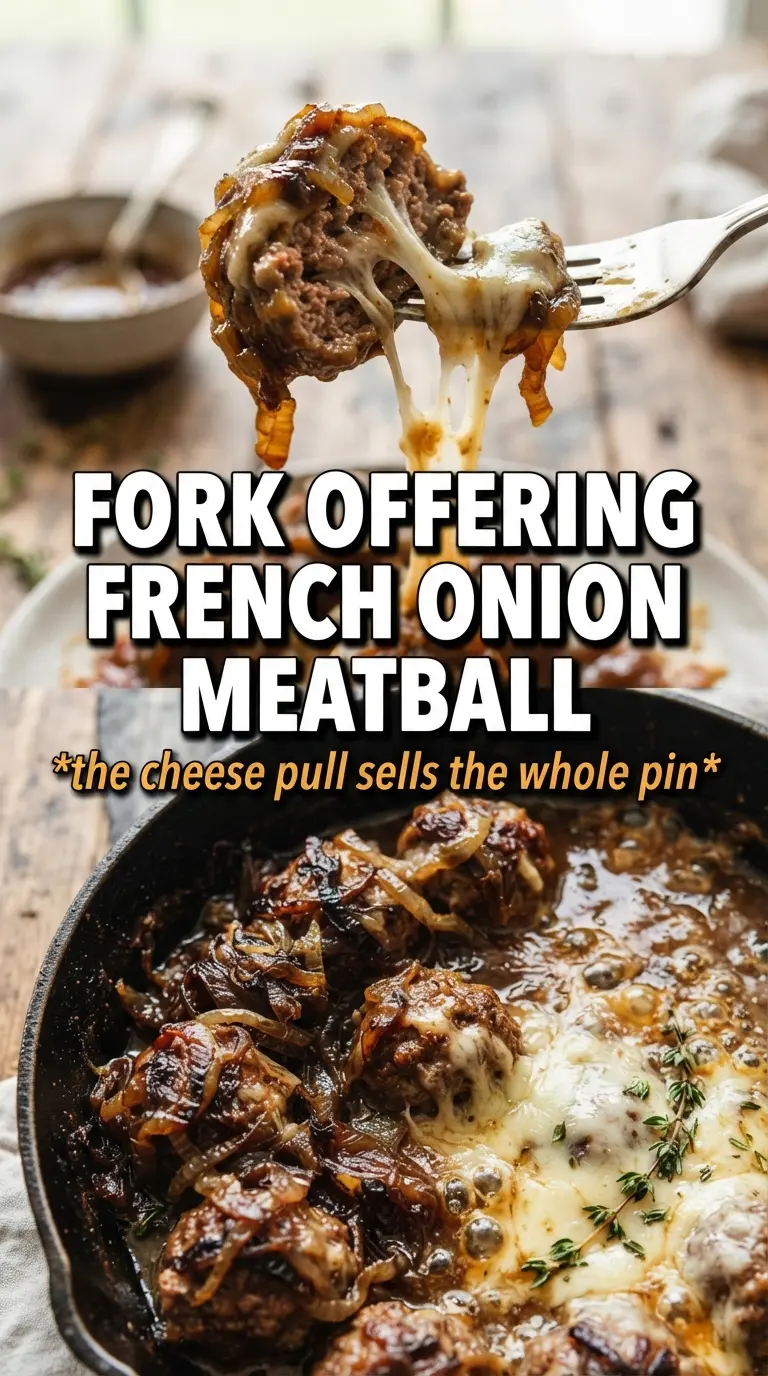
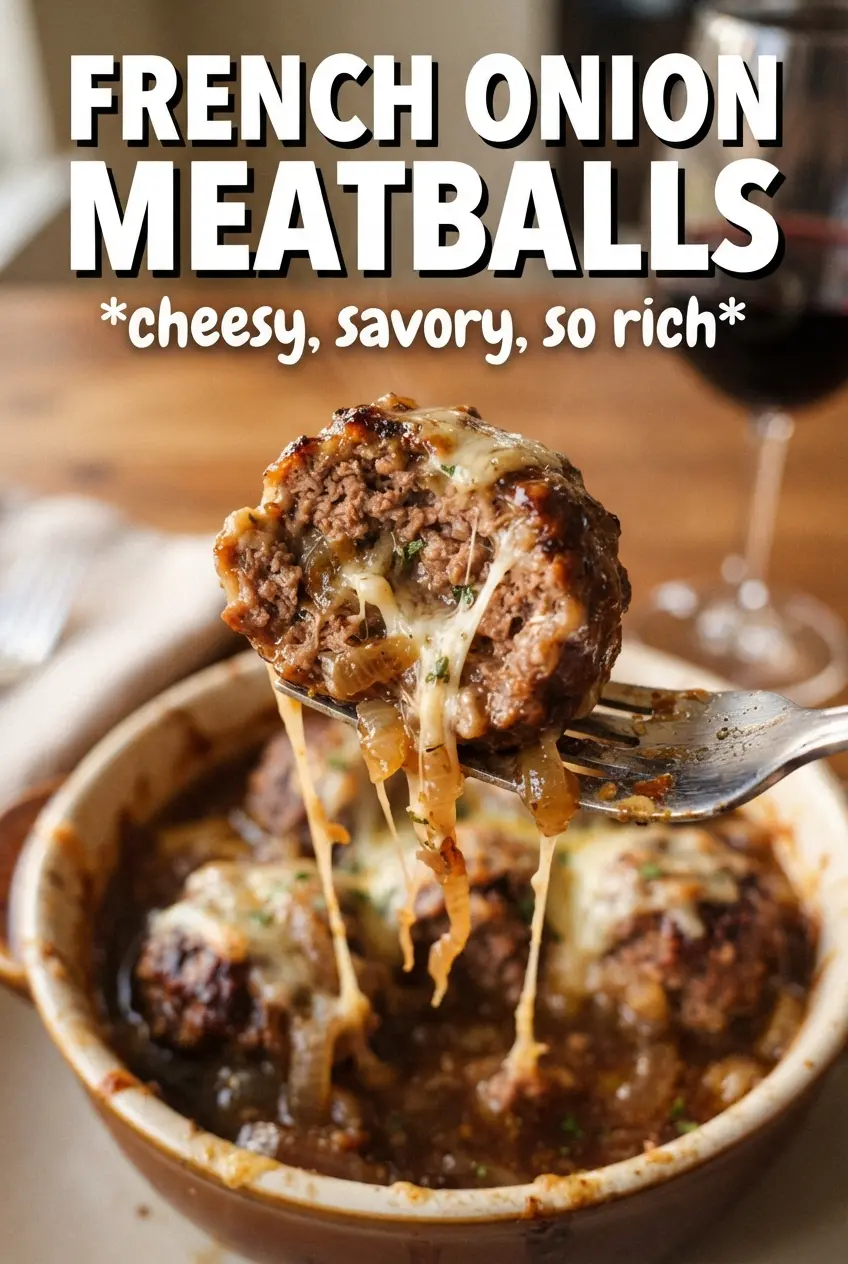
French onion meatballs bring everything people love about French onion soup into a hearty main dish: deeply browned meatballs, slow-cooked onions that turn sweet and jammy, and a blanket of melted Gruyere that pulls into golden strands when you spoon it apart. The best part is that the sauce doesn’t taste like a shortcut. It tastes like onions that were given the time they needed, which is what makes this dish feel rich instead of just salty and cheesy.
The flavor comes from building in layers. The meatballs are browned first so they hold their shape and leave fond in the pan, then the onions cook in the same skillet until they soften, collapse, and turn bronze at the edges. A splash of white wine or broth loosens all that goodness from the bottom, and thyme plus Worcestershire give the sauce the kind of savory depth you’d expect from a proper French onion base.
Below, I’ve included the one part that most often gets rushed, the ingredient swaps that still keep the dish in balance, and what to do if you want to serve it straight from the skillet or bake it under a proper cheese crust.
The onions cooked down into this gorgeous rich sauce, and the meatballs stayed tender even after broiling. My husband kept going back for the cheese crust and asked if I could put this on the regular dinner rotation.
Save these French Onion Meatballs for a cozy dinner with a proper caramelized onion sauce and a bubbling Gruyere crust.
The Onion Sauce Only Works If You Don’t Rush It
The part that makes this dish taste like French onion soup is the onion base, and that only happens when the onions are allowed to cook down until they’re soft, browned, and almost sticky around the edges. If they stay pale, the sauce ends up tasting thin and sharp instead of sweet and layered. This is one of those recipes where patience changes the flavor more than any extra seasoning ever could.
Brown the meatballs first, then use the same pan for the onions. That fond on the bottom is not a cleanup problem; it’s the backbone of the sauce. If the skillet starts to look dry before the onions are done, add just a small splash of butter or broth and keep going. The goal is golden onions with a spoonable texture, not steamed rings sitting in liquid.
What Each Ingredient Is Actually Doing in This Dish
- Ground beef — Use an 80/20 blend if you can. It stays juicy after browning and simmering, which matters because lean beef can turn dry once it goes under the broiler.
- Breadcrumbs and egg — These hold the meatballs together and keep them tender. If you need a gluten-free version, use gluten-free breadcrumbs or crushed gluten-free crackers in the same amount.
- Worcestershire — This gives the meatballs and sauce a deep savory note that plain salt can’t replace. It doesn’t make the dish taste like Worcestershire; it just makes everything taste meatier.
- Onions — Three large onions sounds like a lot, but they cook down dramatically. Yellow onions are the best choice here because they caramelize well and bring the right balance of sweetness and depth.
- Dry white wine or beef broth — Wine adds brightness and helps lift the browned bits from the skillet. If you skip it, use broth and a small splash of vinegar or lemon juice at the end to replace some of that lift.
- Gruyere or provolone — Gruyere gives the classic nutty finish; provolone melts beautifully and is easier to find. Either one works, but pre-shredded cheese won’t melt as cleanly as freshly shredded cheese.
The 20 Minutes That Actually Matter
Mixing the Meatballs Without Packing Them
Combine the beef, breadcrumbs, egg, Worcestershire, garlic powder, onion powder, salt, and pepper just until everything looks evenly distributed. If you work the mixture too hard, the meatballs turn dense instead of tender. Roll them into 1.5-inch balls and keep the pressure light; they should hold together without looking compressed.
Getting a Deep Brown on the Meatballs
Browm the meatballs in butter over medium heat until they’ve got color on more than one side, then move them out of the pan. You’re not cooking them through here. You’re building flavor and setting the outside so they can finish gently in the sauce without falling apart.
Cooking the Onions Until They Taste Sweet
Add the sliced onions to the same skillet and let them cook low and slow in the butter. Stir often at first, then less once they start softening. If the heat is too high, the edges scorch before the centers break down, and that burnt bitterness will carry straight into the sauce. You want soft, amber onions that smell sweet and savory at the same time.
Finishing Under the Broiler
Return the meatballs to the sauce and simmer until they’re cooked through and the flavors have come together. If your skillet can’t go under the broiler, transfer everything to a baking dish before adding the cheese. Broil just until the top is melted, bubbling, and spotted with deep gold; walk away for two minutes too long and the cheese turns oily and dark.
Three Ways to Make This Work for Your Table
Make it gluten-free
Swap the breadcrumbs for a good gluten-free breadcrumb blend or finely crushed gluten-free crackers. The meatballs will still hold together, and the sauce stays the same. Just check your Worcestershire and broth labels, since those can hide gluten.
Use provolone for a milder, stretchier top
Provolone melts into a softer, silkier cheese layer than Gruyere and gives you a little less nutty intensity. It’s the better pick if you want the onion flavor to stay front and center while still getting that dramatic bubbling top.
Make it ahead for an easier dinner
Cook the meatballs and onion sauce earlier in the day, then reheat gently and add the cheese right before broiling. The sauce actually benefits from a little rest, and the flavors deepen as it sits. Hold the broil until the last minute so the cheese stays bubbly instead of tightening up.
Serve it as a fuller French onion bake
Spoon the meatballs and sauce over toasted bread, mashed potatoes, or buttered egg noodles if you want the dish to stretch further. The sauce is rich enough to coat all three, but bread gives the most classic French onion feel and catches the cheese the best.
Storage and Reheating
- Refrigerator: Store leftovers in an airtight container for up to 4 days. The sauce may thicken as it chills, but that’s normal.
- Freezer: Freeze the meatballs and sauce without the cheese topping for up to 2 months. Add the cheese after reheating so it melts fresh instead of turning grainy.
- Reheating: Warm gently on the stovetop over low heat or in a covered baking dish at 325°F until hot. High heat can tighten the meatballs and make the sauce separate, so keep it low and slow.
Answers to the Questions Worth Asking
French Onion Meatballs
Ingredients
Equipment
Method
- In a mixing bowl, combine ground beef, breadcrumbs, egg, Worcestershire, garlic powder, onion powder, salt, and pepper until just combined. Roll into 1.5-inch balls and set aside on a plate.
- Heat 1 tablespoon of butter in a cast iron skillet over medium-high heat. Brown the meatballs until deeply browned on all sides, then transfer to a plate and set aside.
- Add the remaining butter to the same skillet and reduce to medium-low. Cook the thinly sliced onions, stirring, until caramelized, about 30–35 minutes, turning the onions dark golden and jammy.
- Pour in the wine (or beef broth) to deglaze, scraping up the browned bits. Simmer briefly, then add beef broth, Worcestershire, and fresh thyme until the sauce tastes savory and fragrant.
- Return the browned meatballs to the onion sauce and bring to a gentle simmer. Simmer for 15 minutes, until the meatballs are cooked through and the sauce thickens slightly.
- Transfer to a baking dish if your skillet isn’t oven-safe, then scatter shredded Gruyère or provolone over everything in an even layer. Broil 3–4 minutes until the cheese is golden and bubbly, with browned blistered edges.