Deep, golden broth and tender chicken are what make homestyle chicken noodle soup worth a spot in the regular dinner rotation. The noodles stay slurpable, the vegetables keep their shape, and the dill at the end lifts the whole pot without turning it grassy or sharp. It tastes like the kind of soup that’s been simmering for hours, even though most of the work is hands-off.
The trick is building the broth first with the whole chicken, a few vegetables left intact, peppercorns, and bay leaves. That gives you a broth with body and depth before you add the sliced carrots, celery, and noodles. If you add everything at the start, the vegetables go limp and the noodles overcook before the broth has time to taste like much of anything.
Below, I walk through the small details that make this soup better than the thin, underseasoned version a lot of us grew up with. You’ll also find the best way to keep the noodles from soaking up all the broth if you want leftovers.
The broth had such a deep homemade taste, and the egg noodles stayed tender without getting mushy. I strained it exactly like you said and the soup tasted like it had been on the stove all afternoon.
Save this homestyle chicken noodle soup for the nights when you want a rich broth, tender chicken, and noodles that hold their shape.
The Broth Needs Time Before the Noodles Go In
The biggest mistake with chicken noodle soup is rushing the broth stage and treating it like a race to the noodles. The chicken needs time to give up its flavor, and the aromatics need a slow simmer so the broth tastes savory instead of watery. If the pot is boiling hard the whole time, the broth turns cloudy and the chicken can dry out before it ever gets tender enough to shred cleanly.
Skimming the foam early matters here. That foam is mostly protein and impurities coming to the surface as the pot heats, and removing it gives you a cleaner-tasting soup with a broth that looks as good as it tastes. You also get better control over the final salt level, since a muddy broth often tastes dull and underseasoned no matter how much salt you add at the end.
- Whole chicken or bone-in pieces — A whole chicken gives you the deepest broth because you get skin, bones, and meat all working together. Bone-in thighs or a cut-up fryer work if that’s what you have, but boneless breasts alone won’t build the same body.
- Whole carrots, celery, onion, garlic, bay leaves, and peppercorns — Leaving a few vegetables whole keeps them from collapsing into the broth before the chicken is done. They’re there for flavor, not for serving, so don’t worry about chopping them neatly.
- Wide egg noodles — Their shape holds up well in hot broth and gives the soup that classic homestyle feel. If you use thinner noodles, cut the simmering time a minute or two and watch them closely or they’ll turn soft fast.
- Fresh dill — Add it at the end. Dill loses its clean, fresh edge if it boils too long, and this soup needs that bright finish to balance the rich broth.
What Each Ingredient Is Actually Doing in This Recipe
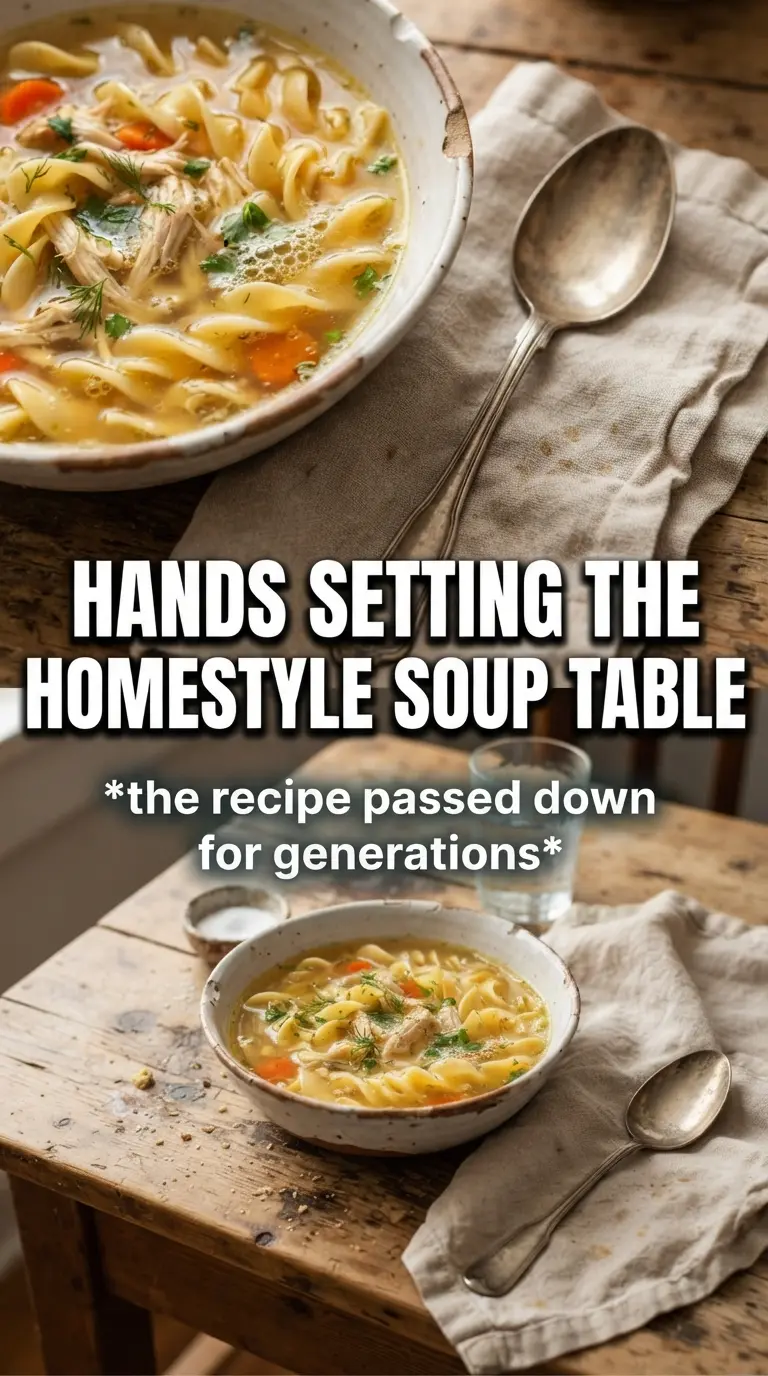
- Primary ingredient (the star) — Quality matters most. Choose the best you can find.
- Cooking medium (oil, butter, or broth) — This carries flavors and prevents dryness.
- Seasonings (salt, pepper, spices, herbs) — Layer flavors so nothing overpowers. Build depth gradually.
- Aromatics (garlic, onion, herbs) — Cook with fat to bloom flavors. Become the foundation.
- Supporting ingredients — Complement the main ingredient without overpowering it.
- Sauce or liquid (if applicable) — Brings flavors together. Balance richness with acid.
- Acid (lemon, vinegar, wine, or other) — Brightens and prevents flat-tasting results.
- Final finish (garnish, glaze, or sauce) — Prevents one-dimensional taste and adds visual appeal.
Building the Soup in the Right Order
Starting With the Flavor Base
Put the chicken, whole vegetables, garlic, bay leaves, peppercorns, and water in the pot before you turn up the heat. Bring it just to a boil, then drop it to a steady simmer. A hard boil makes the broth cloudy and can break the chicken apart before it gets tender enough to shred in satisfying pieces.
Simmering Until the Chicken Gives Up Easily
Cook until the meat pulls away from the bones and the carrots in the broth have gone pale and soft. That usually takes 45 to 60 minutes, depending on the size of the bird. If the chicken still feels tight when you try to lift it, give it more time; tough chicken is the sign you cut the simmer short.
Straining and Shredding Without Losing the Broth
Strain the broth into a clean pot and discard the spent vegetables and peppercorns. Pull the chicken meat off the bones while it’s still warm enough to handle, then shred it into pieces that look like something you’d actually want in a spoonful of soup. Bigger chunks stay juicier than tiny strings, which can disappear into the broth.
Cooking the Fresh Vegetables and Noodles
Add the sliced carrots, celery, diced onion, and remaining garlic to the strained broth and simmer until the carrots are just tender. Then add the noodles and shredded chicken together near the end. If you dump the noodles in too early, they keep drinking broth and go mushy before the soup hits the table.
Finishing With Dill and Salt
Stir in the dill after the noodles are done and season generously with salt and pepper. The broth should taste rounded and savory, not flat or salty at the surface only. If the soup tastes thin, it usually needs more salt than more herbs.
What to Change When You Need a Different Version
Gluten-Free Chicken Noodle Soup
Swap the egg noodles for a certified gluten-free noodle that holds up in broth, and cook it just until tender. Gluten-free noodles can break down faster than wheat noodles, so if you plan on leftovers, cook them separately and add them to each bowl when serving.
Dairy-Free and Naturally Rich
This soup is already dairy-free as written, and that’s part of why the broth tastes so clean. If you want extra body, simmer the broth a little longer after straining so it concentrates before the vegetables go back in.
Using Leftover Chicken Instead of Starting From Scratch
If you already have cooked chicken, use a good-quality stock or broth instead of water and simmer the carrots, celery, onion, and garlic until tender. Add the chicken only long enough to warm through, or it will turn dry and stringy.
How to Keep the Noodles from Soaking Up the Pot
For the best texture on day two, cook the noodles separately and add them to each bowl before ladling in the soup. That keeps the broth clear and the noodles from turning swollen and soft in the fridge.
Storage and Reheating
- Refrigerator: Store for up to 4 days. The noodles will keep absorbing broth, so expect the soup to thicken as it sits.
- Freezer: The broth and chicken freeze well for up to 3 months, but the noodles get soft after freezing. For the best result, freeze the soup without noodles and add fresh noodles when reheating.
- Reheating: Warm gently over medium-low heat until steaming. A hard boil can turn the chicken stringy and break the noodles apart, so keep the simmer quiet and add a splash of water or broth if needed.
Answers to the Questions Worth Asking
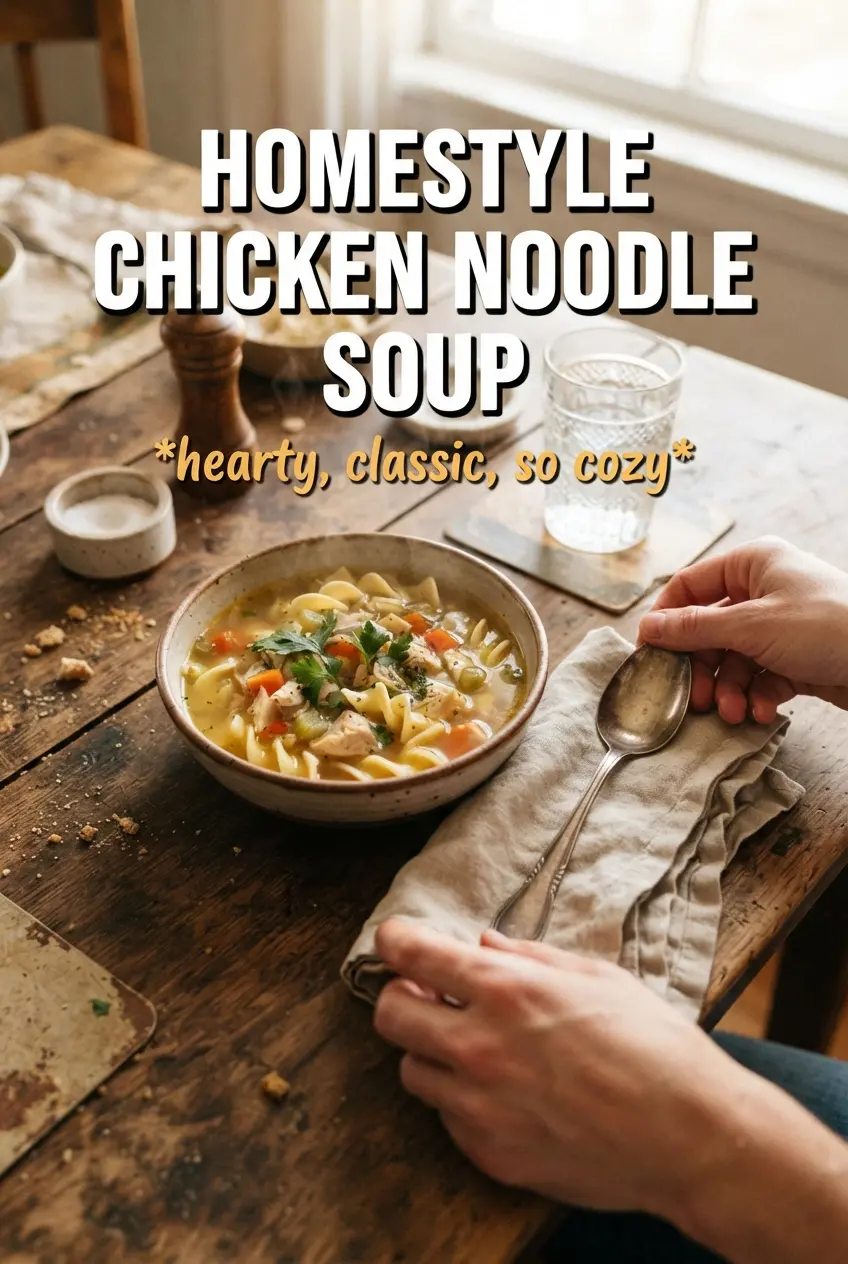
Homestyle Chicken Noodle Soup
Ingredients
Equipment
Method
- Place the whole chicken, 2 whole carrots, 2 whole celery stalks, whole onion, 4 garlic cloves, bay leaves, and whole peppercorns in a large Dutch oven with the water. Bring everything together so the chicken is fully submerged.
- Bring the pot to a boil, skim off the foam, and reduce heat to a gentle simmer for 45-60 minutes. Cook until the chicken is very tender, with steady small bubbles around the edges.
- Strain the broth, discarding the vegetables and peppercorns, then shred the chicken meat. Keep the strained broth in the pot for the next simmer.
- Return the broth to the Dutch oven and bring it back to a simmer. You should see consistent steam and bubbling, not a rolling boil.
- Add the sliced carrots, sliced celery, diced onion, and the remaining garlic, then simmer for 10 minutes. Cook until the vegetables start to soften but still hold their shape.
- Add the wide egg noodles and shredded chicken, then cook for 6-8 minutes until the noodles are tender. Stir occasionally so noodles don’t stick to the bottom.
- Stir in the fresh dill and season generously with salt and pepper. Taste and adjust, then simmer briefly to warm everything through.