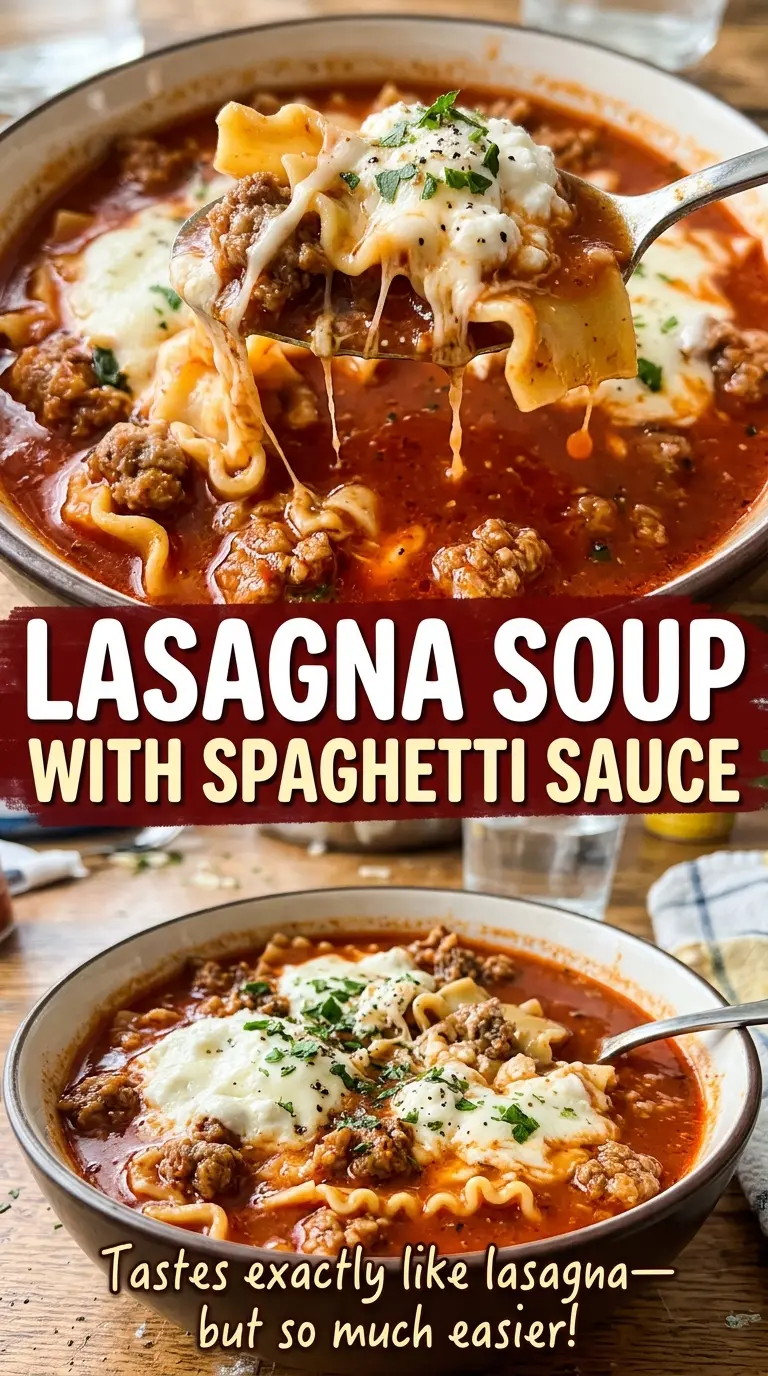
Lasagna soup with spaghetti sauce gives you the whole comfort of baked lasagna without the layering, waiting, or cleanup. The broth turns rich and tomato-forward, the sausage adds enough depth to stand up to the pasta, and the broken noodles make every spoonful feel like the real thing. The best part is the cheese on top: a cold spoonful of ricotta and mozzarella slowly melts into the hot soup and turns the bowl creamy without making it heavy.
Using jarred spaghetti sauce is the shortcut that makes this version work on a weeknight, but it needs a little help. A can of diced tomatoes keeps the broth from tasting flat, and the broth stretches the sauce into something spoonable instead of thick and pasty. I also like breaking the lasagna noodles into uneven pieces so the bowl eats like a rustic, shaggy version of the original rather than a pasta stew.
Below, I’ll walk you through the one step that matters most for texture, plus a few smart swaps if you want to change the meat, the pasta, or the cheese topping.
The broth had that rich lasagna flavor without tasting heavy, and the noodles stayed tender instead of falling apart. I loved how the ricotta melted into the soup when I stirred it in at the table.
Love the cozy, cheesy pull of this lasagna soup with spaghetti sauce? Save it to Pinterest for the nights when you want lasagna flavor without assembling a whole pan.
The Broth Needs More Than Jarred Sauce to Taste Like Lasagna
Jarred spaghetti sauce gives this soup a head start, but it can’t carry the whole pot by itself. On its own, it usually tastes a little sweet and one-note, which is fine for pasta night but not enough for a soup that needs depth in every spoonful. The broth and diced tomatoes stretch the sauce, loosen it, and give it a fresher, more balanced tomato base.
The other thing that matters is timing. If you boil the noodles hard for too long, they shed starch and turn the soup cloudy and thick in the wrong way. A steady simmer is enough. You want the noodles tender with a little bite left in the center, because they keep softening in the hot broth after the pot comes off the heat.
What Each Ingredient Is Actually Doing in This Dish
- Italian sausage or ground beef — Sausage gives you built-in seasoning and a little fennel flavor that reads like lasagna without any extra work. Ground beef works too, but it tastes cleaner and benefits from the full measure of Italian seasoning and basil. If you use beef, brown it well so the soup has some savory depth instead of tasting flat.
- Spaghetti sauce — This is the shortcut, so use one you already like on pasta. A smoother sauce gives you a more brothy finish, while a chunkier one makes the soup thicker and heartier. If your sauce is very sweet, add an extra pinch of red pepper flakes or a little more broth to keep it balanced.
- Diced tomatoes — These keep the broth from feeling like diluted pasta sauce. They add brightness and little tomato pieces that give the soup texture. Crushed tomatoes will work if that’s what you have, but the finished soup will be thicker and less rustic.
- Lasagna noodles — Broken noodles give you that lasagna feel without the layering. Break them into uneven pieces so some stay long enough to twirl and some sink into the spoon. If you need a substitute, mafaldine or broken pappardelle comes closest in shape, though it won’t quite mimic lasagna noodles’ sturdy bite.
- Ricotta and mozzarella topping — This is what makes the bowl taste like lasagna instead of tomato noodle soup. Ricotta brings the creamy, mild base; mozzarella gives you that melty pull; parmesan sharpens the whole thing. Don’t stir it all into the pot unless you want a creamier soup, because the contrast of hot broth and cool cheese is part of what makes each bowl feel special.
Building the Flavor Before the Noodles Go In
Brown the meat until it has edges, not just color
Cook the sausage or beef in a large pot until it has some browned bits stuck to the bottom. Those bits matter more than the color of the meat itself, because they season the broth once the liquid goes in. If you see a lot of fat, drain it off, but leave the browned fond behind. That’s where the deep savory flavor starts.
Soften the onion before adding the garlic
Let the diced onion cook until it turns translucent and loses its raw bite. Garlic only needs about a minute, and it should smell fragrant, not toasted. If the garlic darkens, it turns bitter and that flavor carries through the whole pot. Keep the heat at medium so the aromatics soften instead of scorching.
Simmer, don’t boil hard
Once the sauce, tomatoes, broth, and seasonings go in, bring the pot just to a boil to get everything moving, then drop it to a steady simmer before adding the noodles. That keeps the tomato base from tightening up too much and gives the pasta room to cook evenly. Stir now and then so the noodles don’t stick together or settle in one clump at the bottom.
Finish with cheese at the bowl, not the pot
Mix the ricotta, mozzarella, parmesan, and basil in a small bowl, then spoon it over each serving. The hot soup melts the cheese just enough without turning the entire pot grainy or overly thick. If you want a creamier texture in the soup itself, stir in a spoonful of ricotta at the very end, after the heat is off.
Three Ways to Make This Soup Fit What You Have
Dairy-Free Bowl with the Same Tomato Depth
Skip the ricotta and mozzarella topping and finish the soup with a drizzle of good olive oil and a handful of fresh basil. The soup still has plenty of body from the sausage, tomatoes, and pasta, but it loses the creamy lasagna finish. If you want a little richness back, stir in a spoonful of dairy-free cream cheese just before serving.
Gluten-Free Version That Still Eats Like Lasagna Soup
Use your favorite gluten-free lasagna-style pasta and cook it just until tender, since gluten-free noodles can turn soft fast. If the pasta you buy releases a lot of starch, cook it separately and add it to the bowls before ladling in the soup. That keeps the broth cleaner and stops the noodles from falling apart.
Vegetarian Version with More Body
Use plant-based sausage or leave the meat out and add an extra can of diced tomatoes plus a handful of chopped mushrooms sautéed with the onion. The mushrooms help rebuild some of the savory depth that meat usually brings. Vegetable broth works here, but use a robust one so the soup doesn’t taste thin.
Make-It-Thicker, More Like Baked Lasagna
Cut the broth by about one cup if you want a thicker, spoon-coating soup. It will still be soup, but it will sit heavier in the bowl and cling to the noodles more like a lasagna filling. Just don’t reduce it so much that the pasta has nowhere to move, or the noodles will stick and overcook.
Storage and Reheating
- Refrigerator: Store the soup and cheese topping separately for up to 4 days. The noodles will keep absorbing broth, so expect a thicker texture the next day.
- Freezer: The broth and meat freeze well, but the pasta softens after thawing. For best texture, freeze the soup base without noodles and cook fresh noodles when you reheat it.
- Reheating: Warm it gently on the stove over medium-low heat with a splash of broth or water to loosen it. Microwave reheating works too, but stop and stir often so the noodles don’t turn mushy before the center is hot.
Answers to the Questions Worth Asking

Lasagna Soup With Spaghetti Sauce
Ingredients
Equipment
Method
- Brown the Italian sausage or ground beef in a large pot over medium-high heat, then drain the excess fat.
- Sauté the diced onion for 3 minutes, stirring until softened, then add the minced garlic and cook for 1 minute.
- Pour in the spaghetti sauce, diced tomatoes, and broth, then add Italian seasoning, dried basil, and red pepper flakes and stir to combine.
- Bring the mixture to a boil, then add the broken lasagna noodles and submerge them as much as possible.
- Simmer for 10-12 minutes, stirring occasionally, until the noodles are tender and the broth looks slightly thickened.
- Season with salt and pepper to taste, adjusting gradually until balanced.
- Mix the cheese dollop ingredients (ricotta, shredded mozzarella, parmesan, and fresh basil) until evenly combined.
- Ladle the soup into bowls and top each serving with a generous spoonful of the cheese dollop, letting it melt slightly on the hot surface.