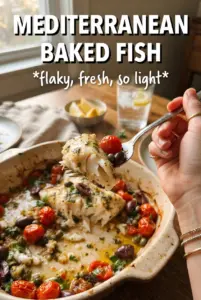
Flaky white fish, blistered tomatoes, briny olives, and capers all bake together in one dish, and the result tastes far more layered than the effort it takes. The fish stays tender because it’s tucked into a hot bed of vegetables instead of sitting dry in the oven, and the olive oil, wine, and roasted peppers turn into a light pan sauce that clings to every bite.
The trick here is starting the vegetables first. That 10-minute head start softens the tomatoes and wakes up the garlic before the fish goes in, so the fillets steam gently in a flavorful base instead of overcooking while the vegetables catch up. I also like using a dry white wine if I have it, because it adds a little brightness without making the dish heavy. Broth works just fine if that’s what you’ve got.
Below, I’ll walk through why the fish should be nested into the vegetables instead of placed on top, which substitutions hold up, and how to keep the fillets from turning dry. It’s one of those dinners that looks like you worked harder than you did.
The tomatoes and peppers made their own little sauce in the oven, and the fish stayed so tender it flaked apart with a fork. I used cod and the whole pan was gone in one sitting.
Save this Mediterranean Baked Fish for a fast one-pan dinner with flaky fish, briny olives, and a bright tomato pan sauce.
The Secret to Keeping the Fish Tender While the Tomatoes Get Jammy
The fish doesn’t need long in the oven, and that’s the whole game. The vegetables get a head start so they soften, release juice, and build the savory base the fillets will finish in. If you put everything in at once, the fish is often overdone by the time the tomatoes and peppers have fully broken down.
Cod, halibut, and sea bass all work because they’re firm enough to hold together but still delicate once cooked. The vegetables matter too: cherry tomatoes burst into the sauce, capers add salt and sharpness, and roasted red peppers bring sweetness that keeps the dish from tasting one-note. The olives do more than garnish; they season the whole pan from the inside out.
What Each Ingredient Is Actually Doing in This Dish
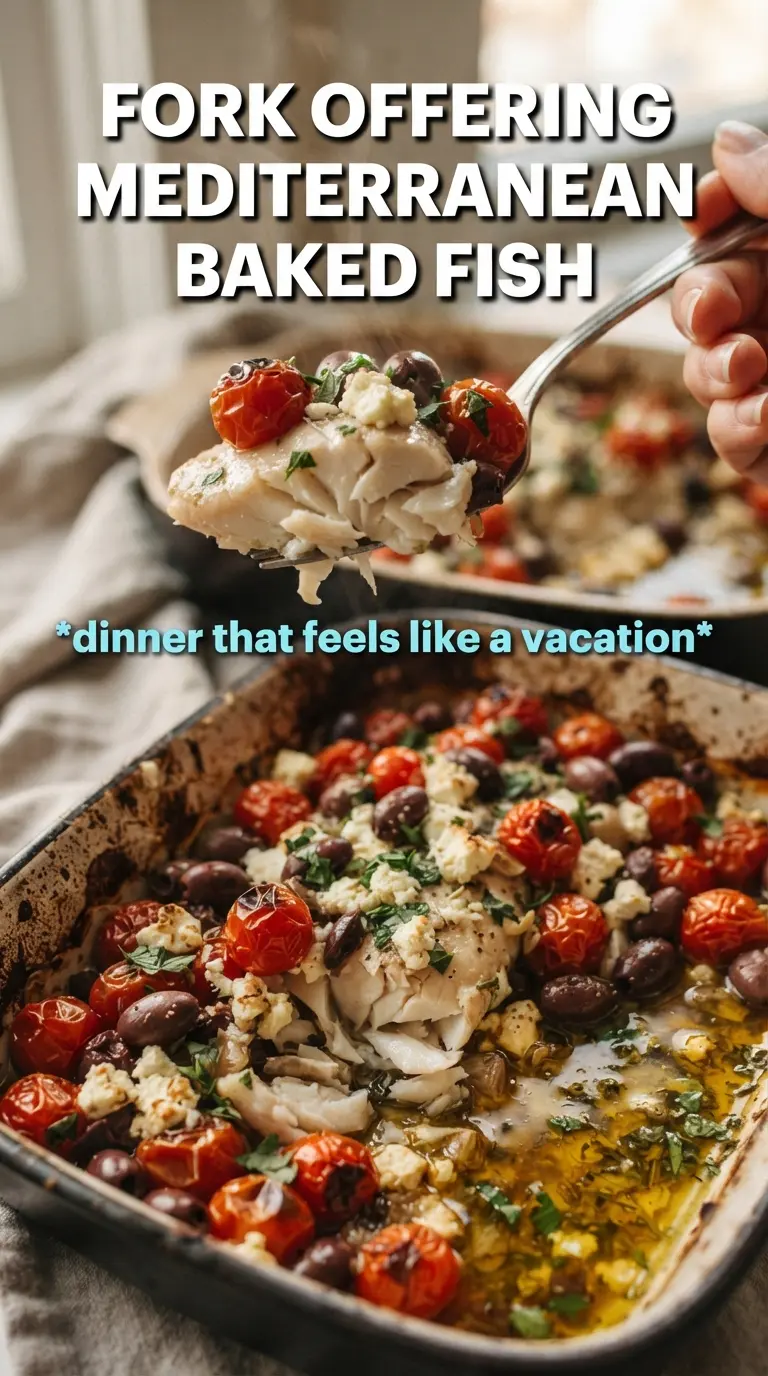
- White fish fillets — Cod gives you the most forgiving, flaky result. Halibut and sea bass are a little richer and hold their shape beautifully. Keep the pieces similar in thickness so they finish at the same time.
- Cherry tomatoes — These are the base of the sauce. Halving them helps them collapse faster and release juice in the oven. Grape tomatoes work in a pinch, but they’re usually a little less juicy.
- Kalamata olives and capers — This is where the Mediterranean character comes from. They bring salt, brine, and depth, so the dish tastes seasoned even before the lemon goes on at the end. If you use canned olives that are extra salty, taste the finished sauce before adding more salt.
- Roasted red peppers — Jarred peppers are one of the easiest shortcut ingredients here, and they earn their spot. They add sweetness and body without extra cooking time. Fresh peppers won’t give the same soft texture unless you roast them first.
- Dry white wine or broth — Wine gives the pan sauce a little lift and keeps the vegetables from tasting flat. Broth is the best substitute if you don’t cook with wine; just choose a low-sodium one so the olives and capers don’t push the dish too salty.
- Garlic, oregano, and red pepper flakes — Garlic turns sweet in the oven, oregano gives the dish its backbone, and the pepper flakes add just enough heat to keep the sauce lively. Slice the garlic thinly so it softens instead of burning on top.
The 20 Minutes That Matter Most
Letting the Vegetables Start First
Spread the tomato mixture in the baking dish and roast it for 10 minutes before adding the fish. You want the tomatoes to look glossy and a little collapsed, with the garlic softened and the liquid starting to pool at the bottom of the dish. If the vegetables still look raw and dry, the fish will be waiting for them while it cooks past tender.
Nesting the Fish, Not Burying It
Season the fillets, then tuck them into the hot vegetable mixture so they sit partly surrounded by sauce. That contact keeps the fish moist and lets the bottom of each piece pick up flavor. Don’t cover the fillets completely with vegetables or they’ll steam unevenly and you’ll lose the nice flaky texture.
Stopping at the First Clean Flake
Bake just until the fish flakes easily with a fork and looks opaque in the center. Pull it as soon as the thickest part gives without resistance; carryover heat will finish the job as it rests for a minute or two. If you wait until the fillets look completely dry in the oven, you’ve gone too far.
How to Make This with What You Already Have
Swap cod for any firm white fish you trust, but keep the fillets similar in thickness so they finish together. If you only have green olives, use them sparingly because they bring a sharper edge than Kalamatas. The dish still works, but the sauce will taste cleaner and less mellow.
Dairy-Free and Naturally Gluten-Free
This recipe already fits both of those needs without any changes. The only thing to watch is your broth if you use it instead of wine, since some brands use add-ins you may not want. A simple low-sodium broth keeps the flavor clean.
Making It a Little More Lemony
Add lemon zest to the vegetable mixture before baking, then finish with wedges at the table. That gives you a brighter, more aromatic citrus note without risking bitterness from baking in too much juice. It’s a good move if your tomatoes are on the sweeter side.
Storage and Reheating
- Refrigerator: Store leftovers in an airtight container for up to 2 days. The fish stays tasty, but it will firm up a bit as it chills.
- Freezer: I don’t recommend freezing this dish once it’s baked. The fish turns grainy after thawing, and the tomatoes lose their texture.
- Reheating: Warm it gently in a 300F oven, covered loosely with foil, just until heated through. The mistake to avoid is blasting it in the microwave, which dries out the fish fast and makes the sauce separate.
Answers to the Questions Worth Asking
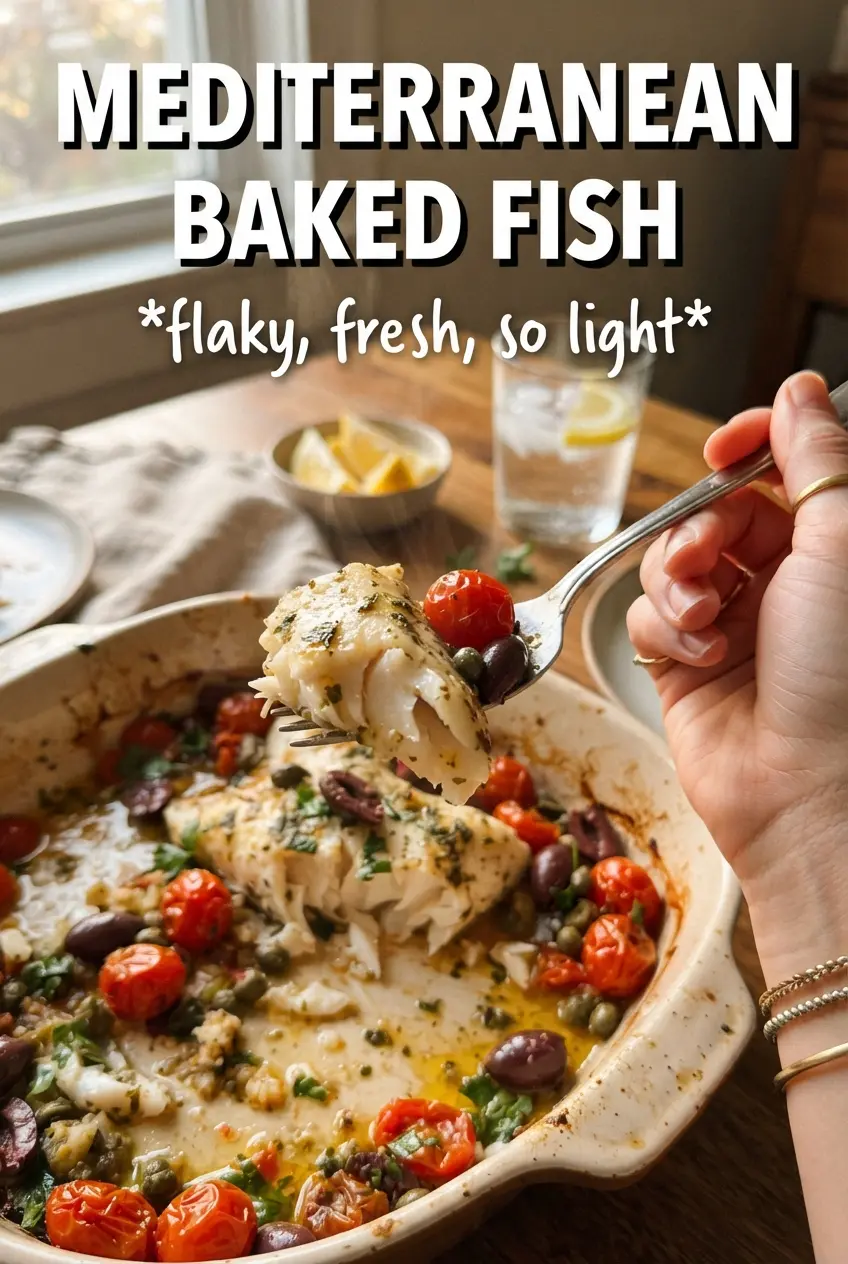
Mediterranean Baked Fish
Ingredients
Equipment
Method
- Preheat oven to 400F and grease a 9x13 baking dish so nothing sticks.
- In the baking dish, combine cherry tomatoes, Kalamata olives, capers, roasted red peppers, garlic, dry white wine or broth, olive oil, dried oregano, and red pepper flakes until evenly coated.
- Roast the vegetable mixture for 10 minutes at 400F, until the tomatoes begin to soften and the mixture looks glossy.
- Season the white fish fillets with salt and pepper, then nestle them into the hot vegetable mixture.
- Bake 12-15 more minutes at 400F until the fish flakes easily with a fork and looks opaque in the thickest part.
- Garnish with fresh parsley and serve with lemon wedges on the side.