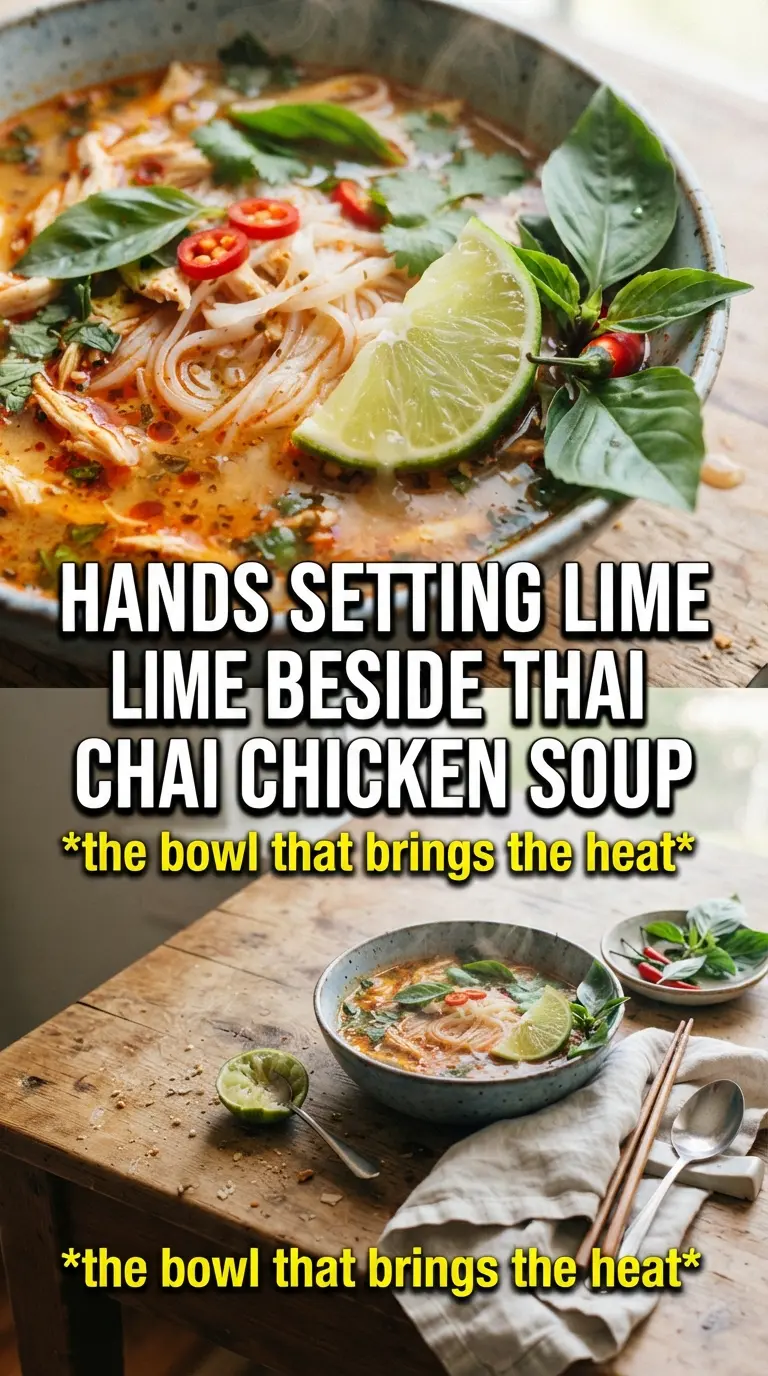
Silky coconut broth, bright lime, and tender rice noodles make this Thai chicken noodle soup the kind of bowl that disappears fast. The curry paste blooms in oil first, which gives the broth a deeper, rounder flavor than just stirring everything together and hoping for the best. Then the coconut milk mellows the heat and turns the whole pot into something fragrant, cozy, and clean-tasting at the same time.
The trick here is to build the broth before the noodles go in. Rice noodles keep their best texture when they’re only warmed through at the end, and that keeps them springy instead of soft and swollen. Thinly sliced chicken cooks quickly in the simmering broth, so you get tender pieces without giving the coconut milk a long hard boil.
Below, I’ll walk through the one step that matters most for flavor, the ingredient swaps that still keep the soup balanced, and the storage note you’ll want if you’re planning leftovers. This is one of those recipes that tastes like it took a lot more effort than it did.
The broth turned out so smooth and the noodles stayed springy because I added them at the end. My husband kept talking about the lime and basil combo all night.
Creamy coconut broth, tender chicken, and springy rice noodles make this Thai chicken noodle soup worth saving for a fast, cozy dinner.
The Broth Needs the Curry Paste Bloomed First
If you dump the coconut milk and broth in before the curry paste hits heat, the soup still tastes fine, but it never gets that deep, rounded base that makes people go back for a second bowl. Curry paste needs to cook in oil for a minute or two so the spices wake up and the aromatics lose their raw edge. That small step changes the whole pot.
Once the garlic, lemongrass, and galangal go in, keep the heat at a lively but gentle sauté. You want fragrance, not browning. If the garlic starts to color hard, the broth can turn bitter before the coconut milk even has a chance to smooth it out.
What the Coconut Milk, Fish Sauce, and Lime Are Really Doing
- Coconut milk — Full-fat coconut milk gives the broth its body and keeps the curry paste from tasting sharp. Light coconut milk works in a pinch, but the soup will be thinner and less silky.
- Red curry paste — This is the backbone of the soup, so use a brand you trust. Some pastes are saltier or hotter than others, which is why the fish sauce and lime at the end should be adjusted by taste, not dumped in all at once.
- Lemongrass and galangal — These are the part that make the soup taste distinctly Thai-American instead of generic coconut chicken soup. If you can’t find galangal, fresh ginger is the best substitute, but use a little less because ginger reads warmer and sharper.
- Rice noodles — Soaking them before they hit the pot keeps them from clumping and overcooking. If you boil them hard in the broth, they soak up too much liquid and turn soft fast.
- Thai basil, cilantro, and lime — These finish the soup with freshness that cuts through the richness. Don’t skip the lime wedges; that last squeeze at the table wakes the whole bowl up.
Building the Soup in the Right Order
Soften the Noodles Before the Pot Starts
Soak the rice noodles in warm water until they bend without snapping, then drain them well. They should be pliable, not fully cooked. This keeps them from stealing too much broth later and lets them finish in the soup instead of turning gluey.
Wake Up the Curry Paste
Heat the oil, then stir in the curry paste and cook it until it smells fragrant and a little deeper in color. That usually takes 1 to 2 minutes. If the paste sticks hard or looks dry, lower the heat; burned curry paste tastes harsh and carries that bitterness through the whole pot.
Build the Broth, Then Cook the Chicken
Add the garlic, lemongrass, and galangal first, then pour in the coconut milk and broth with the fish sauce, lime juice, and brown sugar. Simmer the soup before adding the chicken so the base tastes balanced on its own. Slice the chicken thinly enough that it cooks through in about 8 to 10 minutes; thick pieces can leave the broth overcooked while you wait for the center to turn opaque.
Finish With Noodles and Fresh Herbs
Pull out the lemongrass and galangal before adding the noodles. Stir them in just long enough to warm through, then serve right away with bean sprouts, green onions, basil, cilantro, lime, and chili. If the noodles sit too long in the pot, they keep absorbing liquid and the soup turns into a stew.
How to Adapt This for Different Kitchens and Preferences
Make It Dairy-Free Without Losing the Creamy Broth
This soup is already naturally dairy-free as written, so the main job is keeping the coconut milk full-fat and not replacing it with a lighter carton version. That richness is what gives the broth its body.
Swap Ginger for Galangal When That’s What You Can Find
Fresh ginger works well if galangal is out of reach, but use a lighter hand because ginger brings a warmer, more familiar bite. The soup will still taste balanced; it just loses some of that sharper, cleaner Thai aroma.
Use Thighs for Richer Chicken or Breast for a Leaner Bowl
Chicken thighs stay juicier and give the broth a little more richness, especially if you’re simmering the soup ahead of time. Chicken breast is fine too, but slice it thin and stop cooking as soon as it turns opaque so it doesn’t dry out.
Storage and Reheating
- Refrigerator: Store the broth and noodles together for up to 3 days, though the noodles will soften as they sit.
- Freezer: Freeze the broth and chicken without the noodles for up to 2 months. Rice noodles turn mushy after freezing, so cook a fresh batch when you reheat.
- Reheating: Warm the soup gently on the stove over medium-low heat until steaming. If it thickened in the fridge, loosen it with a splash of broth or water; a hard boil can make the chicken stringy and the coconut milk separate.
Answers to the Questions Worth Asking

Thai Chicken Noodle Soup
Ingredients
Equipment
Method
- Soak the rice noodles in warm water for 15 minutes, then drain and set aside for springy noodles.
- Heat 1 tablespoon oil in a large Dutch oven over medium heat, then cook the red curry paste for 1-2 minutes until fragrant and aromatic.
- Add the garlic, lemongrass, and galangal (or ginger) and cook for 1 minute to bloom the aromatics.
- Pour in the coconut milk and chicken broth, then add the fish sauce, lime juice, and brown sugar and stir to combine.
- Simmer for 10 minutes to develop the coconut-curry flavor.
- Add the sliced chicken to the simmering broth and cook for 8-10 minutes until cooked through.
- Remove the lemongrass and galangal (or ginger), then stir in the drained rice noodles and heat through for 2-3 minutes.
- Serve the soup topped with bean sprouts, green onions, Thai basil, cilantro, lime wedges, and sliced red chili.