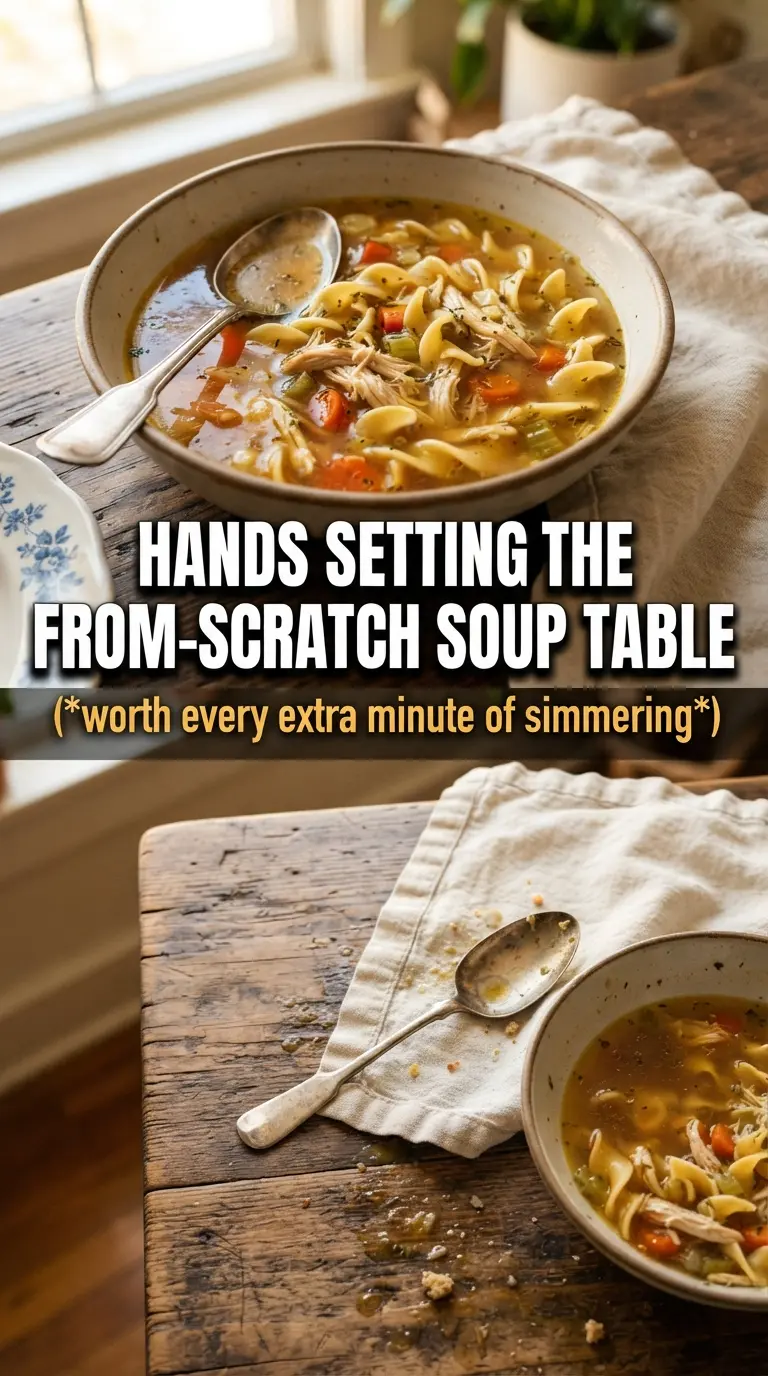
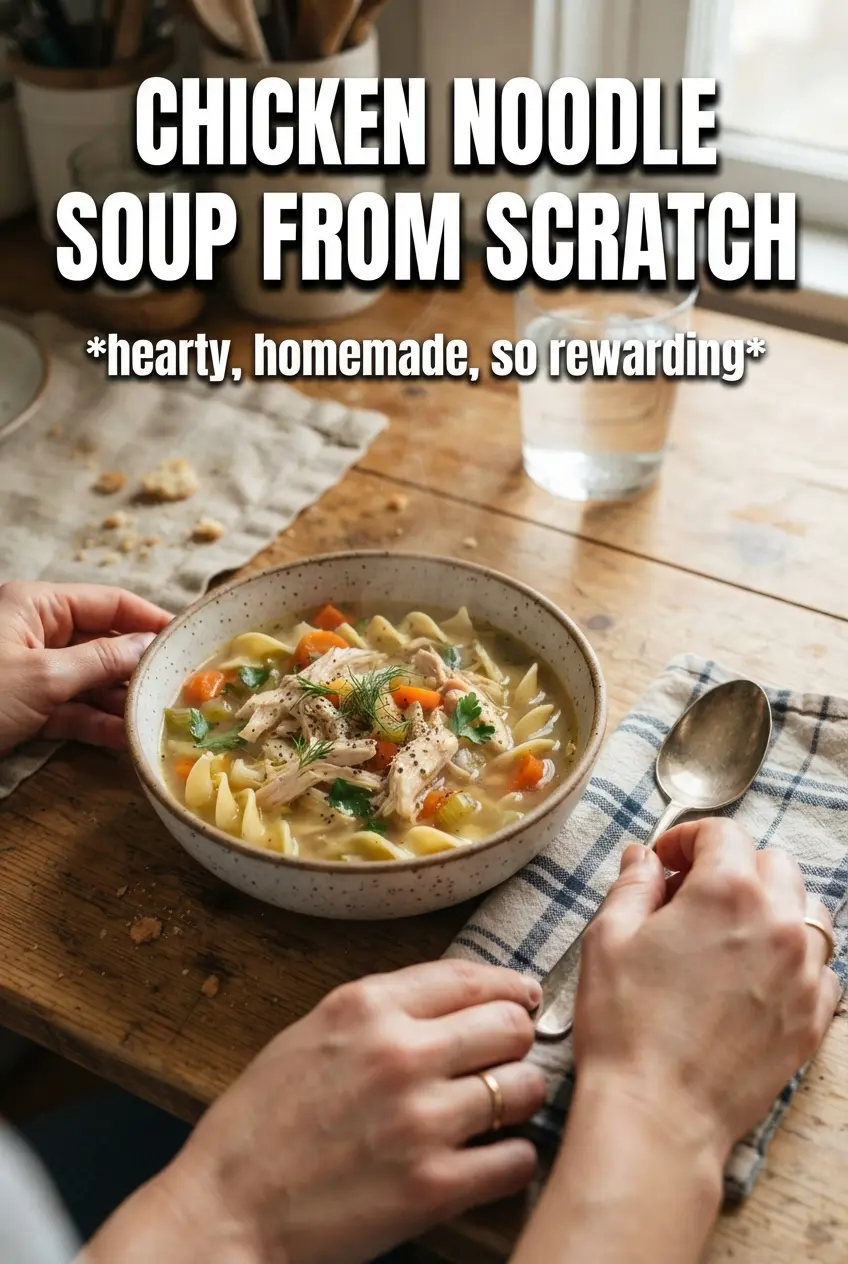
Chicken noodle soup from scratch earns its place at the table because the broth tastes like chicken, not salt and broth base. The stock turns a deep golden color as the whole chicken simmers with carrots, celery, onion, garlic, and herbs, and that slow build gives the finished soup a roundness you can’t get from a carton. The noodles stay tender, the vegetables keep a little bite, and the shredded chicken soaks up every bit of flavor in the pot.
The key here is starting with cold water and a whole chicken. That gives the broth time to pull flavor out gently instead of sealing everything up too fast. Skimming the foam early keeps the broth clean, and straining out the cooked vegetables before adding the fresh ones gives you a soup that tastes fresh, not muddled. Wide egg noodles hold up well in a long-simmered pot, but they still go in near the end so they don’t turn soft and bloated.
Below you’ll find the small details that matter: how to tell when the broth is ready, why the noodles should be cooked only after the vegetables are tender, and how to keep the soup bright instead of heavy.
The broth came out rich and clear, not cloudy, and the noodles stayed perfect even after reheating the next day. My kids kept asking for “the homemade soup” again.
Save this chicken noodle soup from scratch for the nights when you want a deeply flavored broth and tender noodles without opening a carton.
The Broth Is the Recipe, Not Just the Base
The biggest mistake with homemade chicken noodle soup is rushing the broth or treating it like a shortcut. A whole chicken gives you meat, collagen, and flavor all at once, and that long, gentle simmer is what turns plain water into something rich enough to carry the whole pot. If you boil it hard the entire time, the broth can go cloudy and the chicken can turn stringy before the bones have had time to do their work.
Cold water matters here. It gives the chicken time to release flavor gradually, which makes for a cleaner-tasting broth. The aromatics that go into the broth are there for depth, not for texture, so they can be discarded after simmering. Save the fresh carrots, celery, and onion for the second round if you want the finished soup to taste bright instead of tired.
- Whole chicken — This gives you the most flavor and body. Chicken parts can work, but you’ll lose some of the richness that makes the broth taste homemade.
- Parsley stems — Don’t skip them. They add a clean herb note to the broth without making it taste grassy the way leafy parsley can after a long simmer.
- Wide egg noodles — They hold up better than thin noodles in a big pot of soup. If you use a different pasta, cook it separately and add it just before serving so it doesn’t drink up all the broth.
- Fresh carrots, celery, and onion — These go in after straining, which keeps the final soup looking fresh and gives you vegetables with some texture left.
What Each Ingredient Is Actually Doing in This Recipe
- Primary ingredient (the star) — Quality matters most. Choose the best you can find.
- Cooking medium (oil, butter, or broth) — This carries flavors and prevents dryness.
- Seasonings (salt, pepper, spices, herbs) — Layer flavors so nothing overpowers. Build depth gradually.
- Aromatics (garlic, onion, herbs) — Cook with fat to bloom flavors. Become the foundation.
- Supporting ingredients — Complement the main ingredient without overpowering it.
- Sauce or liquid (if applicable) — Brings flavors together. Balance richness with acid.
- Acid (lemon, vinegar, wine, or other) — Brightens and prevents flat-tasting results.
- Final finish (garnish, glaze, or sauce) — Prevents one-dimensional taste and adds visual appeal.
How to Build the Soup Without Ending Up With Mushy Noodles
Starting the Broth Gently
Put the whole chicken and broth ingredients into a large pot, then cover everything with cold water and bring it up to a boil. As soon as the pot boils, reduce the heat so it settles into a steady simmer. Skim off the foam in the first few minutes; that step keeps the broth cleaner and less greasy later. The chicken should be very tender after about 1 1/2 hours, and the meat should pull away from the bones without effort.
Straining for a Clearer, Cleaner Soup
Lift the chicken out and strain the broth through a fine strainer if you have one. Discard the spent vegetables and spices; they’ve already given up what they had. If you skip this part and leave everything in, the soup can taste muddled and the vegetables can break apart into the finished bowl. Taste the broth now and season with salt before anything else goes back in.
Cooking the Fresh Vegetables First
Add the sliced carrots, celery, and diced onion to the cleared broth and bring it back to a simmer. Ten minutes is usually enough for the vegetables to soften while still keeping some shape. If they cook much longer than that before the noodles go in, they start to fade into the background and lose that fresh, sweet bite that makes the soup feel finished.
Finishing With Noodles and Chicken
Stir in the egg noodles and cook just until tender, usually 6 to 8 minutes. Add the shredded chicken and chopped parsley at the end so the meat stays juicy and the herbs stay bright. If you cook the chicken too long after it’s shredded, it dries out fast. Taste again and add pepper and more salt if needed; broth usually wants a little more seasoning right before serving.
How to Adapt This for a Smaller Pot, a Gluten-Free Bowl, or Extra Rich Broth
Gluten-Free Chicken Noodle Soup
Swap the egg noodles for your favorite gluten-free pasta, but cook it separately if you can. Gluten-free noodles tend to soften faster and they can make the broth cloudy if they sit in the pot too long. Add them to each bowl just before serving for the best texture.
Using Chicken Thighs or a Mix of Parts
If you don’t have a whole chicken, use bone-in thighs and drumsticks for the broth. The soup will still have good flavor, though it won’t be quite as balanced as a whole bird. You’ll need to watch the meat a little more closely so it doesn’t overcook and shred into dry strands.
Extra-Luxurious Broth
For a deeper broth, simmer a little longer after the chicken is tender, but keep the heat low. A longer gentle simmer extracts more body from the bones without turning the broth cloudy. If the pot drops too low, the flavor can flatten, so keep the liquid at a steady lazy bubble.
Storage and Reheating
- Refrigerator: Store in an airtight container for up to 4 days. The noodles will keep soaking up broth, so the soup thickens as it sits.
- Freezer: The broth and chicken freeze well, but the noodles get soft after thawing. For best results, freeze the soup without noodles and add fresh cooked noodles when reheating.
- Reheating: Warm it gently over medium-low heat until steaming, not boiling. A hard boil can break down the noodles and make the chicken stringy. Add a splash of water or broth if the pot has tightened up in the fridge.
Answers to the Questions Worth Asking
Chicken Noodle Soup From Scratch
Ingredients
Equipment
Method
- Place the whole chicken and all broth ingredients into a very large Dutch oven with the cold water. Bring to a boil over high heat.
- Skim off the foam as it forms. Reduce the heat to a gentle simmer.
- Simmer for 1.5 hours until the chicken is very tender. Keep the broth at a steady, gentle bubble.
- Strain the broth and discard the used vegetables. Remove all meat from the chicken and shred it.
- Return the clear broth to the pot, then taste and season with salt. Keep it over medium heat until it reaches a simmer.
- Add the sliced carrots, celery, and diced onion to the simmering broth. Cook for 10 minutes until the vegetables are tender.
- Add the wide egg noodles and cook until tender, about 6 to 8 minutes. Stir occasionally so the noodles don’t stick.
- Add the shredded chicken and chopped fresh parsley. Simmer briefly until heated through, about 2 minutes, then adjust seasoning with salt and pepper.