Stovetop chicken noodle soup earns its place in the rotation because it tastes like it simmered all afternoon, even though it comes together in under an hour. The broth stays clear and savory, the chicken turns tender enough to shred with two forks, and the noodles soak up just enough flavor without going mushy. It’s the kind of bowl that fixes a rough day fast.
The difference here is in the order of operations. The vegetables get a short sauté first, which gives the broth a deeper base before any liquid goes in. The chicken cooks whole in the broth, so it stays juicy, and the noodles go in only at the end so they keep their texture instead of swelling into paste. A small amount of celery seed adds that old-fashioned soup-shop flavor without making the broth taste heavy.
Below, I’ll walk through the few places people usually go wrong with chicken noodle soup, plus the best way to keep the noodles from stealing the whole pot if you’re planning leftovers.
The broth had so much flavor for such a short simmer, and the noodles stayed springy instead of getting soft and bloated. My kids asked for seconds, which never happens with chicken soup.
Save this stovetop chicken noodle soup for the nights when you want a clear, cozy broth with tender chicken and noodles that still have bite.
The Shortcut That Keeps the Broth Clear and the Chicken Tender
A lot of chicken noodle soup turns cloudy because the pot boils too hard for too long, or the noodles are cooked in the soup before the chicken has a chance to finish. The broth doesn’t need aggression. It needs a gentle simmer once the chicken goes in, which keeps the meat tender and gives the aromatics time to season the liquid without breaking everything apart.
The other common mistake is overcooking the noodles. Egg noodles only need a few minutes, and they keep drinking broth even after the heat is off. If you’re serving the soup right away, that’s fine. If you want leftovers, plan on cooking the noodles separately or pulling the pot off the heat the moment they turn tender so they don’t go soft in the bowl.
What Each Ingredient Is Actually Doing in This Soup
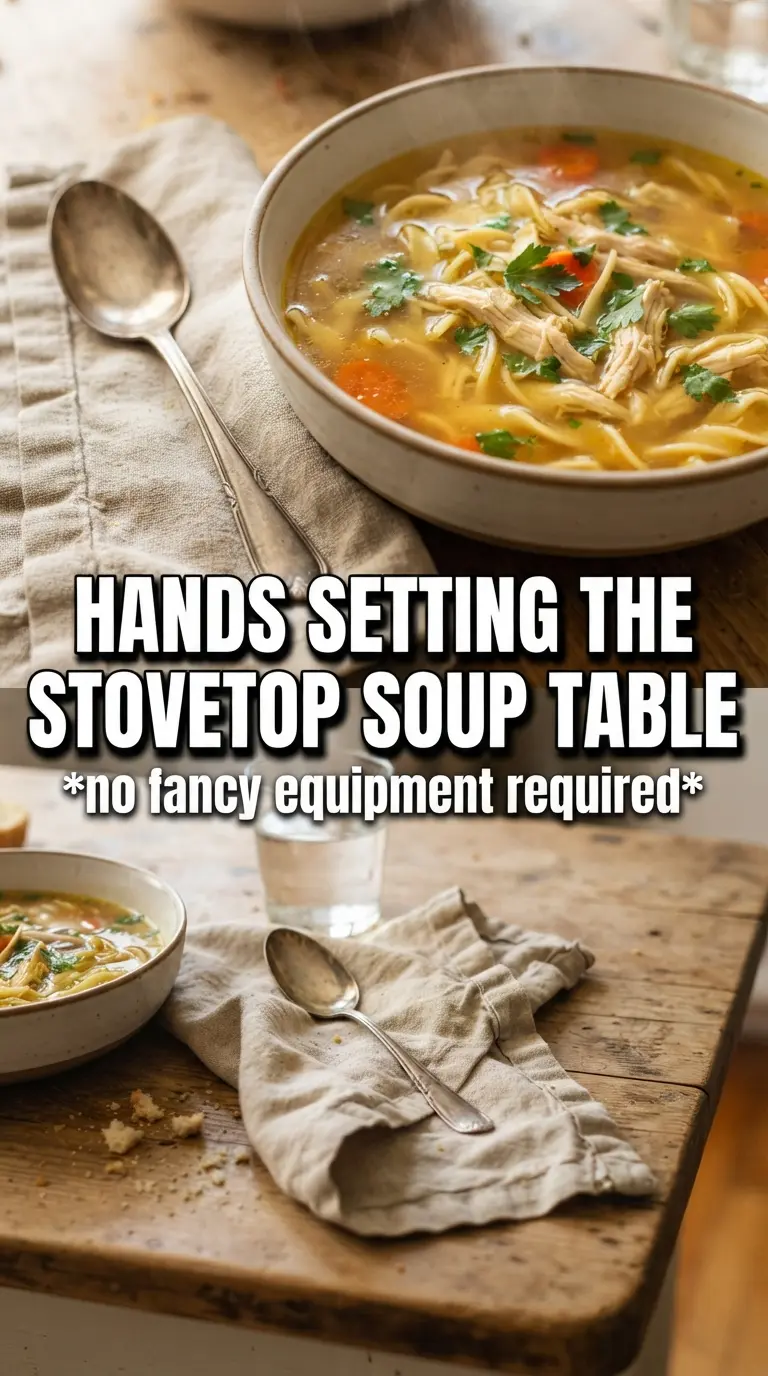
- Chicken breast — Whole breasts stay juicy in the broth and shred cleanly once cooked. You can swap in boneless skinless thighs if you want a richer soup; they’ll give you a slightly deeper flavor and a softer texture.
- Chicken broth — This is the backbone of the soup, so use one you’d actually sip. If your broth is very salty, hold back on extra salt until the end because it concentrates a bit as the soup simmers.
- Carrots, celery, and onion — This trio builds the base. Sautéing them first softens their edges and gives the soup a sweeter, rounder flavor than dumping everything into liquid at once.
- Egg noodles — They give the soup that classic comfort-food body and thicken the broth slightly as they cook. If you need a gluten-free version, use a sturdy gluten-free noodle and watch it closely; many of them go from done to soft fast.
- Celery seed — Optional, but it adds a quiet depth that makes the soup taste older-fashioned in the best way. If you don’t have it, leave it out rather than trying to replace it with a bigger amount of celery salt, which can throw off the seasoning.
Building the Soup in the Right Order
Softening the Vegetables First
Start by warming the olive oil in a heavy-bottomed pot and cooking the onion, carrots, and celery until the onion turns translucent and the carrots begin to soften at the edges. You’re not trying to brown them hard here. You’re just pulling sweetness and aroma out of the vegetables before the broth goes in. If the pot looks dry or the vegetables begin to stick, lower the heat a touch and stir more often.
Simmering the Chicken Gently
Once the broth and seasonings are in, add the chicken breasts and bring the pot up to a boil just long enough to get everything moving, then drop it to a steady simmer. A hard boil will tighten the meat and make the broth cloudy. After about 18 to 20 minutes, the chicken should feel firm, the center should no longer be pink, and the juices should run clear when you shred it.
Finishing with the Noodles
Take the chicken out, shred it, and bring the soup back to a boil before adding the noodles. They need active heat to cook evenly, but they only need 6 to 8 minutes. Stir once or twice so they don’t clump on the bottom, then return the chicken at the end and season the whole pot until it tastes full and balanced.
How to Adapt This for Different Eaters and Different Schedules
Gluten-Free Chicken Noodle Soup
Swap the egg noodles for a gluten-free noodle that holds its shape well, and cook it separately if the package says it softens quickly. Gluten-free pasta often clouds the broth and breaks down faster, so keeping it out of the main pot until serving gives you the best texture.
Thighs Instead of Chicken Breast
Boneless skinless thighs bring a slightly richer broth and stay tender even if they simmer a little longer. They’re the better choice if you like a more savory, less lean soup, and they shred with almost no effort.
Making It Ahead for Lunches
If you want leftovers that still taste good the next day, cook the noodles separately and add them to each bowl before serving. The broth and chicken reheat beautifully on their own, but noodles left in the pot will keep absorbing liquid and turn soft.
Extra Herby, Brighter Flavor
Stir in chopped parsley at the end and add a small squeeze of lemon if you want the broth to taste brighter. That little bit of acid wakes up the chicken and makes the soup taste fresher without turning it into something tart.
Storage and Reheating
- Refrigerator: Store in an airtight container for up to 4 days. The noodles will continue to soften, so expect the broth to thicken a little.
- Freezer: Freeze the broth and chicken without noodles for up to 3 months. Noodles freeze poorly in soup and turn mushy when thawed.
- Reheating: Warm gently on the stovetop over medium-low heat until steaming. If the soup was stored with noodles, add a splash of broth or water before reheating so the pot doesn’t turn pasty.
Answers to the Questions Worth Asking
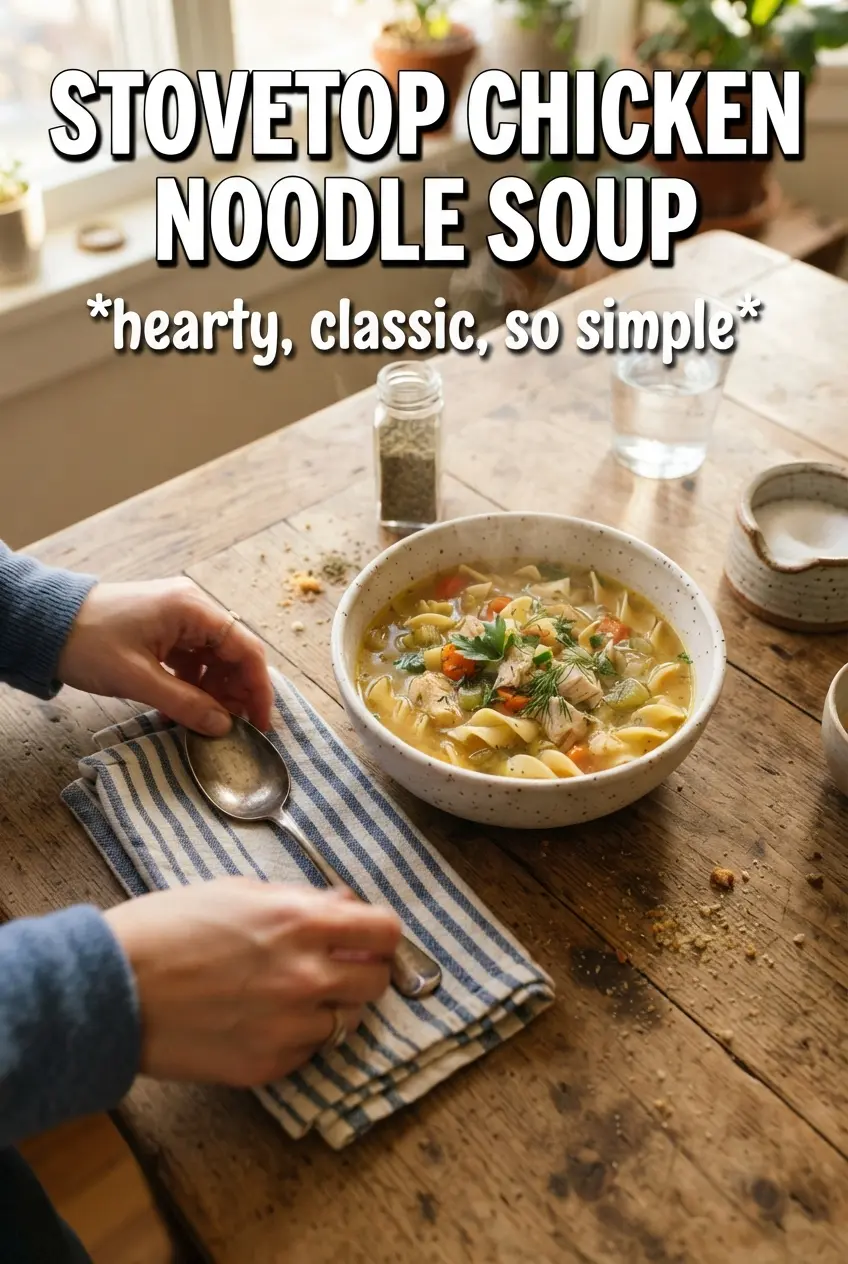
Stovetop Chicken Noodle Soup
Ingredients
Equipment
Method
- Heat olive oil in a large heavy-bottomed pot over medium heat and sauté onion, carrots, and celery for 5 minutes until starting to soften and smell fragrant.
- Add garlic and cook for 1 minute, stirring, until fragrant without browning.
- Pour in the chicken broth and stir in dried thyme, garlic powder, onion powder, and celery seed, scraping up any browned bits.
- Add the whole chicken breasts and bring the soup to a boil.
- Reduce the heat to a steady simmer and cook for 18-20 minutes until the chicken is fully cooked.
- Remove the chicken from the pot and shred it with two forks.
- Bring the soup back to a boil and add the egg noodles.
- Cook for 6-8 minutes until the noodles are tender, stirring occasionally so they don’t stick.
- Return the shredded chicken to the pot and stir until heated through.
- Season generously with salt and pepper, then garnish with fresh parsley before serving.