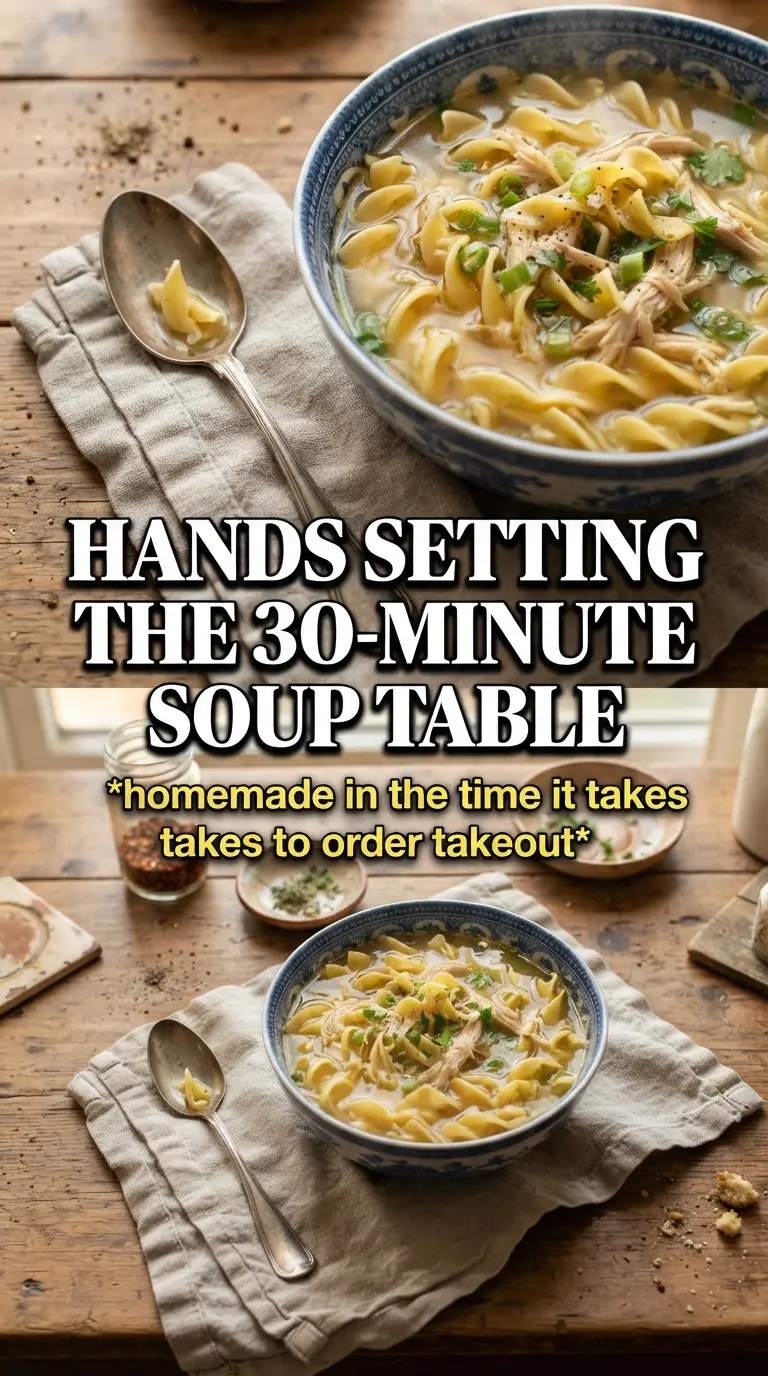
Chicken noodle soup earns its place in the dinner rotation when the broth tastes deep and savory, the vegetables still have a little bite, and the noodles are tender without turning bloated. This version gets there fast because it starts with cooked chicken and leans on a good broth, so you’re building flavor instead of waiting around for it.
The trick is to sauté the onion, carrots, and celery first so they soften and sweeten before the broth goes in. A small amount of butter gives the soup a rounder base, and the lemon at the end keeps the whole pot from tasting flat. If you’ve ever made chicken noodle soup that came out tasting thin or bland, the fixes are all here.
Below you’ll find the timing that keeps the noodles from going mushy, plus a few simple swaps if you’re working with what’s already in the fridge. It’s the kind of soup that tastes like you cooked longer than you did.
The broth had such a clean, homemade taste, and the lemon at the end kept it from tasting heavy. My egg noodles stayed perfectly tender, not mushy, even after I reheated the leftovers the next day.
Love the quick, cozy broth and tender egg noodles in this 30-minute chicken noodle soup? Save it to Pinterest for the nights when you need real comfort without a long simmer.
The Shortcut That Keeps the Broth Tasting Like It Simmered Longer
The biggest mistake in fast chicken noodle soup is treating the broth like a dump-and-boil situation. If the vegetables go in raw and the seasonings never get a chance to wake up, the soup tastes thin no matter how good the chicken is. A short sauté in butter gives the carrots and celery a sweeter edge, and the onion loses that raw bite before the liquid hits the pot.
Cooking the noodles directly in the broth is what gives this soup its body, but it also means timing matters. If they stay in too long, they soak up too much liquid and turn soft. Pull the pot from the heat as soon as the noodles are tender, then add the chicken just long enough to warm through.
- Cooked chicken — Rotisserie chicken is the easiest win here because it’s already seasoned and tender. Leftover roast chicken works just as well. If you use plain poached chicken, the broth needs a little more salt at the end.
- Good-quality chicken broth — This is the base of the whole soup, so use one you’d drink on its own if possible. If yours is on the weaker side, a small pinch more thyme and a heavier hand with salt will help, but broth can’t be fully rescued once it tastes flat.
- Egg noodles — These give you the classic chicken noodle soup texture. Wide or medium noodles both work. If you swap in pasta, use a short shape and watch the clock closely because it may need a different cook time.
- Lemon juice — This is the ingredient that wakes everything up at the end. It doesn’t make the soup sour; it sharpens the broth and makes the chicken taste more savory. Add it after the heat comes down so the flavor stays bright.
What Each Ingredient Is Actually Doing in This Recipe
- Primary ingredient (the star) — Quality matters most. Choose the best you can find.
- Cooking medium (oil, butter, or broth) — This carries flavors and prevents dryness.
- Seasonings (salt, pepper, spices, herbs) — Layer flavors so nothing overpowers. Build depth gradually.
- Aromatics (garlic, onion, herbs) — Cook with fat to bloom flavors. Become the foundation.
- Supporting ingredients — Complement the main ingredient without overpowering it.
- Sauce or liquid (if applicable) — Brings flavors together. Balance richness with acid.
- Acid (lemon, vinegar, wine, or other) — Brightens and prevents flat-tasting results.
- Final finish (garnish, glaze, or sauce) — Prevents one-dimensional taste and adds visual appeal.
Building the Soup in the Right Order
Softening the Vegetables First
Melt the butter in a large pot over medium-high heat, then add the onion, carrots, and celery. Cook them for about 4 minutes until the onion turns translucent and the edges of the carrots start to look glossy. If the pot runs too hot, the butter will brown before the vegetables soften, which gives the soup a scorched note instead of a clean savory base.
Adding the Garlic and Broth
Stir in the garlic and cook it for about 1 minute, just until it smells fragrant. Garlic burns fast, so this is a short step. Pour in the broth right away, then add the thyme, parsley, and garlic powder so the dried herbs have time to bloom in the liquid instead of staying dusty and flat.
Cooking the Noodles Without Ruining Them
Bring the pot to a boil, then add the egg noodles and cook them for 6 to 8 minutes. Watch for tender noodles with a little bite left in the center; they should not be falling apart. If the broth is boiling hard the whole time, the noodles can split and cloud the soup, so keep the boil lively but controlled.
Finishing with Chicken and Lemon
Stir in the shredded chicken and simmer for 2 to 3 minutes, just until it’s heated through. Turn off the heat before adding the lemon juice so the flavor stays fresh and the broth doesn’t taste cooked down. Taste, then season generously with salt and pepper; that final seasoning is what pulls the vegetables, noodles, and chicken into one balanced bowl.
What to Change When You Need a Different Version
Gluten-Free Chicken Noodle Soup
Swap the egg noodles for a gluten-free pasta that holds up in broth, and cook it just to tender so it doesn’t break apart. Rice noodles can work too, but they soften quickly and change the soup into something lighter and silkier rather than classic chicken noodle soup.
Dairy-Free Without Losing the Richness
The soup is naturally close to dairy-free already; just use oil instead of butter if needed. You’ll lose a little roundness, but a good broth and a proper sauté on the vegetables still give you a full, satisfying pot.
Make It Heartier
Add extra chicken or toss in a handful of baby spinach at the end. The spinach wilts in seconds and gives you a little more green without changing the broth, while extra chicken makes the soup feel more like a full meal.
Storage and Reheating
- Refrigerator: Store for up to 4 days. The noodles will keep soaking up broth, so expect the soup to thicken as it sits.
- Freezer: It freezes, but the noodles soften a lot after thawing. For the best texture, freeze the broth, vegetables, and chicken without noodles, then cook fresh noodles when you reheat it.
- Reheating: Warm it gently on the stove over medium-low heat until hot. Don’t boil it hard or the noodles will go from tender to mushy, especially if they’ve already sat in the broth overnight.
Answers to the Questions Worth Asking

30-Minute Homemade Chicken Noodle Soup
Ingredients
Equipment
Method
- Melt butter in a large pot over medium-high heat. Add onion, carrots, and celery and sauté for 4 minutes until slightly softened, stirring now and then.
- Add garlic and cook for 1 minute, stirring until fragrant. Pour in chicken broth and add thyme, dried parsley, and garlic powder.
- Bring the soup to a boil over medium-high heat. Add egg noodles and cook for 6-8 minutes until tender.
- Add shredded chicken to the pot and simmer for 2-3 minutes until heated through. Stir gently so the noodles and chicken are evenly distributed.
- Squeeze in lemon juice and season generously with salt and pepper. Taste and adjust seasoning as needed for balance.
- Garnish with fresh parsley right before serving. Ladle into bowls while the noodles are hot and the broth looks golden.