Deep, mahogany broth and beef that falls apart at the touch of a spoon are what make a good crock pot beef stew worth keeping in the regular rotation. The slow cooker does the heavy lifting here, but the order of the ingredients matters more than people think. Put the vegetables underneath the beef so they soak up the broth, and you end up with potatoes and carrots that taste like they belong in the pot instead of floating through it.
This version leans on tomato paste, Worcestershire, and red wine for a darker, more savory base than the bland, thin stew a lot of slow cooker recipes turn out. The cornstarch goes in at the end, after the beef is already tender, so the broth thickens without turning gummy during the long cook. That last step makes a bigger difference than extra flour ever will.
Below, I’ll walk through the small details that keep the broth rich, the beef tender, and the vegetables from turning to mush. I’ve also included a few smart swaps and storage notes, because stew is one of those meals that should work just as well on day two as it does straight from the pot.
The beef got so tender it practically shredded itself, and the broth thickened up perfectly after the slurry went in. I used the red wine and it gave the stew a deep, rich flavor that tasted like it had simmered all day on the stove.
Love the deep broth and fall-apart beef in this Crock Pot Beef Stew? Save it to Pinterest for a low-effort dinner that tastes like it took all day.
The Secret to Tender Beef Is Not the Heat — It’s the Wait
Crock pot beef stew fails when people try to rush the beef or pile everything in without thinking about how the ingredients cook. Chuck roast is the right cut because it has enough fat and connective tissue to turn silky during a long, slow cook. If you use a lean cut, it won’t get the same soft, spoon-tender texture no matter how long it stays in the slow cooker.
The vegetables go on the bottom for a reason. They sit in the broth, soften, and help anchor the beef above them so the meat doesn’t dry out. That setup also keeps the potatoes from disappearing into mush before the beef is ready.
- Beef chuck — This is the cut that turns into tender stew meat after hours of low heat. Cut it into large chunks so it holds together instead of falling apart too soon.
- Red wine or extra broth — Wine gives the stew a deeper, more rounded base, but broth works if you want to skip it. If you do use wine, choose something dry and don’t worry about fancy bottles.
- Tomato paste and diced tomatoes — Tomato paste adds body and a slow-cooked richness, while the diced tomatoes bring acidity that keeps the stew from tasting flat. Stir the paste into the liquid so it dissolves instead of clumping.
- Baby potatoes — These hold their shape better than starchy russets. Halving them gives the centers time to soak up flavor without turning watery.
What Each Ingredient Is Actually Doing in This Recipe
- Primary ingredient (the star) — Quality matters most. Choose the best you can find.
- Cooking medium (oil, butter, or broth) — This carries flavors and prevents dryness.
- Seasonings (salt, pepper, spices, herbs) — Layer flavors so nothing overpowers. Build depth gradually.
- Aromatics (garlic, onion, herbs) — Cook with fat to bloom flavors. Become the foundation.
- Supporting ingredients — Complement the main ingredient without overpowering it.
- Sauce or liquid (if applicable) — Brings flavors together. Balance richness with acid.
- Acid (lemon, vinegar, wine, or other) — Brightens and prevents flat-tasting results.
- Final finish (garnish, glaze, or sauce) — Prevents one-dimensional taste and adds visual appeal.
The 20 Minutes at the Start and the 20 Minutes at the End
Building the Vegetable Base
Spread the potatoes, carrots, celery, and onion across the bottom of the slow cooker before the beef goes in. That first layer acts like a bed, keeping the meat lifted slightly while the vegetables soak up the broth as they cook. If the onion is cut too large, it won’t melt into the stew the way it should, so keep the dice fairly even and let the slow cooker do the softening.
Seasoning the Beef and Adding the Broth
Season the beef generously with salt and pepper before it goes into the crockpot. The seasoning on the meat matters more than trying to fix the stew at the end. Pour the broth, wine, tomatoes, tomato paste, Worcestershire, thyme, rosemary, and bay leaves over everything and give the tomato paste a quick stir into the liquid so it doesn’t sit in one thick blob.
Cooking Until the Beef Collapses
Cook on Low for 8 to 10 hours until the beef gives easily when pressed with a spoon. If you cook on High, the stew will finish faster, but the texture is best on Low because the connective tissue has time to break down slowly. Don’t pull the lid off over and over; every peek dumps heat and adds time back onto the clock.
Thickening the Broth at the End
Remove the bay leaves, then stir in the cornstarch slurry. This works because the beef is already tender and the starch only needs a short burst of heat to thicken the broth. Leave the lid off or crack it slightly and cook on High for 20 to 30 minutes, just until the broth looks glossy and lightly coats the spoon. If you add the slurry too early, it can thicken and then loosen again during the long cook.
How to Adapt This for the Pantry You Have
Make It Dairy-Free and Gluten-Free Without Losing Body
This stew already fits both diets as written if your Worcestershire sauce is gluten-free. The cornstarch slurry gives you all the thickening you need without flour, and the broth stays rich because the body comes from the beef, tomato paste, and long cooking time rather than dairy.
Skip the Wine and Keep the Stew Deep
Use an extra cup of beef broth in place of the wine if you want to keep it alcohol-free. The stew will still be savory, but it will taste a little softer and less sharp, so the Worcestershire and tomato paste matter even more for depth.
Use Different Vegetables When That’s What’s in the Fridge
Parsnips, turnips, or peeled sweet potatoes can stand in for some of the potatoes or carrots. Just cut them into larger pieces so they don’t collapse during the full cook time. Softer vegetables will give the stew a sweeter note and a slightly looser texture.
Storage and Reheating
- Refrigerator: Store covered for up to 4 days. The broth thickens as it chills, and the potatoes soften a little more by day two.
- Freezer: It freezes well for up to 3 months. Cool it completely, portion it into airtight containers, and leave a little room at the top for expansion.
- Reheating: Warm it gently on the stove over medium-low or in the microwave in short bursts, stirring between rounds. Add a splash of broth if the stew looks too thick, because cold potatoes and cornstarch can tighten the texture quite a bit.
Answers to the Questions Worth Asking
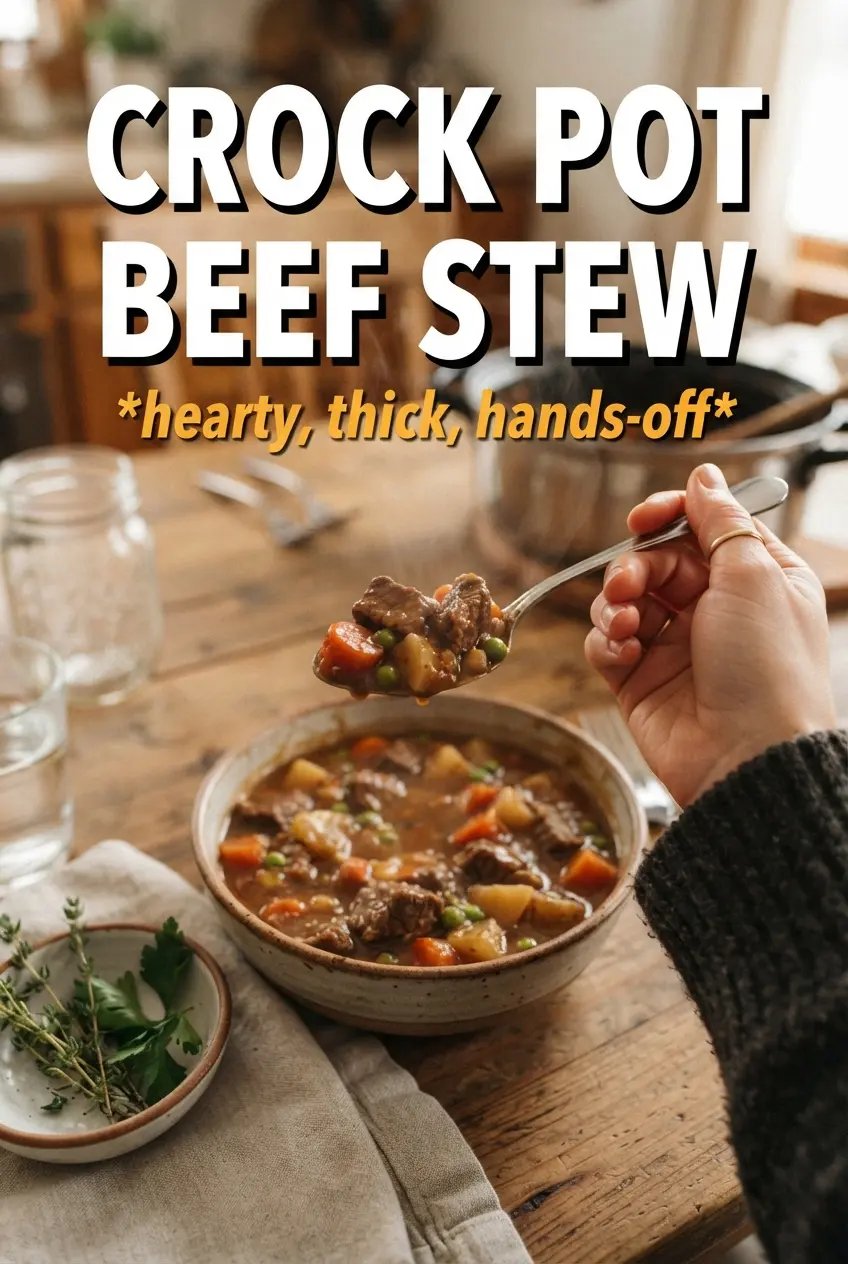
Crock Pot Beef Stew
Ingredients
Equipment
Method
- Season the beef chuck generously with salt and pepper. Make sure each cube is coated so the stew develops deep flavor.
- Add the baby potatoes, carrots, celery, and onion to the bottom of the crock pot. Nestle the seasoned beef on top in an even layer.
- Add the garlic, beef broth, red wine or extra broth, diced tomatoes, tomato paste, Worcestershire sauce, dried thyme, dried rosemary, and bay leaves. Stir gently once to distribute the seasonings.
- Cook on Low for 8-10 hours, or High for 4-5 hours, until the beef is fall-apart tender. Look for beef fibers that break apart easily when pressed.
- Remove the bay leaves, then stir the stew. This keeps the flavor from turning overly herbal.
- Stir together the cornstarch and water to form a slurry, then pour it into the crock pot while stirring. The broth should look slightly cloudy right after adding.
- Cook on High for 20-30 minutes until the broth thickens. Watch for a glossy, spoon-coating texture.
- Season with salt and pepper to taste. Taste and adjust before serving for balanced flavor.