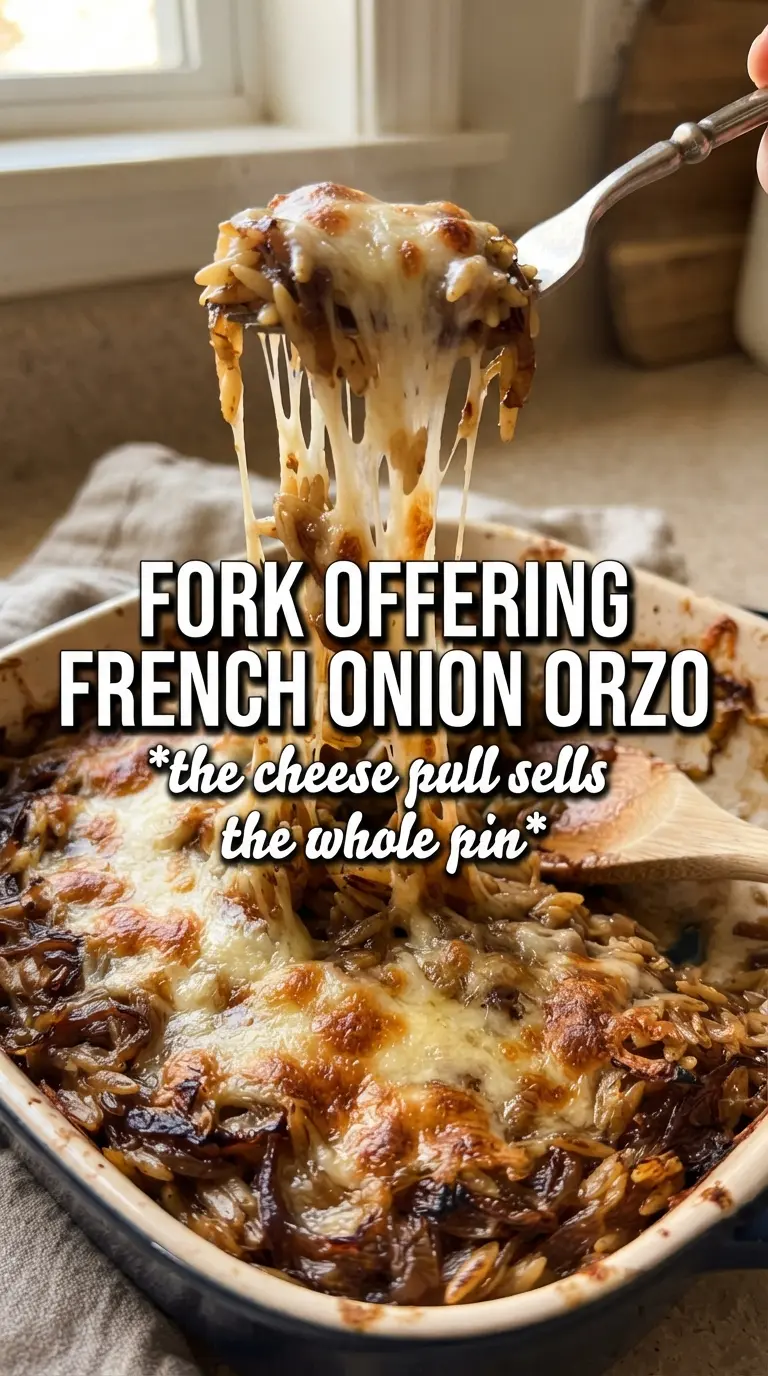
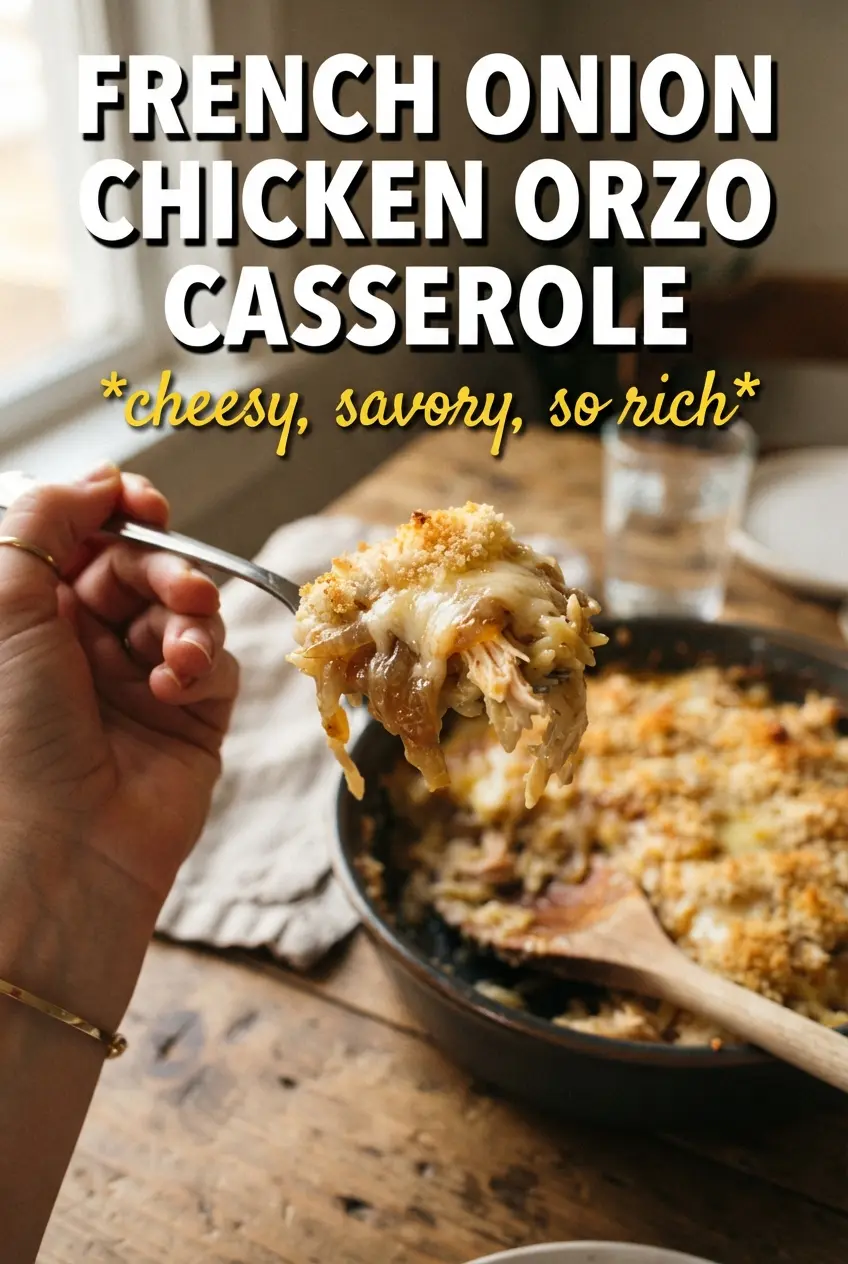
French onion chicken orzo casserole comes out with the kind of deep, savory richness that makes people keep going back for one more spoonful. The onions cook down until they’re jammy and sweet, the orzo turns creamy without needing a separate sauce, and the Gruyere on top bakes into a bronzed crust with just enough chew at the edges. It eats like a full meal, but it still feels like there was some care behind it.
What makes this version work is the way the flavor gets built in layers instead of dumped into a pan all at once. The onions need the full caramelizing time; that’s where the French onion flavor lives, and rushing them leaves the casserole tasting flat. Dry white wine loosens the browned bits from the pan, beef broth gives the dish its backbone, and cream cheese melts into the liquid so the orzo cooks in something that tastes like a proper sauce instead of just flavored broth.
Below, I’ve called out the one part that matters most if you want that classic French onion depth, plus a few swaps and storage notes so the casserole still works when you need to adapt it.
The onions finally caramelized the way they’re supposed to, and the orzo stayed creamy instead of turning mushy. My husband asked if I could put this into the regular dinner rotation.
Save this French Onion Chicken Orzo Casserole for the nights when you want a creamy baked dinner with caramelized onions and a golden Gruyere top.
The Quiet Trick Behind Deep Onion Flavor Without a Watery Casserole
The biggest mistake people make with French onion-style dishes is stopping the onions too early. Pale onions taste sweet, but they don’t taste roasted, and they won’t carry the casserole the way deep caramelization does. You want them soft, amber, and sticky enough to drag across the bottom of the pan.
The other thing that matters here is controlling the liquid once the orzo goes in. Orzo drinks up a lot of broth fast, and if you don’t start with a simmer and move it straight to the oven, you can end up with a dish that’s either soupy or dry. The skillet should look loose before baking, because the pasta keeps absorbing liquid in the oven.
- Onions — These are the whole point of the dish. Thin slices cook down faster and more evenly, and the long cook time is what gives you that sweet, savory depth. If they’re browning too fast, lower the heat; if they’re sticking, a splash of broth or wine helps loosen the pan.
- Dry white wine — This adds acidity and pulls the browned bits off the bottom of the skillet. You don’t need an expensive bottle, but you do want one that tastes clean rather than sweet. If you’d rather cook without alcohol, use extra broth with a small splash of white wine vinegar stirred in at the end.
- Gruyere — This melts with that nutty, slightly salty finish that makes the casserole taste unmistakably French onion. Swiss cheese works in a pinch, but it’s milder. Pre-shredded cheese will melt, but block-shredded gives you a smoother top.
- Cream cheese — This is what keeps the sauce creamy as the orzo bakes. Cut it into cubes so it melts quickly and evenly. If you try to stir in a cold block all at once, it takes longer to break down and can leave little soft lumps in the sauce.
What Each Ingredient Is Actually Doing in This Recipe
- Primary ingredient (the star) — Quality matters most. Choose the best you can find.
- Cooking medium (oil, butter, or broth) — This carries flavors and prevents dryness.
- Seasonings (salt, pepper, spices, herbs) — Layer flavors so nothing overpowers. Build depth gradually.
- Aromatics (garlic, onion, herbs) — Cook with fat to bloom flavors. Become the foundation.
- Supporting ingredients — Complement the main ingredient without overpowering it.
- Sauce or liquid (if applicable) — Brings flavors together. Balance richness with acid.
- Acid (lemon, vinegar, wine, or other) — Brightens and prevents flat-tasting results.
- Final finish (garnish, glaze, or sauce) — Prevents one-dimensional taste and adds visual appeal.
Building the Casserole So the Orzo Stays Creamy and the Chicken Stays Juicy
Caramelizing the onions first
Melt the butter in an oven-safe skillet and give the onions time to soften, then deepen, then turn glossy and golden brown. They should shrink dramatically and smell sweet, not sharp. If you rush this stage, the casserole tastes like chicken and pasta with onion in it, not French onion casserole. Stir often enough to keep the edges from scorching, but leave enough space for the onions to actually brown.
Letting the wine reduce into the pan
Once the garlic and thyme are fragrant, pour in the wine and let it bubble for a couple of minutes. You want the sharp alcohol smell to cook off and the liquid to pick up the browned residue from the skillet. This is where the base gains depth. If the pan looks dry too quickly, lower the heat; high heat can turn the garlic bitter before the wine has a chance to do its job.
Cooking the orzo in the sauce
Stir in the broth, Worcestershire sauce, and uncooked orzo, then add the diced chicken before the casserole goes to the oven. The mixture should look loose and soupy at this point. That’s correct. If it looks thick on the stove, it will bake up dense and the orzo can seize before it softens.
Finishing under the cheese
Once the cream cheese melts into the pan, season the mixture and scatter the Gruyere across the top. Bake until the cheese is golden and the orzo is tender with just a little bite at the center. The chicken should be cooked through, but not dried out, so start checking near the end of the bake time. If the top browns too quickly, lay a loose piece of foil over the skillet for the last few minutes.
What to Change When You Need This Casserole to Fit Your Kitchen
Make it gluten-free without losing the creamy finish
Use a gluten-free orzo or small gluten-free pasta shape and keep a close eye on the bake time, because some brands soften faster than regular orzo. Worcestershire sauce is often not gluten-free, so check the label or swap in tamari plus a tiny splash of vinegar. The casserole still comes out rich and savory, but the texture can vary a little by brand.
Skip the wine and keep the flavor deep
Replace the wine with extra beef broth and add a teaspoon of white wine vinegar or lemon juice at the end for brightness. You lose a little of the roundness that wine adds, but the casserole still tastes layered because the onions are doing the heavy lifting. Don’t add too much acid or the cheese sauce can taste sharp instead of savory.
Use rotisserie chicken instead of raw chicken breast
Stir in shredded cooked chicken after the broth and orzo have come together, right before the cream cheese goes in. That keeps the meat from overcooking while the pasta finishes in the oven. This is the easiest shortcut if you’re trying to cut the prep time without changing the rest of the dish.
Storage and Reheating
- Refrigerator: Keeps well for 3 to 4 days. The orzo will thicken as it sits, so expect a much firmer texture after chilling.
- Freezer: Freezes better than a cream-heavy casserole, but the pasta softens a little after thawing. Cool it completely, portion it into airtight containers, and freeze for up to 2 months.
- Reheating: Warm covered in the oven at 325F with a splash of broth stirred in to loosen the sauce. The biggest mistake is blasting it in the microwave until the chicken dries out and the cheese separates.
Questions I Get Asked About This Recipe
French Onion Chicken Orzo Casserole
Ingredients
Equipment
Method
- Preheat oven to 375F.
- Melt butter in a large oven-safe skillet over medium heat, then cook onions 30-35 minutes until deeply caramelized with dark golden edges.
- Add garlic and dried thyme and cook 2 minutes, stirring, until fragrant.
- Add dry white wine and cook 2 more minutes to reduce slightly.
- Add beef broth, Worcestershire sauce, and uncooked orzo, stirring in diced chicken until evenly combined.
- Bring the mixture to a simmer and stir in cream cheese until fully melted and creamy.
- Season with salt and pepper to taste, then scatter Gruyere over the top in an even layer.
- Bake 25-30 minutes until orzo is cooked, chicken is done, and the cheese is golden and bubbling at the edges, then garnish with fresh thyme before serving.