Ginger garlic chicken noodle soup lands with the kind of clean, warming broth that makes a bowl disappear fast. The ginger gives it lift, the garlic gives it depth, and the chicken turns the whole pot into something that feels restorative without tasting heavy. The noodles soak up just enough broth to stay slippery and satisfying, and the vegetables keep every spoonful grounded.
What makes this version work is the layering. Onion, carrot, and celery soften first so they can sweeten the broth instead of tasting raw, then the garlic and ginger go in briefly so they stay fragrant instead of harsh. A little soy sauce adds savory backbone, while sesame oil and rice vinegar at the end brighten everything without muddying the broth. That finishing step matters more than it looks on paper; if you add those flavors too early, they fade.
Below, I’ve included the part that matters most: how to keep the noodles from going soft, when to shred the chicken so it stays juicy, and the swaps that still give you a broth with real personality.
The broth had so much ginger and garlic flavor, and the noodles stayed perfect instead of getting mushy. I added the sesame oil at the end like the recipe said, and that little finish made the whole soup taste restaurant-quality.
Save this ginger garlic chicken noodle soup for nights when you want a clear, savory broth with tender chicken and noodles that actually hold their texture.
The Reason the Broth Stays Clear Instead of Cloudy
Clear chicken noodle soup starts with restraint. If you boil the pot hard after the chicken goes in, the broth turns cloudy and the chicken fibers tighten up before they’re fully tender. A steady simmer keeps the broth clean-tasting and gives the aromatics time to release their flavor without shredding the texture of the soup.
The other trap is overcooking the noodles in the pot for too long. Egg noodles and ramen both keep cooking in hot broth, so pull them when they’re just tender and serve right away. If you know you’ll have leftovers, cook the noodles separately and add them to each bowl so the soup doesn’t turn thick and starchy by day two.
What Each Ingredient Is Actually Doing in This Bowl
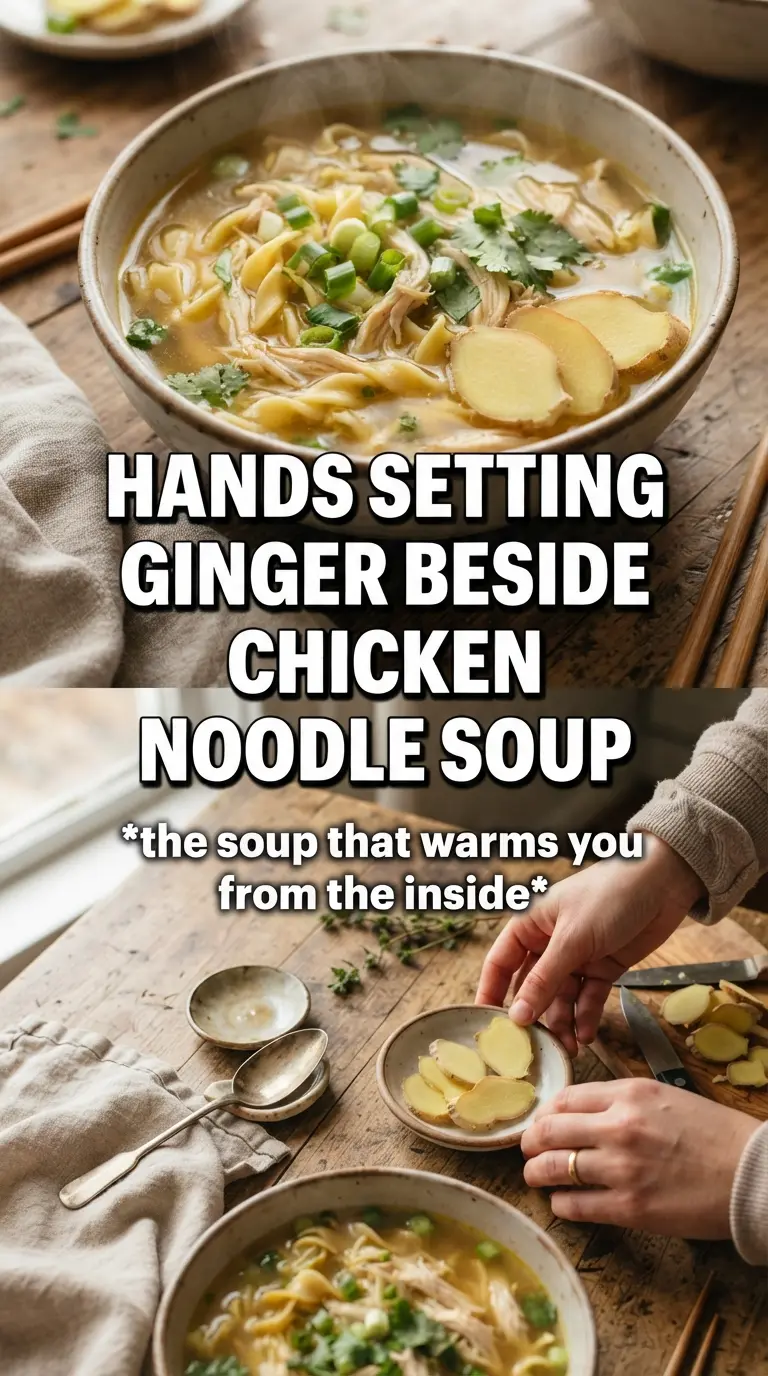
- Chicken breast or thighs — Breasts cook a little leaner and shred into neat strands, while thighs stay juicier and add a richer broth. Either works, but thighs are more forgiving if you’re worried about overcooking.
- Fresh ginger and garlic — These are the backbone of the soup, and fresh is worth using here. Powdered versions don’t give the same bright heat or aroma, and this broth depends on that fresh edge.
- Chicken broth — Use one you’d actually sip. A bland broth gives you a bland soup, while a good broth carries the ginger and garlic instead of disappearing behind them.
- Soy sauce — This is the salt and umami builder. If you need a gluten-free version, use tamari and keep the amount the same.
- Sesame oil and rice vinegar — These go in at the end for a reason. Sesame oil gives the soup a toasted finish, and rice vinegar sharpens the broth just enough to keep it from tasting flat.
- Ramen or egg noodles — Ramen gives you springier chew, while egg noodles feel softer and more classic. Cook them just until tender because they’ll keep absorbing broth after they hit the bowl.
Building the Broth Without Losing the Ginger and Garlic
Softening the vegetables first
Start with onion, carrots, and celery in a little oil and cook them until the onion looks translucent and the edges of the carrots start to soften. You’re not browning them here; you’re giving the broth a sweet, savory base. If the pot is too crowded or the heat is too low, they’ll steam instead of softening, and the soup tastes flatter.
Waking up the ginger and garlic
Add the garlic and ginger after the vegetables have had a few minutes on their own. They only need about two minutes in the hot pot before they turn fragrant, and that brief cooking takes the raw edge off without dulling them. If garlic starts to brown, the flavor turns bitter fast, so keep it moving and don’t walk away.
Simmering the chicken gently
Add the broth, soy sauce, and chicken, then bring the pot just to a boil before lowering it to a simmer. The broth should have small bubbles, not a rolling boil. That gentler heat keeps the chicken tender and the broth clear, and it gives you time to cook the meat through without drying it out.
Finishing with noodles and brightness
Remove the chicken once it’s cooked, shred it, and return it to the pot before adding the noodles. Cook the noodles until they’re just tender, then turn off the heat and stir in the sesame oil and rice vinegar. The finish is what makes the soup taste complete; if you add those ingredients too early, they lose the freshness that makes them worth using.
How to Adapt This for a Bigger Bowl, a Lighter Bowl, or a Gluten-Free One
Use chicken thighs for a richer, more forgiving soup
Thighs stay juicy even if they simmer a little long, and they give the broth a deeper chicken flavor. If you prefer breast meat, keep an eye on the pot and pull it as soon as it’s cooked through so it doesn’t turn stringy.
Make it gluten-free without losing the savory base
Swap the soy sauce for tamari and use rice noodles instead of ramen or egg noodles. You’ll keep the same warming ginger-garlic character, and the broth stays just as satisfying.
Add extra vegetables without throwing off the broth
Mushrooms, baby spinach, or snap peas all fit in here. Add firmer vegetables with the carrots and celery, then stir in quick-cooking greens at the very end so they stay bright instead of going dull and limp.
Store it so the noodles don’t take over
If you know you’ll have leftovers, keep the noodles separate from the broth. That gives you a cleaner texture when reheating, because noodles left in broth overnight keep soaking up liquid until they turn soft and swollen.
Storage and Reheating
- Refrigerator: Store in an airtight container for up to 4 days. The noodles will soften as they sit, so expect a thicker, more brothy-stew texture on day two.
- Freezer: Freeze the broth, chicken, and vegetables without the noodles for up to 3 months. Noodles don’t freeze well in soup; they go mushy once thawed.
- Reheating: Warm gently on the stove over medium-low heat until steaming. If the soup thickened in the fridge, add a splash of broth or water and stop heating as soon as it’s hot so the chicken stays tender.
Answers to the Questions Worth Asking
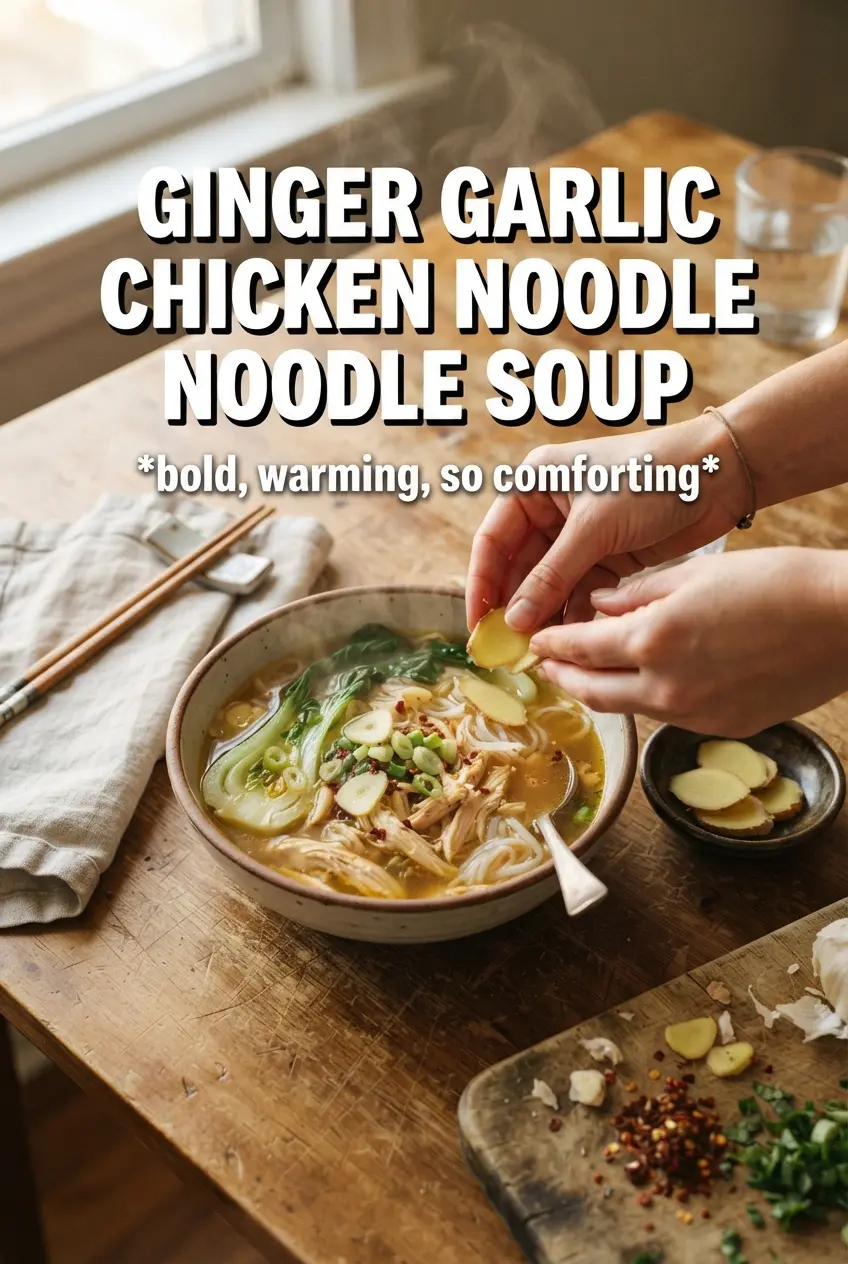
Ginger Garlic Chicken Noodle Soup
Ingredients
Equipment
Method
- Heat 1 tablespoon sesame oil in a large Dutch oven over medium heat, then sauté onion, carrots, and celery for 4 minutes, stirring until they begin to soften and look glossy.
- Add garlic and grated ginger, then cook for 2 minutes until very fragrant, with a noticeable aroma filling the kitchen.
- Add chicken broth, soy sauce, and chicken to the pot, bring to a boil, then reduce to a simmer and cook for 20 minutes until the chicken is cooked through.
- Remove the chicken to a plate, shred it into bite-size pieces, then return the shredded chicken to the pot.
- Add ramen noodles or egg noodles and simmer for 3-5 minutes until tender, with the noodles visibly softening.
- Stir in sesame oil and rice vinegar, then season with salt and pepper to taste until the broth tastes balanced and fragrant.
- Ladle the soup into bowls and top with green onions, fresh cilantro, and sesame seeds for a fresh, lightly nutty finish.